
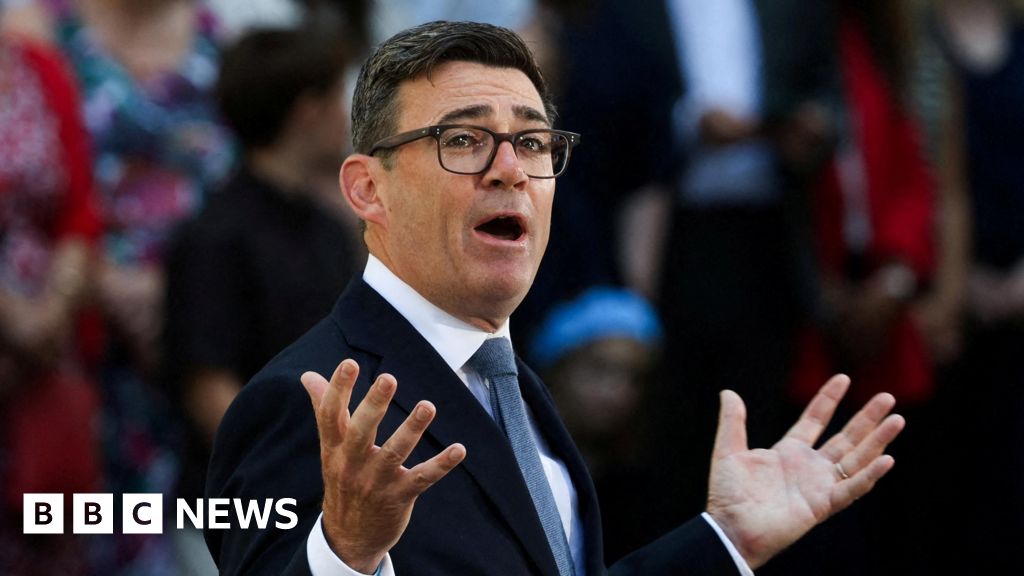
Andy Burnham has officially become the United Kingdom’s 7th prime minister in a decade, staging a dramatic Downing Street entrance that shattered long-standing Westminster protocols. Eschewing the traditional wooden lectern entirely, the former Greater Manchester mayor stood directly on the asphalt surrounded by hundreds of shouting supporters to announce an immediate "circuit breaker" for British politics. His ascension marks the end of Sir Keir Starmer’s two-year tenure, cut short by internal party revolt and catastrophic local election results that have left the centre-left government fighting for survival against insurgent populist forces.
The Bottom Line
- Andy Burnham has been appointed UK prime minister by King Charles III following the formal resignation of Sir Keir Starmer at Buckingham Palace.
- In a complete break from traditional prime ministerial protocol, Burnham delivered his first address without notes or a physical lectern.
- His very first prime ministerial instruction is a sweeping directive to completely end rough sleeping across the United Kingdom.
- A brutal cabinet purge began within minutes, with Deputy Prime Minister David Lammy and Chancellor Rachel Reeves both summarily sacked.
- Burnham explicitly signaled that the UK will honour its international defence commitments, easing concerns over Australia’s $300 billion AUKUS partnership.
Breaking It Down
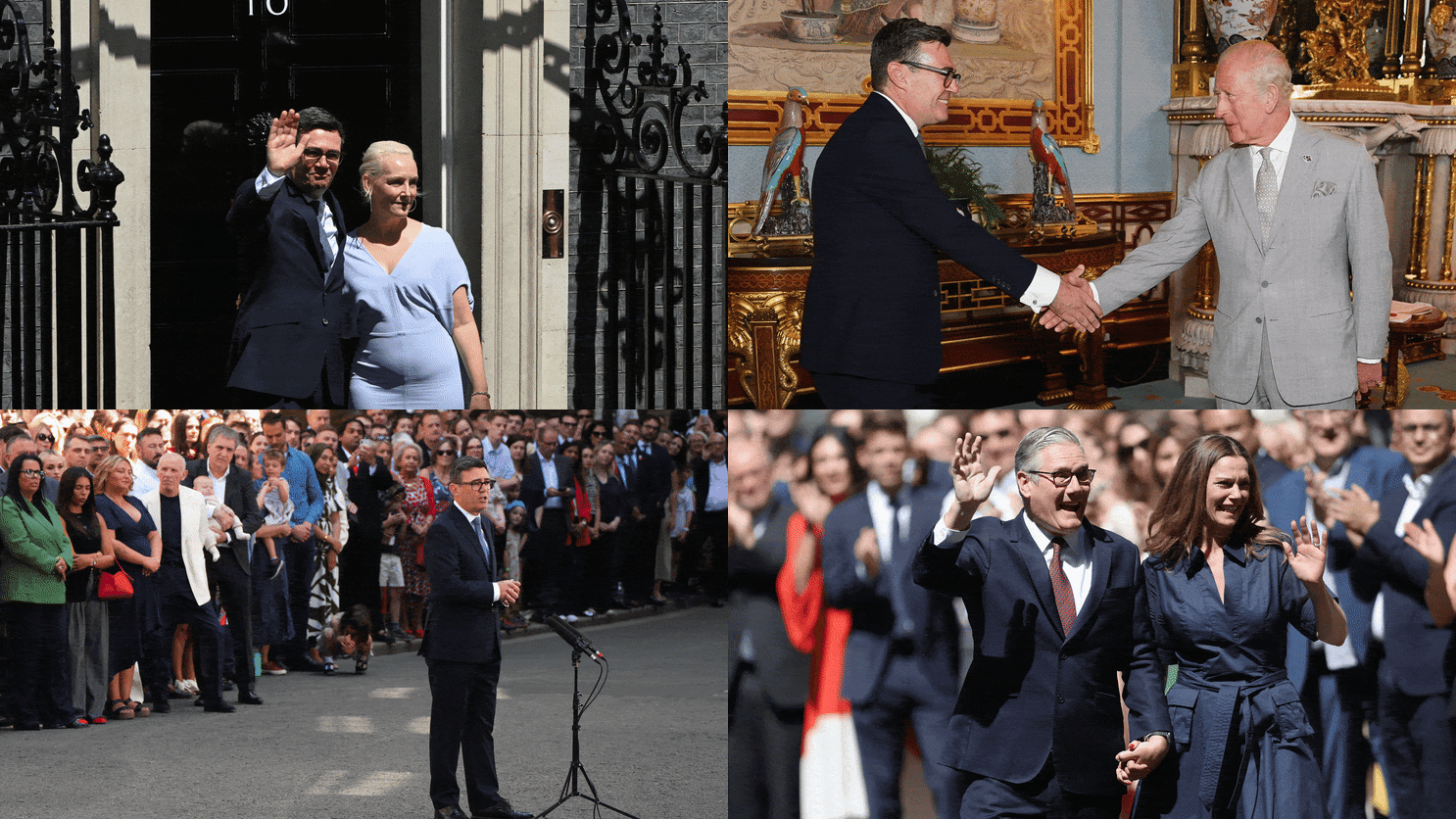
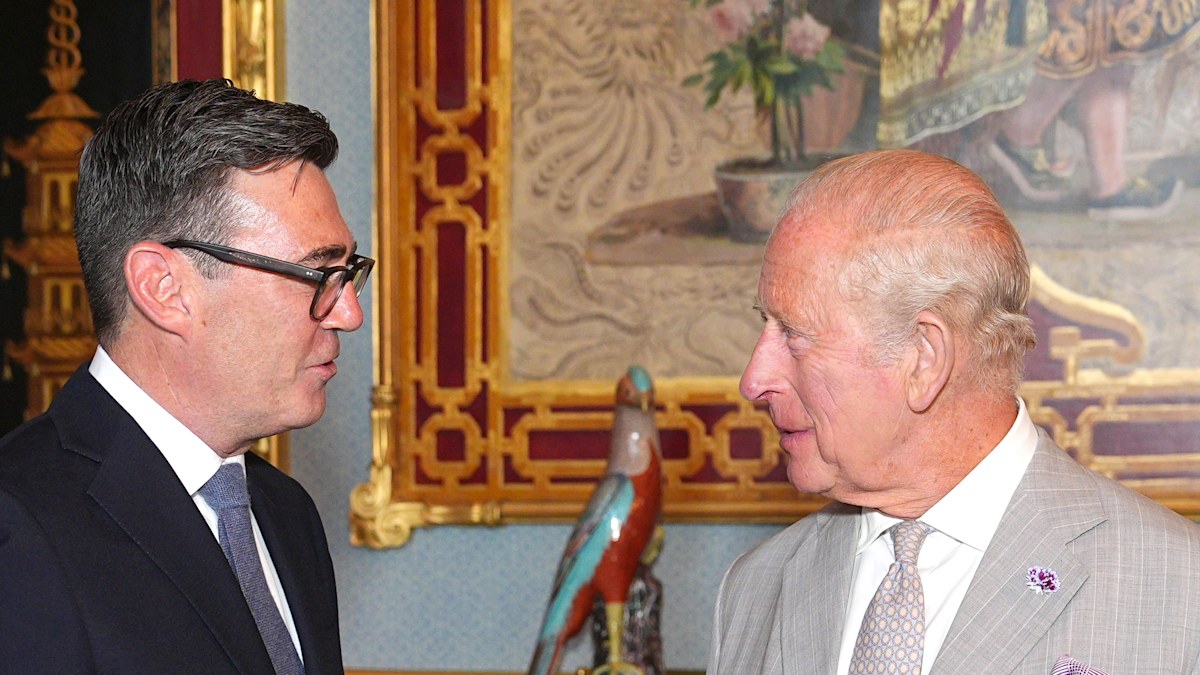
The fast-moving transfer of power began at 12:05pm on Monday when Andy Burnham arrived at Buckingham Palace’s Chinese Dining Room. Just minutes earlier, Sir Keir Starmer had met with King Charles III to tender his resignation, concluding a rapid decline triggered by disastrous May local elections and deep backlashes over cutting winter fuel payments for pensioners. The King formally accepted Starmer’s departure and requested Burnham form a new administration, executing the ancient constitutional ritual known as "kissing hands."
Stepping out outside 10 Downing Street shortly before 1pm local time, Burnham delivered a highly conversational, direct-to-camera speech that explicitly took aim at the political establishment. "We will make this moment a circuit breaker for Britain, bringing forward the biggest changes in the last 40 years," Burnham declared. He targeted historical structural choices dating back to the 1980s, stating that political power had been over-centralised in London while essential industries were privatised and large swathes of the country were left de-industrialised.
Immediate policy actions are already underway. Burnham confirmed his first official order would target homelessness, a signature issue from his time in Manchester where he achieved significant but mixed results. Furthermore, former think-tank head Miatta Fahnbulleh has been quietly constructing bolder cost-of-living policy options behind the scenes. Burnham announced that a funded package of immediate economic relief measures will be unveiled on Tuesday, followed by a comprehensive 10-year national plan later this year.
Why This Matters
For observers in Australia, the most critical element of Burnham’s debut speech lies in his explicit foreign policy reassurance. By stating that Britain would honour its "defence commitments to international partners," the new prime minister provided a vital green light to the ongoing AUKUS defence partnership. Australia has committed at least $300 billion over thirty years to this three-way security agreement, but persistent British leadership turnover has sparked serious anxiety about the UK’s industrial capacity to deliver its side of the submarine bargain.
Prime Minister Anthony Albanese moved quickly to secure the relationship, publicly congratulating Burnham and stating he looked forward to strengthening security, resilience, and prosperity. Yet the underlying instability of Westminster remains a sobering domestic case study. Political analysts highlight that the structural collapse of public trust in the UK, driven by successive leadership executions and stagnant economic productivity, serves as a stark warning to Australian political parties about the dangers of alienating the broader electorate outside major metropolitan capitals.
What Comes Next
The new government faces immediate fiscal pressure with Britain's net public debt sitting heavily at £2.9 trillion, representing roughly 95% of the country's annual economic output. Burnham must immediately finalize his senior cabinet appointments, with intense market scrutiny focused on who will take over the Treasury as chancellor. On the international front, confirmed diplomatic phone calls are scheduled to take place immediately with Ukrainian President Volodymyr Zelenskyy and United States President Donald Trump.
Frequently Asked Questions
Who is the new UK Prime Minister?
Andy Burnham, the former long-serving metro mayor of Greater Manchester, has taken office as leader of the Labour Party and Prime Minister of the United Kingdom.
Why did Keir Starmer resign?
Sir Keir Starmer resigned after losing the support of his parliamentary colleagues following disastrous local election results, tanking public approval ratings, and deep internal anger over his domestic welfare and energy policies.
What was Andy Burnham’s first policy announcement?
Burnham announced that his very first directive upon entering 10 Downing Street is to launch an immediate government program to completely end rough sleeping across the country.
Will the leadership change affect Australia’s AUKUS deal?
No. Prime Minister Burnham explicitly confirmed that the UK will honour all existing defence commitments to its international partners, which effectively secures the ongoing AUKUS pact.
How many prime ministers has the UK had recently?
The United Kingdom has seen extraordinary political instability, with Andy Burnham marking the country’s seventh prime minister to take office since the 2016 Brexit referendum.