
Only one conference motion drew visible dissent across three days of Labor's 50th national conference in Adelaide. That near-total absence of floor conflict has become the story itself: did Anthony Albanese's tightly managed unity strengthen Labor, or conceal debates voters expected the party to have in public?
What People Are Searching For
The main claim driving interest is that Labor's national conference was stage-managed to prevent meaningful disagreement. Reports from inside the Adelaide gathering describe disputes over gambling reform, artificial intelligence, gas taxation, AUKUS and Israel, but say most were negotiated, rewritten or abandoned before reaching the floor.
Former minister Ed Husic became the clearest public critic. His proposed amendment seeking a tougher Labor position on Israel and the Palestinian territories did not proceed after the Maritime Union withdrew support. Husic argued that Labor had become “allergic” to disagreement, while senior figures said he failed to secure enough backing.
The available reporting confirms disagreements existed. The dispute is whether settling them privately is responsible party management or a warning that internal democracy has become too constrained.
What Is Confirmed
- Labor held its 50th national conference in Adelaide over three days.
- Potential disputes involving Gaza, AUKUS, gambling, gas taxation and artificial intelligence were largely resolved before formal floor debate.
- All but one amendment or motion passed without visible opposition; the exception concerned voluntary assisted dying and telehealth access.
- Husic's Gaza-related amendment did not reach a vote after it lost the support needed to proceed.
- The final foreign-policy position was backed publicly by Jewish MP Josh Burns and Palestinian Australian MP Basem Abdo.
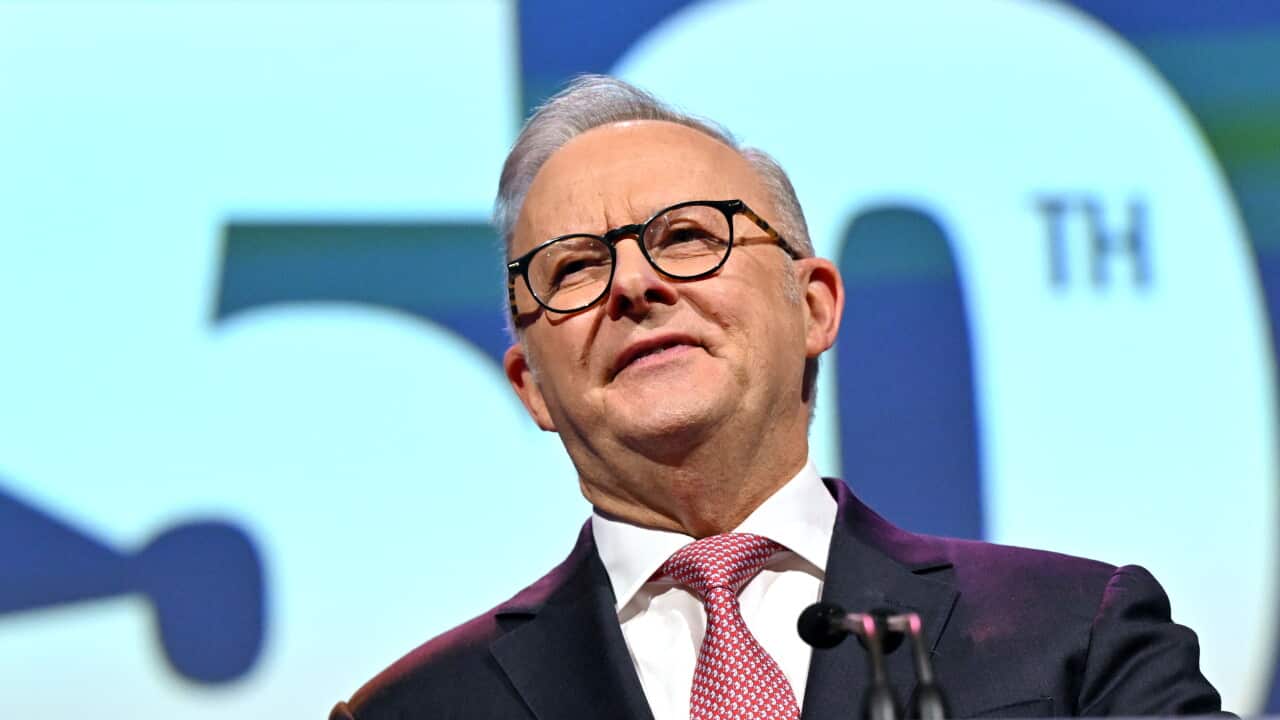
Albanese defended the outcome as cohesion. He told ABC's Insiders, “We are more cohesive, more united than we've ever been before. And I think that's a good thing.” Labor's political logic is to contrast its discipline with division among the Liberals, Nationals and One Nation, while keeping attention on cost-of-living pressures rather than internal culture wars.
The conference also produced policy commitments. According to The Conversation's report, Albanese announced paid placements for more allied health students, costed at $158 million from 2026-27 to 2029-30, and a new Fair Work Court intended to resolve underpayment disputes faster and more cheaply.
What Is Unconfirmed
The strongest allegations go beyond what the supplied material can establish. Claims that Labor MPs were “gagged”, that delegates were coerced, or that factional figures improperly pressured the Maritime Union are contested descriptions, not proven findings. The union later said it withdrew support because it feared the motion would be defeated and the adopted position weakened.

It is also unconfirmed that the lack of public debate will directly push voters towards One Nation. Commentators identify that risk, but the supplied sources provide no polling showing a causal link. Letters published by The Age reveal frustration among some readers, not a representative measure of national opinion.
The claim that Albanese's control will eventually damage Labor is also a forecast. The evidence supports two interpretations: discipline may reassure voters tired of party chaos, or reinforce the belief that major parties settle decisions among insiders.
The Bigger Picture
Labor's strategy is shaped by memories of the Rudd-Gillard years, when leadership conflict overwhelmed policy. Historian Frank Bongiorno told AAP that the 2007-13 collapse of unity likely influenced the current preference for control.
The conference also exposed an economic gap. Former ACTU secretary Bill Kelty highlighted a 5 per cent fall in real wages since 2021, weak productivity, low investment and non-existent per-capita growth. Those figures matter because Labor's promises on services, workplace protection and redistribution depend on an economy capable of funding them. Several reports argued that this problem received less open debate than the political threat posed by One Nation.
Latest Status
Labor left Adelaide with its platform passed, public unity intact and Albanese's authority reinforced. Husic's amendment failed to reach the floor, the consensus position passed, and the conference avoided the explosive policy contests of earlier eras.
What changes next will depend on whether internal critics keep pressing for open debate and whether voters reward discipline or interpret it as distance. The conference did not resolve that tension; it made it more visible.
Frequently Asked Questions
Why was the 2026 Labor conference criticised?
Critics said major disputes were settled behind closed doors before delegates could debate them publicly. Supporters argued the process showed a governing party resolving differences without damaging internal warfare.
Did Ed Husic's Gaza motion go to a vote?
No. The motion did not reach the conference floor after the Maritime Union withdrew the support needed for it to proceed.
Was there any open disagreement at the conference?
Yes, but very little. The only motion reported as drawing dissenting votes concerned voluntary assisted dying and access through telehealth.
What did Labor decide on Israel and Palestine?
The adopted platform opposed Israeli annexation of Palestinian territories and called for illegal settlement activity to end. Husic sought stronger language and additional measures, but his proposal was not debated.
Why was One Nation discussed so often?
Labor figures presented One Nation as a growing political challenge and linked its appeal to economic frustration and distrust of established parties. The sources do not prove that Labor's conference process directly increases One Nation support.
What economic issue was missing from the debate?
Commentators highlighted weak productivity, low investment, falling real wages and stagnant per-capita growth. The concern is that governments cannot expand services indefinitely without stronger wealth creation.