
Last updated: 22 November 2026
$173 billion in net debt, nearly 12 years in government and a leadership change just four months before polling day: Victorian Labor is entering the final week of the state election campaign facing a possible historic defeat. Premier Ben Carroll is battling declining support while former ministers and party insiders publicly question the decision to replace Jacinta Allan. Meanwhile, Liberal leader Jess Wilson faces unanswered questions about Coalition costings, and a potential change of government is already reshaping Victoria's lobbying industry.
What Is Being Proposed
The immediate political contest is over who will govern Victoria after the 28 November election, rather than a single piece of legislation. Labor is seeking another term under Carroll, while Wilson's Coalition is campaigning to replace a government that has held office since 2014.
Carroll inherited the premiership after Allan resigned in July, following internal conflict over her resistance to an inquiry into construction-sector corruption allegations. His administration subsequently strengthened the investigative powers of the Independent Broad-based Anti-corruption Commission, known as IBAC.
According to ABC News election reporting, public and private polling points towards a Labor defeat. The party is losing support to the Liberals, One Nation and the Greens.
Yet the Coalition has not released its full election costings. Wilson says they are coming, although millions of Victorians are expected to have voted before their publication.
What It Would Change
A Coalition victory would end Labor's lengthy control of Spring Street and potentially change how government decisions, infrastructure commitments and political influence operate across Victoria.
The fiscal challenge is substantial. Victoria's net debt stands at $173 billion, with major infrastructure expenditure and pandemic-related spending contributing to the burden. Economists are questioning how the Coalition intends to meet its targets without detailed costings.
Energy security is another unresolved issue, with warnings that Coalition proposals could worsen existing supply concerns. The available reporting does not establish the precise financial or electricity-system consequences of those plans.
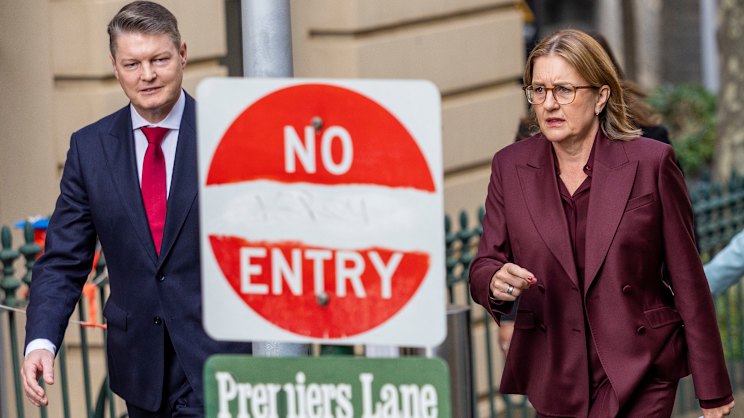
Political access could also change significantly. The Age's investigation into lobbying, drawing on more than 15 interviews, describes firms recruiting Liberal-connected personnel in anticipation of a new administration.
Carroll's changes to IBAC lowered the investigative threshold for certain non-criminal conduct. However, separate proposed laws targeting lobbying practices were abandoned, leaving unresolved questions about political influence and accountability.
- IBAC
- Victoria's Independent Broad-based Anti-corruption Commission, which investigates corruption and improper influence.
- Election costings
- Financial estimates explaining how political parties intend to fund their commitments.
- Upper house
- The parliamentary chamber where a government may need support from other parties to pass legislation.
Who Supports and Who Opposes It
Labor's internal divisions are now a defining feature of the campaign. Supporters of Allan argue the leadership change damaged the government's electoral prospects. Carroll's allies counter that the former premier's political difficulties made change unavoidable.
Former Labor premier Steve Bracks has backed Carroll's prospects, recalling his own unexpected victory over Jeff Kennett in 1999. He has also acknowledged mistakes by previous Labor governments.
Wilson's Coalition is positioned to benefit from dissatisfaction with Labor, although its economic plans remain subject to scrutiny.
One Nation could become especially influential. The party is projected to secure at least eight upper-house seats, while the Coalition is unlikely to control that chamber outright. Wilson could therefore need support from One Nation, Labor or the Greens for particular legislation.
Within the lobbying sector, Matthew Harris, chief executive of Coalition-aligned Barton Deakin, has defended a bipartisan business model. His firm is expanding its Victorian team with former Coalition staffers Scott Samson and Terry Barnes, while Labor-aligned Hawker Britton retains connections to the federal government.
Other firms, including Cornerstone, SECNewgate and GRACosway, are positioning themselves for potential political change. Their commercial preparations illustrate how an election result can affect organisations beyond parliament.
Where Things Stand
With one week remaining, Labor's internal recriminations are competing with its campaign message. The Coalition is favoured to win despite projections suggesting its primary vote could remain below 40 per cent.
No election result has been declared. Nor has the Coalition provided the complete costings needed to assess its financial promises.
The lobbying industry's preparations are similarly anticipatory. Recruitment decisions and client strategies reflect expectations of a Coalition victory, not a confirmed transfer of power.
What Happens Next
Victorians vote on Saturday, 28 November. Before then, attention will focus on whether Wilson publishes the Coalition's costings and whether Carroll can redirect Labor's campaign towards its record in government.
After polling day, the distribution of upper-house seats will help determine which parties can influence legislation. Any incoming government would also inherit outstanding questions about debt, energy policy and lobbying regulation.
For Victorian voters, those issues extend beyond party leadership: they concern how public spending will be funded, how reliable electricity supply will be maintained and how transparently government decisions will be made.
Frequently Asked Questions
When is the Victorian state election?
The election is scheduled for Saturday, 28 November 2026.
Who is Victoria's current premier?
Ben Carroll is the premier and leads Labor's re-election campaign after replacing Jacinta Allan.
Who leads the Victorian Liberal Party?
Jess Wilson leads the Liberals and is seeking to form a Coalition government.
Why is Victorian Labor facing internal conflict?
Party figures disagree over Allan's removal, Carroll's campaign strategy and how Labor should defend its record after nearly 12 years in office.
How much debt does Victoria have?
The reported net debt is $173 billion, reflecting substantial infrastructure expenditure and pandemic-related spending.
Could One Nation influence the next Victorian government?
Yes. If projected upper-house results materialise, One Nation could hold votes needed to pass legislation, although other parties may also provide support.