

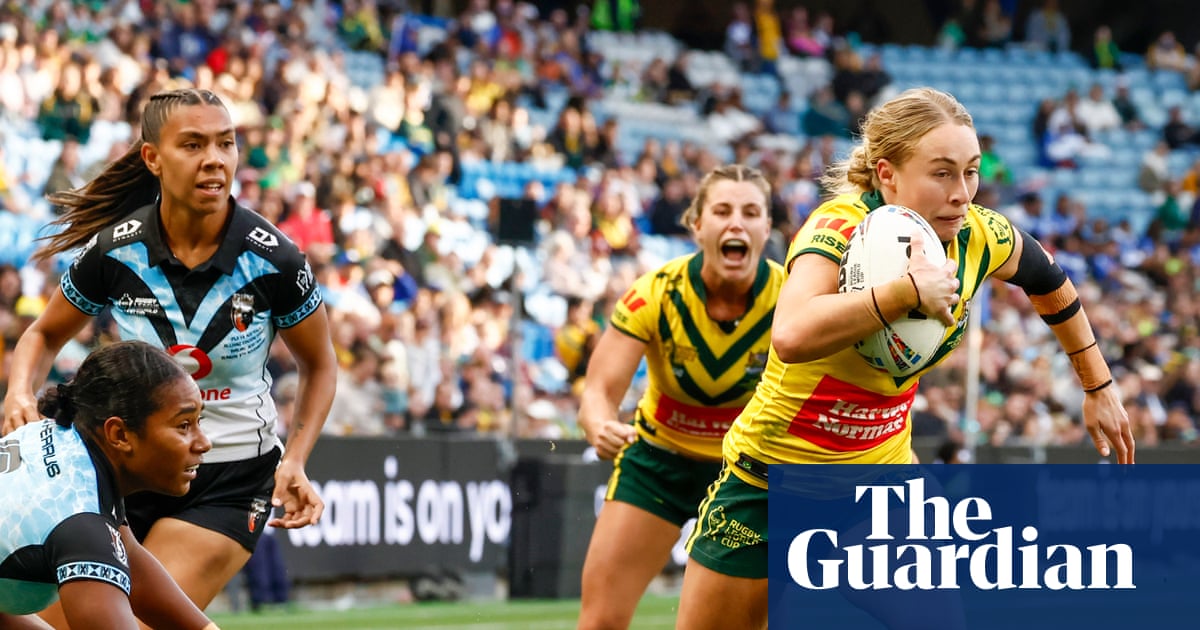
Australia's remarkable winning run was pushed to its limits as Fiji threatened one of the biggest upsets in women's rugby league history before the Jillaroos recovered to secure a 30-14 semi-final victory. Four tries from winger Abbi Church proved decisive after the tournament debutants raced into an 8-0 lead and exposed vulnerabilities in the Australian defence. The result sends the defending champions into their fifth consecutive Women's Rugby League World Cup final, where New Zealand await in Brisbane next Sunday.
What Happened in the Semi-Final
The Jillaroos entered the match after dominating the group stage with an aggregate score of 242-6. That record suggested another comfortable afternoon, but Fiji had different ideas from the opening whistle at Sydney Football Stadium.
The Bulikula, competing in their first Women's Rugby League World Cup, immediately challenged Australia's authority. Five-eighth Luisa Yaranamua was central to the early pressure, earning a penalty goal before producing a dummy and crossing the line herself. Her performance helped Fiji establish an 8-0 advantage after 16 minutes.
Australia had rarely faced such a difficult position in the tournament. Fiji's aggressive defensive approach disrupted the Jillaroos' attacking rhythm, while their work around the ruck created opportunities to challenge the defending champions.
Church eventually gave Australia a way back into the contest, crossing in the corner before Tamika Upton added another try. The two scores brought the teams level at half-time, although Australia's first-half completion rate of just 12 successful sets from 19 highlighted how uncomfortable the hosts had been.
According to ABC's match report, the Australians had been caught off guard by Fiji's disciplined and aggressive approach.
The Key Details
The final score was Australia 30-14 Fiji, with Church delivering the standout individual performance through four tries.
- Competition: 2026 Women's Rugby League World Cup semi-final.
- Teams: Australia Jillaroos versus Fiji Bulikula.
- Venue: Sydney Football Stadium, Sydney.
- Final score: Australia 30, Fiji 14.
- Australia's leading scorer: Abbi Church, four tries.
- Next match: Australia versus New Zealand in Brisbane next Sunday.
Fiji's early lead was particularly significant because Australia had not conceded the opening score in a World Cup match since the 2013 final. The result also ended the possibility of a historic first appearance in the tournament decider for the Bulikula.
Why Fiji Pushed Australia So Hard
Fiji's performance was built around physical commitment, intelligent attacking play and an impressive understanding of Australia's players. Several members of the Bulikula squad already had experience in the Australian domestic competition, giving them familiarity with the opposition's style.
Yaranamua, just 23 and yet to play an NRLW match, emerged as one of the match's most influential figures. Her ability to challenge defenders directly and create opportunities around the defensive line caused repeated problems for Australia.
Fiji also demonstrated that its earlier tournament performances were not isolated successes. The team had previously led New Zealand 12-10 at half-time in its opening match before the Kiwi Ferns eventually recovered. Its semi-final performance provided further evidence of the growing competitiveness of international women's rugby league.
Australia's response after the interval was based on cleaner possession and greater control. Tarryn Aiken began to influence the attacking structure, while Church repeatedly found space to finish opportunities. Her spectacular aerial try from an Aiken kick was among the defining moments of the contest.
What It Means for Both Teams
For Australia, the victory preserves its opportunity to claim another consecutive World Cup title. However, the semi-final exposed areas that New Zealand could target, particularly the Jillaroos' early handling errors and their difficulty containing Fiji's attacking movement.
The result also raises a concern surrounding Jaime Chapman. The Australian winger scored before leaving the field with a problem affecting her leg. The Guardian reported a quad injury, while ABC described her difficulty as cramp. A definitive diagnosis and confirmation of her availability for the final were not included in the reports.
Fiji, meanwhile, leaves the competition with a performance that could have a lasting impact on the international game. Its players demonstrated that emerging national teams can challenge established powers, even without the same depth of experience.
Maria Paseka's late try, created through a short-side attacking move involving Yaranamua, gave Fiji another deserved reward. Although the final margin was 16 points, it did not reflect how closely contested the match had been for much of the afternoon.
Reactions and What's Next
Fiji captain Sereana Naitokatoka expressed pride in her teammates after the match, highlighting their commitment throughout the campaign.
I'm so proud of all my lewas [girls], they put in the hard work from the first minute of the game to the very end, and I'm very proud of them.
Australia now faces New Zealand in a final that continues one of international women's rugby league's defining rivalries. The Kiwi Ferns booked their place by defeating Samoa 32-0, with Stacey Waaka scoring three tries. Her tournament tally reached nine, matching Chapman's total at the top of the scoring standings.
The final will take place at Lang Park in Brisbane next Sunday, marking the fifth consecutive World Cup final between Australia and New Zealand. The previous Australian defeat against the Kiwi Ferns came more than three years ago, when New Zealand won 12-6 in Melbourne.
That history gives the upcoming contest considerable significance. Australia remains the team to beat, but Fiji has provided New Zealand with a detailed example of how the champions can be unsettled through aggressive defence and confident attacking football.
For Australian supporters, the semi-final delivered the result they wanted, but also a reminder that another championship will require a considerably sharper performance.
Frequently Asked Questions
What was the final score of Jillaroos vs Fiji?
Australia defeated Fiji 30-14 in the 2026 Women's Rugby League World Cup semi-final in Sydney.
Who scored the most tries for Australia against Fiji?
Abbi Church was the leading scorer, crossing the line four times to help the Jillaroos reach the final.
Why was the Jillaroos vs Fiji semi-final so close?
Fiji used aggressive defence and effective attacking play to establish an 8-0 lead before Australia improved its possession and attacking execution after half-time.
Who will Australia play in the Women's Rugby League World Cup final?
Australia will face New Zealand after the Kiwi Ferns defeated Samoa 32-0 in the other semi-final.
When and where is the Women's Rugby League World Cup final?
The final is scheduled for next Sunday at Lang Park in Brisbane, with Australia and New Zealand meeting for the fifth consecutive tournament decider.