
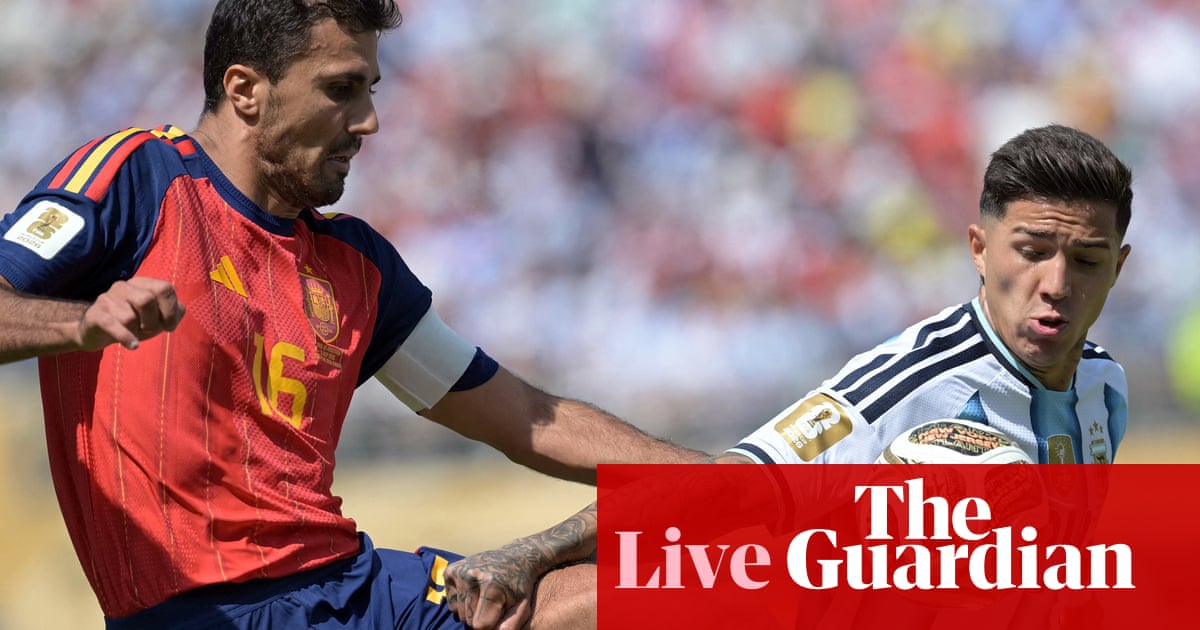
Football fans across Australia tuned in early on Monday morning as the heavily anticipated 2026 FIFA World Cup final between Spain and Argentina kicked off at New York/New Jersey Stadium. The opening 45 minutes delivered a highly tactical, cagey affair that left both continental heavyweights deadlocked without a goal. While Spain controlled the vast majority of possession, clear-cut chances remained exceptionally rare as Argentina's robust defensive shape successfully disrupted the flowing style of La Roja.
Context & Background
The road to the final highlighted a fascinating contrast in preparation and tactical execution. Spain advanced to the showcase match after an impressive semi-final victory where they made France look remarkably poor, completely shutting down their lethal front four while maintaining their signature midfield dominance. Crucially, history favoured the European side heading into the final; thirteen of the past fourteen major men's and women's international tournament finals have been won by the nation that played their semi-final first, granting Spain an extra day of vital physical recovery.
Defending champions Argentina reached the final after a dramatic turnaround against England, where Argentina scored twice after the 84th minute to snatch a 2-1 victory. Looking to secure their second consecutive title and fourth overall, the South American champions entered the match with an established reputation for collective mental resilience, frequently executing physical, high-pressing defensive strategies designed to break the rhythm of creative opponents.
Here's What Happened
The match commenced six minutes later than scheduled following an elaborate opening ceremony, and Spain immediately attempted to assert control. In the fifth minute, teenage sensation Lamine Yamal manufactured the first real opportunity of the game when his deflected pass reached Dani Olmo, who quickly slipped it back to the charging winger. Yamal's subsequent shot took a deflection, forcing Argentina goalkeeper Emi Martínez to swiftly adjust his feet and block the ball to his right. Shortly after, a loose clearance from Spanish goalkeeper Unai Simón fell straight to Julián Álvarez, but the forward was unable to control the ball to exploit the open net.
As the first half progressed, the pitch conditions at the New York/New Jersey Stadium heavily impacted play, with the ball bobbling noticeably on a surface that appeared to lack adequate moisture. Spain maintained roughly 65% of the possession, utilizing intricate, one-touch passing sequences orchestrated by full-back Marc Cucurella and Pedro Porro. Despite their territorial dominance, the final ball continuously eluded the Spanish attackers against a deeply entrenched Argentine defensive line.
The final ten minutes of the half saw an escalation in physical intensity. In the 41st minute, Mikel Oyarzabal intercepted a loose pass in the defensive third and sprinted forward before being deliberately hauled down by Lisandro Martínez. The Slovenian referee, Slavko Vincic, promptly issued a yellow card for the cynical foul. Moments later, Oyarzabal received a clever dummy pass from Olmo and unleashed a low drive from 20 yards, which was cleanly handled by Emi Martínez. Just before the break, Lisandro Martínez suffered an apparent muscle strain and was forced to limp off the pitch, replaced by the veteran defender Nicolás Otamendi.
The Response
The cagey nature of the first half drew immediate analysis from television commentators and former players tracking the game. Former Socceroo Tommy Oar noted that Spain's defensive structure looked exceptionally organized, forcing Lionel Messi to drop extremely deep into his own half just to receive the ball.
Meanwhile, considerable frustration mounted regarding the unprecedented tournament organization in the United States. To accommodate a massive American-style entertainment spectacle featuring live performances from Madonna, Coldplay, BTS, Justin Bieber, and Shakira, the standard interval was extended to a lengthy 30-minute mid-game break.
The Bigger Picture
The tactical stalemate produced some historically rare statistics for a World Cup final. Argentina concluded the first half having recorded 0 shots at goal and exactly 0 touches inside the opposition penalty area, representing only the second time such a statistical drought has occurred in a final since modern data tracking began. Furthermore, the physical approach of the South Americans was laid bare by the numbers, as they committed 9 fouls while completing just 8 passes within the final third of the field.
For domestic fans in Australia watching the broadcast live on SBS, the extended half-time break added an unfamiliar element to the viewing experience. Large crowds gathered early at popular local venues, including the Beach Road Hotel in Bondi and various dedicated fanzones across Melbourne, creating a vibrant atmosphere despite the lack of first-half goals.
The Road Ahead
Both squads face the significant challenge of managing their physical conditioning and maintaining muscle warmth during the prolonged 30-minute intermission before returning to the pitch for the second half. With the tournament ultimate prize still entirely up for grabs, the strategic adjustments made during this extended break will directly determine who lifts the trophy.
FAQ
What was the score at half-time in the World Cup final?
The score between Spain and Argentina was tied at 0-0 at the half-time whistle. Neither team managed to break the defensive deadlock during a very cautious opening 45 minutes.
How many shots did Argentina have in the first half?
Argentina recorded zero shots on or off target during the first half. They also failed to register a single touch inside the Spanish penalty area before the break.
Why was the half-time break longer than usual?
The half-time interval was extended to 30 minutes to accommodate a massive Super Bowl-style entertainment concert. The show featured performances from global artists including Coldplay, Madonna, BTS, and Justin Bieber.
Which players were injured or carded during the first half?
Argentine defender Lisandro Martínez received a yellow card in the 41st minute for a tactical foul on Mikel Oyarzabal. Minutes later, Martínez suffered an injury and was substituted for Nicolás Otamendi.
Where can fans in Australia watch the second half live?
The remainder of the World Cup final match is available to watch live and free on television via SBS, or streaming on demand through the SBS On Demand digital platform.