
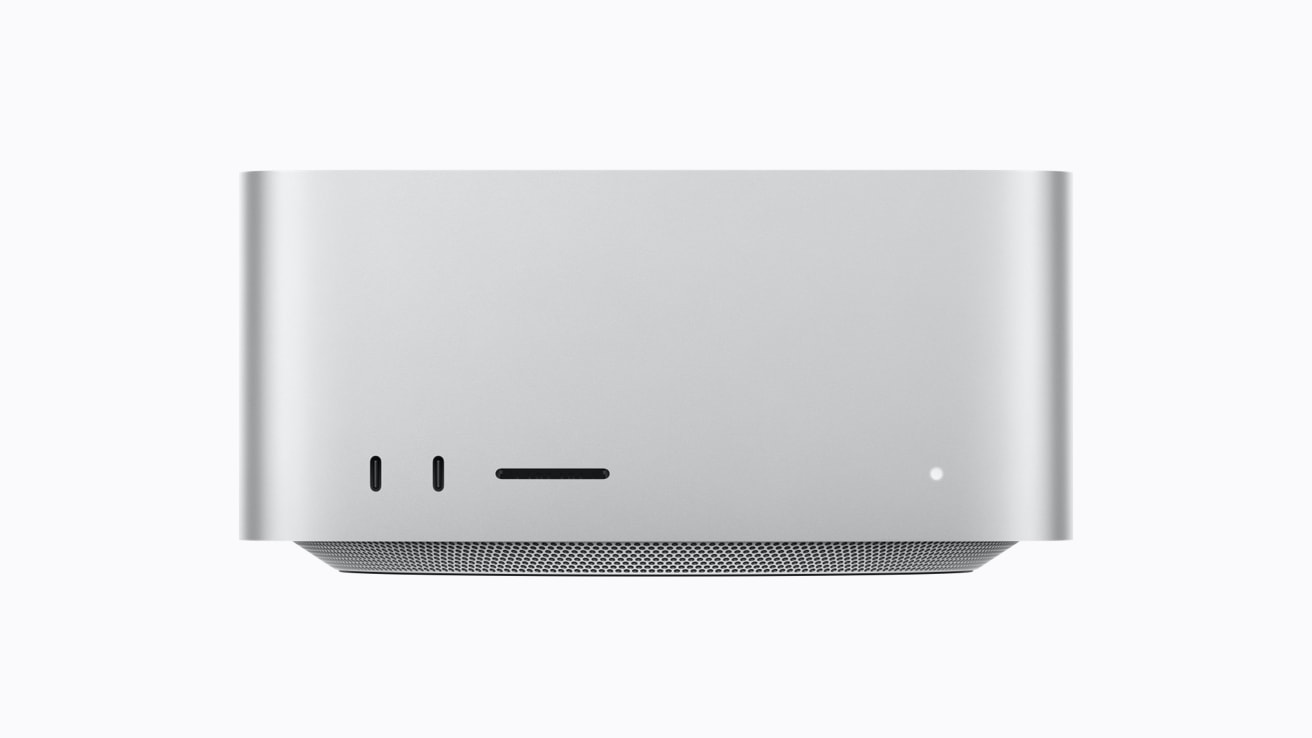
Apple on August 25 officially unveiled its upgraded Mac Studio and Mac Mini desktop lineup, introducing the all-new 2nm M6 chip alongside high-end M5 Pro, M5 Max, and M5 Ultra configurations. The new hardware delivers significant jumps in local artificial intelligence processing, double-speed storage architecture, and faster network connectivity. Pre-orders opened immediately in 30 countries and regions, with retail availability scheduled to begin on September 22.
Why This Is Trending
The announcement broke from Apple's usual release cycle timing by bringing major desktop silicon upgrades ahead of the customary autumn events. Surging demand for local artificial intelligence development, offline large language models (LLMs), and autonomous coding agents has put compact, unified-memory hardware in the spotlight. Both desktops target workflows that previously required power-hungry server racks or high cloud compute subscriptions, while simultaneously adjusting entry price points across the board.
What Happened
Apple revealed four primary desktop tiers across two distinct chassis sizes, preserving the compact external form factors while overhauling the underlying internal silicon. The standard Mac Mini receives the debut of the 2nm M6 processor, while higher-tier configurations offer the M5 Pro. Meanwhile, the pro-grade Mac Studio steps up to the M5 Max and the quad-die M5 Ultra, which combines two dual-die M5 Max chips into an extreme workstation processor.

Mac mini has always been our most versatile Mac. Whether it’s being used as a home computer, powering a professional studio, or as an always-on agentic device, it’s the little Mac that can do it all.
What We Know So Far
The base M6 chip features a 12-core CPU with 2 super cores, 4 performance cores, and 6 efficiency cores, accompanied by a 12-core GPU with dedicated Neural Accelerators on each GPU core. It also integrates a Dual 16-core Neural Engine and provides up to 170GB/s of unified memory bandwidth. Apple claims the M6 delivers up to 40 percent faster CPU performance and up to 4x faster AI performance compared to the M4 generation.
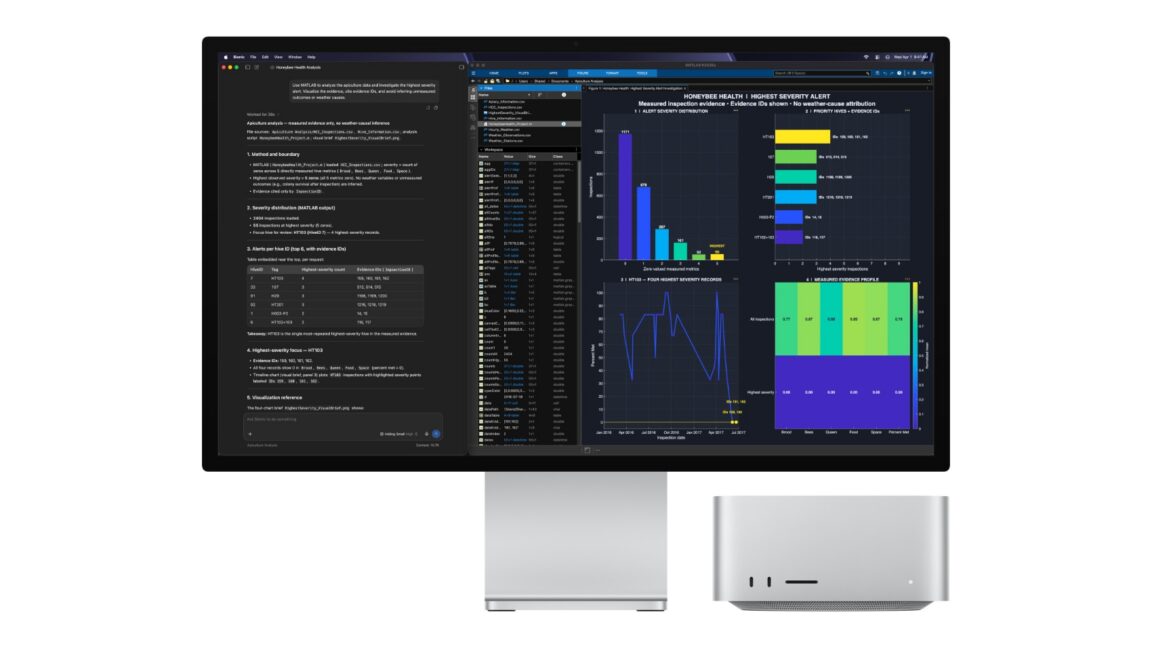
The workstation-grade M5 Ultra features an up-to-36-core CPU and up-to-80-core GPU, packing up to 512GB of unified memory with an unprecedented 1.2TB/s of memory bandwidth. Storage performance across the new range is up to twice as fast, utilizing PCIe Gen 6 architecture reaching speeds up to 15GB/s. Networking across both product lines now incorporates the Apple-designed N1 chip for Wi-Fi 7 and Bluetooth 6, with standard 2.5Gb Ethernet on the Mini (upgradeable to 10Gb) and Thunderbolt 5 connectivity.
Built using the cutting-edge 2 nm process, M6 combines a new CPU complex, two additional CPU and GPU cores, a Dual 16-core Neural Engine, and more unified memory bandwidth to power through workloads with amazing energy efficiency.
Pricing across the lineup has seen an upward adjustment:
- Mac Mini (M6): Starts at $899 (U.S.) with 16GB memory and 256GB SSD ($799 for education).
- Mac Mini (M5 Pro): Starts at $1,699 (U.S.) with 24GB memory and 512GB SSD ($1,599 for education).
- Mac Studio (M5 Max): Starts at $2,499 (U.S.) ($2,299 for education).
- Mac Studio (M5 Ultra): Starts at $5,499 (U.S.) ($5,099 for education).
Why It Matters
Running frontier AI models and local agents like OpenClaw directly on consumer hardware eliminates ongoing cloud token fees and prevents sensitive source code or proprietary business data from leaving the local machine. The massive memory bandwidth of the M5 Ultra and the unified memory architecture allow creators, developers, and researchers to experiment with large language models and multi-stream 8K video rendering in a compact, deskside machine.
What Happens Next
Pre-orders are live now on Apple's online store, with general shipping starting September 22. The 512GB unified memory configuration for the Mac Studio with M5 Ultra is scheduled to ship in late October. Both machines will ship pre-loaded with macOS 27 Golden Gate, rolling out full support for Siri AI and next-generation Apple Intelligence features.
Frequently Asked Questions
When will the new Mac Mini and Mac Studio ship?
Pre-orders began on August 25, 2026, with most configurations shipping on September 22. The 512GB unified memory configuration of the Mac Studio with M5 Ultra will ship in late October.
What is the starting price for the M6 Mac Mini?
The Mac Mini with the base M6 chip starts at $899 (U.S.) for the standard retail model with 16GB of unified memory and 256GB of storage, and $799 (U.S.) for education customers.
How much unified memory can the new Mac Studio support?
The Mac Studio with M5 Max supports up to 128GB of unified memory, while the Mac Studio with M5 Ultra supports up to 512GB of unified memory with 1.2TB/s of memory bandwidth.
What connectivity upgrades are included in the new Macs?
Both models feature Wi-Fi 7 and Bluetooth 6 via Apple's N1 chip. The Mac Mini includes standard 2.5Gb Ethernet and rear Thunderbolt 4 or Thunderbolt 5 ports, while the Studio includes Thunderbolt 5 ports and multi-display support for up to four 5K 120Hz displays.