
Last updated: September 23, 2026
Canada's First F-35 Takes Flight Amid Military Secrecy and Procurement Review
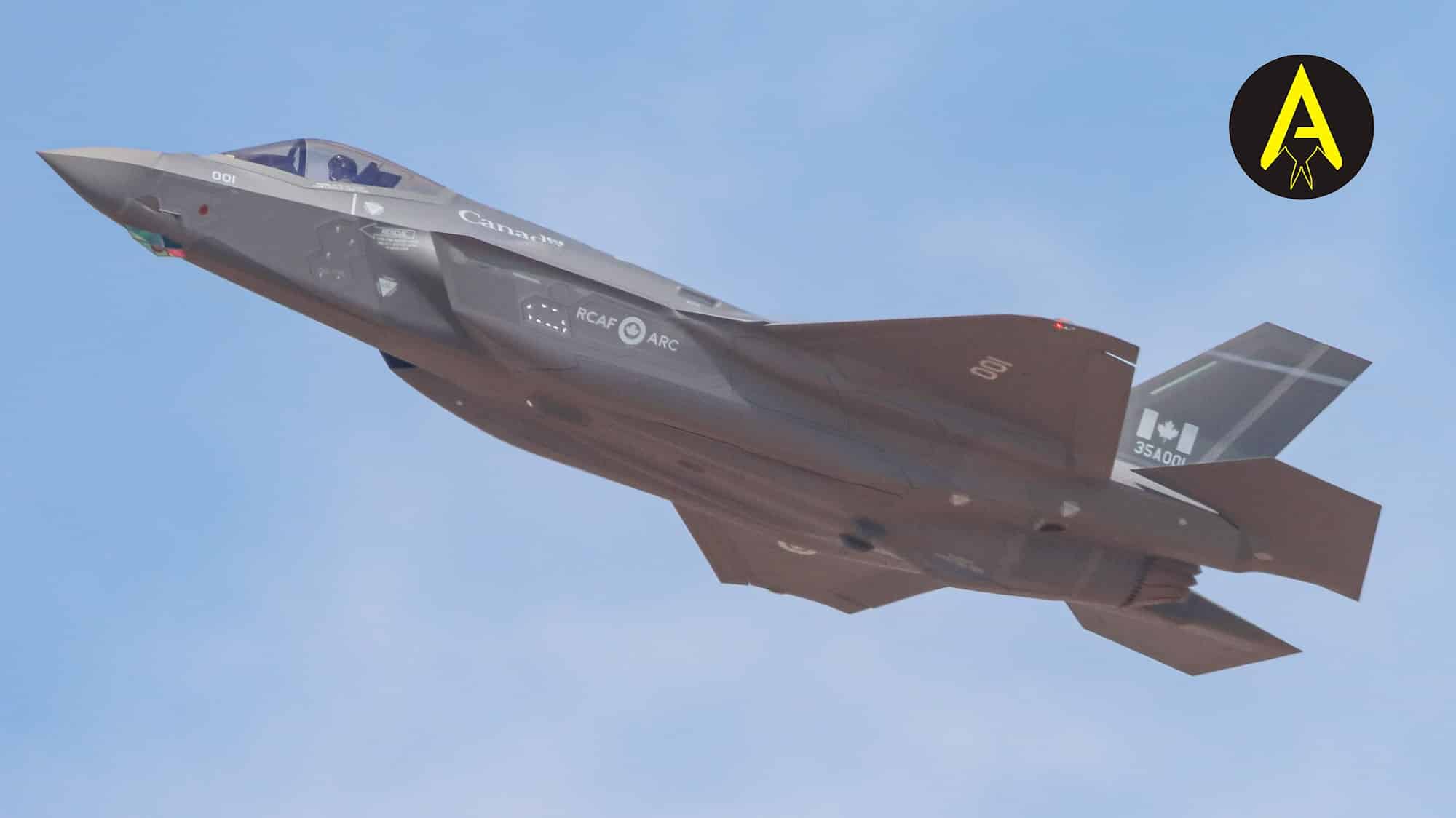
The Royal Canadian Air Force has reached a major milestone as Canada's first F-35A Lightning II completed its maiden flight from Fort Worth, Texas. The flight comes at a tense political crossroads, as Prime Minister Mark Carney’s government weighs whether to proceed with a massive $27 billion fleet purchase amidst mounting diplomatic strain with the United States. Meanwhile, the Canadian military has faced sharp criticism for withholding internal records and original photographs related to a ceremonial signing event for the aircraft's fuselage.

The Story at a Glance
Canada’s acquisition of American-built stealth fighters has transformed into a high-stakes political debate. While 16 aircraft remain contractually locked in and under production, the federal government is reviewing the remaining portion of an 88-jet procurement plan. The recent maiden flight of construction number AR-1 highlights the technical progress of the program, even as internal defense communications draw intense public and journalistic scrutiny.
How the Story Developed
The controversy deepened after The Ottawa Citizen revealed that the military refused to release an original photograph of RCAF commander Lt.-Gen. Jamie Speiser-Blanchet signing the aircraft's fuselage bulkhead during a February ceremony in Texas. Defense officials provided only a grainy photocopy and blocked subsequent requests filed under the Access to Information Act. Anonymous defense sources indicated that the military sought to suppress behind-the-scenes advocacy favoring the F-35 while the broader government review remains active. Additional friction emerged when senior defense personnel publicly or digitally signaled support for the American jets, prompting reprimands from civilian leadership.
Key People and Details
The future of Canada's defense procurement involves several key figures and substantial financial commitments. Prime Minister Mark Carney initiated the review following deteriorating diplomatic relations and U.S. pressure. According to reports from the Auditor General, acquiring the full fleet of 88 fighter jets carries a price tag of roughly $27 billion, with an additional $5.5 billion required to achieve full operational capability. Meanwhile, alternative proposals—such as Swedish firm Saab's offer to build Gripen fighters locally—continue to vie for attention as civilian leaders examine the viability of maintaining a mixed fleet.
Reaction and Response
Federal ministers have moved to curb public lobbying by active-duty officers. Secretary of State for Defence Procurement Stephen Fuhr criticized public endorsements of specific platforms while an official review is underway, telling reporters that defense officials shouldn't be discussing it. Public friction also followed instances where military personnel distributed specialized F-35 promotional items or interacted favorably with defense contractor lobbying groups on social media platforms.
What to Watch
Observers are closely monitoring when Prime Minister Carney will deliver a final verdict on whether Canada will expand its commitment beyond the initial 16 jets. Deliveries for the first aircraft are expected to begin by the end of the year, initially routing to an Arizona training base before arriving on Canadian soil in 2028.
Frequently Asked Questions
Why is Canada's F-35 purchase controversial?
The procurement has sparked debate due to escalating diplomatic tensions with the U.S., a hefty price tag exceeding $27 billion, and ongoing government reviews regarding whether to explore alternative European aircraft.
How many F-35 jets is Canada currently committed to buying?
Canada is contractually bound to acquire 16 aircraft currently in various stages of production, while the fate of the remaining planned jets is still under official review.
What happened with the military photo controversy?
The Canadian military withheld original photographs and internal discussion records regarding RCAF commander Lt.-Gen. Jamie Speiser-Blanchet signing the first jet's fuselage, prompting a freedom-of-information complaint.
Are alternative fighter jets being considered?
Yes. The government is reviewing proposals from Swedish manufacturer Saab, which has pitched building Gripen fighter jets locally to provide significant industrial and technological benefits.