
The flashing lights of unmarked law enforcement vehicles cut through the darkness during routine traffic stops this month, ending in sudden gunfire and two more immigrant fathers dead. Federal agents operating in Texas and Maine had no body cameras to record the fatal encounters, leaving local communities demanding answers amid conflicting accounts. Now, under intense public pressure and widespread protests, the White House has been forced to shift its stance on federal oversight.
How Events Unfolded
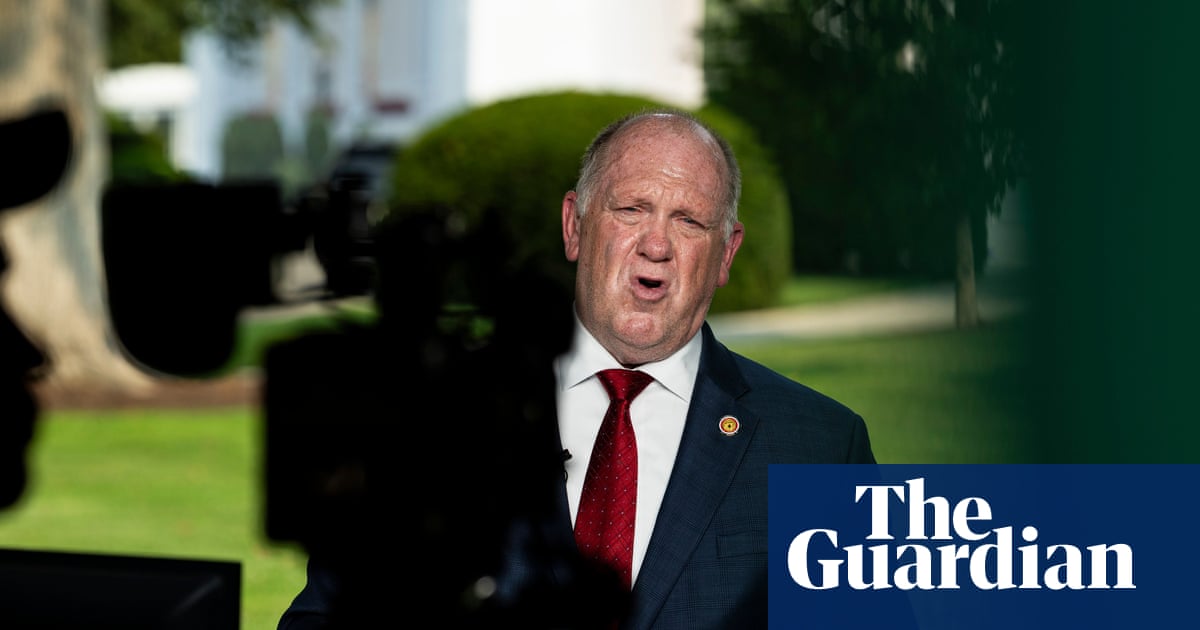
White House border czar Tom Homan announced Sunday that U.S. Immigration and Customs Enforcement (ICE) will immediately require its arrest teams to record vehicle stops with at least one body camera. The sudden directive follows a tumultuous two weeks marked by intense public scrutiny. On July 7, an ICE officer in Houston fatally shot Lorenzo Salgado Araujo, a Mexican national who had lived in the U.S. for 35 years and was close to obtaining legal status. Six days later, an agent in Biddeford, Maine, shot and killed Joan Sebastián Durán Guerrero, a 26-year-old driver from Colombia authorized to work in the country.
Neither victim was the intended target of the immigration operations, federal officials acknowledged. The back-to-back killings quickly sparked angry protests in Maine, Houston, and Boston, intensifying demands for transparency. In response to the outcry, Homan briefly stated last week that the agency would temporarily suspend most vehicle stops to review tactical procedures. However, within 24 hours of that announcement, Donald Trump intervened directly, ordering federal immigration agents to resume the traffic stops immediately, calling them effective tools for fighting crime.
The Department of Homeland Security (DHS) has now clarified that roughly half of all ICE field offices are currently equipped with body cameras. Under the updated guidance, the remaining offices are expected to receive the recording equipment within 60 days. To maintain operations in the interim, officials stated that officers who do not have immediate access to the devices will generally be barred from participating in vehicle stop operations.
Critical Details
The rapid escalation of force highlights a deeper conflict over the deployment of recording technology within federal law enforcement. While local police departments widely adopted body cameras following civil unrest in 2014, federal agencies have lagged behind significantly. ICE initially launched a pilot program in 2021, and by 2024 it had deployed 1,600 cameras across five target cities, including Baltimore and Washington D.C. A January 2024 policy under the previous administration mandated their use, but President Trump rescinded that directive upon taking office in January 2025.
Efforts to fund the equipment have been repeatedly mired in political gridlock. A partial government shutdown earlier this year stalled budget negotiations, which Homan blamed for the current deployment delays. Congress eventually approved $20 million specifically for ICE body cameras in April, followed by a massive $70 billion enforcement package passed via reconciliation in June. According to former ICE Director Todd Lyons, only about 3,000 out of 13,000 active agents were equipped with the technology as of March.
Compounding the tension, structural oversight channels are shifting. The FBI will no longer investigate violent confrontations involving ICE agents, according to internal briefs sent out recently. Previously, those external FBI investigations yielded critical information used to prosecute federal personnel involved in excessive force incidents, meaning accountability will now rely almost entirely on internal DHS reviews and video evidence.
Reactions & Responses
The lack of objective video from the Texas and Maine shootings has drawn sharp rebukes from lawmakers and civil rights organizations, who point to a historical pattern of misleading statements from the agency. In January, after the fatal shooting of two U.S. citizens in Minneapolis, DHS initially labeled the victims domestic terrorists who tried to kill agents, a narrative later discredited by independent bystander videos. Lawmakers are warning that administrative excuses for the delay are wearing thin.
I think the blame on the shutdown is just ludicrous. They were given $20 million just for this purpose.
White House officials, conversely, maintain that the cameras will serve to protect federal personnel from public distortions. Appearing on CBS’s Face the Nation, Homan argued that the technology provides an essential defense for agents operating under extreme duress in dynamic environments.
They exonerate more law enforcement than they convict, and I want officers to wear body cameras because I want the American people to see what the officers saw when they took that action.
Immigrant rights activists remain deeply skeptical of the policy shift. Lauren Bonds, executive director of the National Police Accountability Project, noted that body cameras alone do not inherently deter bad behavior, as officers frequently learn to deactivate devices or exploit operational exceptions. Groups like Fight for the Future have also expressed concern that widespread camera use will simply expand ICE's facial recognition and surveillance capabilities.
Putting It in Perspective
For families and communities affected by immigration enforcement, the policy change does little to lessen the immediate trauma of recent weeks. The fatal shootings represent a sharp escalation; the death of Durán Guerrero marked the 11th fatal shooting by federal immigration officials since the start of the current presidential term. The administrative standard for deadly force allows agents to fire if they reasonably perceive an imminent threat, a subjective baseline that independent video rarely resolves definitively. For readers, the rapid shift means federal enforcement teams will become a highly visible, recorded presence on local transit corridors, even as systemic legal disputes over their tactics continue to mount.
Looking Ahead
The Department of Homeland Security has confirmed that the nationwide training program is actively underway to instruct field supervisors on the new deployment schedule. All remaining ICE field offices are legally mandated to receive their hardware allocations before the end of September. Meanwhile, independent local investigations into the specific actions of the agents involved in the Houston and Biddeford shootings are proceeding, with community groups pledging to monitor whether any partial surveillance footage from nearby businesses will be made public.
Frequently Asked Questions
Why did ICE implement a mandatory body camera rule?
The mandate was introduced after ICE agents operating without cameras fatally shot two men during separate traffic stops in Texas and Maine, sparking widespread protests and demands for transparency.
When will all ICE agents be equipped with body cameras?
DHS stated that half of its field offices currently have the technology, and the remaining offices are scheduled to receive them within the next 60 days.
What did Congress do to fund these cameras?
Congress allocated $20 million specifically for the procurement and deployment of body cameras in April, followed by a broader enforcement funding package over the summer.
Who were the victims of the recent ICE shootings?
Lorenzo Salgado Araujo was shot in Houston, Texas, and Joan Sebastián Durán Guerrero was shot in Biddeford, Maine. Neither man was the intended target of the operations.