

Argentina won the most recent FIFA World Cup, beating France in the 2022 final at Lusail Stadium in Qatar on Dec. 18, 2022. The title came after a 3-3 match, 30 minutes of extra time and a 4-2 penalty shootout that gave Messi his first World Cup trophy.
The Full Story
Messi's side beat France at Lusail Stadium in Qatar on Dec. 18, 2022, after one of the most dramatic finals the tournament has seen.
Argentina took command early. Messi scored from the penalty spot in the first half after Ousmane Dembélé fouled Ángel Di María, and Di María later finished a counterattack to make it 2-0 before halftime. France coach Didier Deschamps responded in the 41st minute by sending on Marcus Thuram and Randal Kolo Muani for Dembélé and Olivier Giroud.

For nearly 80 minutes, France had little going. Then Kylian Mbappé changed the night. He scored an 80th-minute penalty after Nicolás Otamendi brought down Kolo Muani, then equalized 97 seconds later with a volley that turned a controlled Argentina performance into a frantic title fight. Messi restored Argentina's lead in the 108th minute, but Mbappé answered again from the spot in the 118th minute to complete his hat trick.
The match went to penalties after Emiliano Martínez denied Kolo Muani in the closing seconds of extra time. Argentina scored all four of their shootout attempts, while Martínez saved Kingsley Coman's kick and Aurélien Tchouaméni put his effort wide. Gonzalo Montiel then converted the decisive penalty, giving Argentina a 4-2 shootout win, their third World Cup title and their first since Mexico 1986, as detailed in Yahoo Sports' final recap.
Who's Involved
Lionel Messi was the central figure for Argentina, chasing the one major prize missing from his career after falling short in the 2014 World Cup final against Germany. In Qatar, he scored twice in the final and also converted in the shootout.
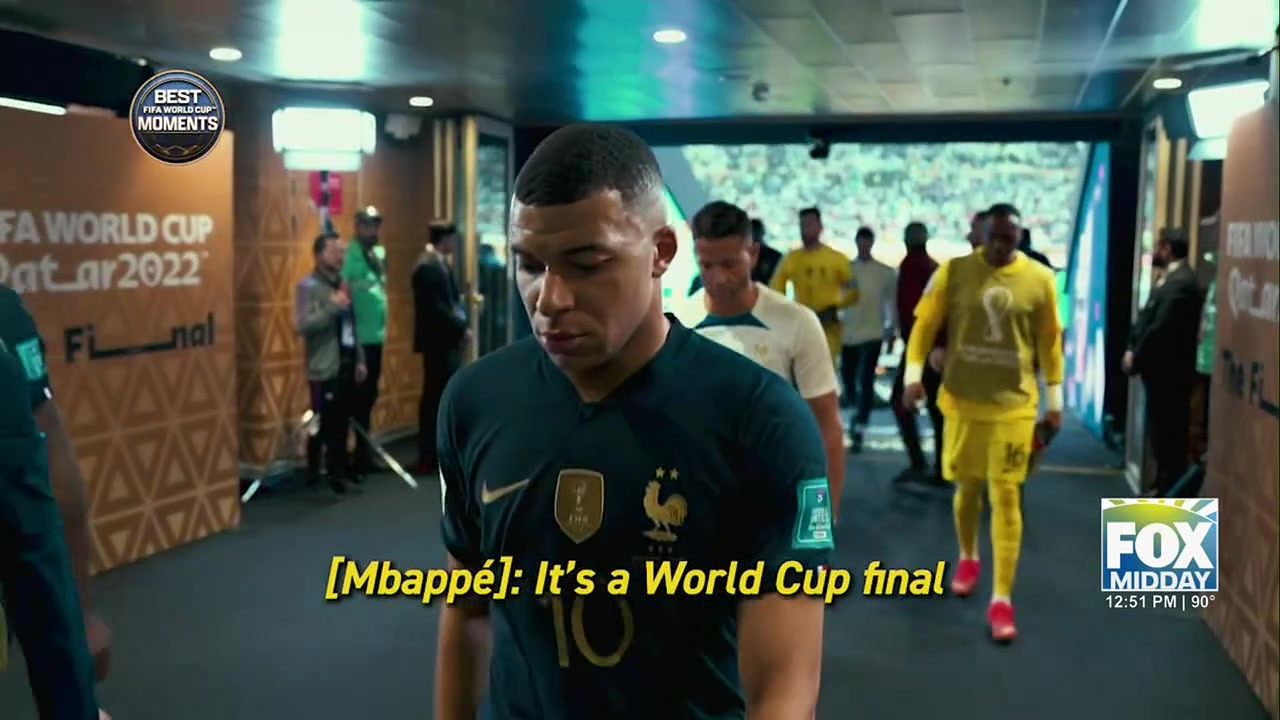
Kylian Mbappé carried France back into the match. He scored three times in regular play and extra time, then scored again in the penalty shootout. He also finished the tournament with the Golden Boot after recording eight goals in seven games, one more than Messi's seven.
Emiliano Martínez mattered because finals often turn on a single goalkeeper moment. His late save on Kolo Muani kept Argentina alive before the shootout, then his stop on Coman helped tilt the penalties toward Argentina. Montiel, who had conceded the late handball penalty, ended up taking the kick that sealed the title.
By the Numbers
3-3 was the score after extra time, and 4-2 was Argentina's winning margin in the penalty shootout. The final was played in front of 89,000 fans at Lusail Stadium, while Yahoo Sports reported 1.5 billion people worldwide tuned in.
The broader numbers show why the match is remembered so clearly. Since the tournament began in 1930, there had been 22 finals through Qatar 2022. Eight needed extra time, and only three required penalties to decide the champion.
- Extra time
- An added 30 minutes used when a knockout match is tied after regular time.
- Penalty shootout
- A best-of-five round of spot kicks used to decide a tied knockout match after extra time.
- Golden Boot
- The tournament scoring award; Mbappé won it in 2022 with eight goals.
What This Means
For Argentina, the win ended a 36-year wait between World Cup titles and gave the country its third championship. It also changed the final chapter of Messi's international story: after years of near-misses, including 2014, he lifted the trophy he wanted most.

For France, the final was agony but not collapse. Mbappé's hat trick made him only the second player after Geoff Hurst in 1966 to score three goals in a World Cup final, and it showed why France stayed dangerous even while being outplayed for long stretches.
For Canadian readers, the timing lands close to home. Canada, the United States and Mexico are hosting the 2026 tournament, and Canada had returned to the World Cup stage in 2022 after 36 years away. Argentina now enter the next cycle carrying the title everyone else is trying to take.
What to Expect
The 2026 World Cup is set to be hosted by the United States, Canada and Mexico. According to the supplied tournament preview, the opening match is between Mexico and South Africa on June 11, 2026, in Mexico City.
The next tournament also expands the field to 48 teams, replacing the 32-team format used in Qatar.
People Also Ask
Who won the last FIFA World Cup?
Argentina won the last FIFA World Cup. They beat France in the 2022 final at Lusail Stadium in Qatar on Dec. 18, 2022.
What was the score of the 2022 World Cup final?
The match finished 3-3 after extra time. Argentina then won 4-2 on penalties after scoring all four of their shootout attempts.
Who scored for Argentina in the 2022 final?
Lionel Messi scored in regular time and again in extra time. Ángel Di María also scored in the first half, and Gonzalo Montiel converted the decisive penalty in the shootout.
How many goals did Kylian Mbappé score in the final?
Kylian Mbappé scored three goals during the match, including two penalties. He also converted his penalty in the shootout and finished the tournament with the Golden Boot.
When is the next World Cup after Qatar 2022?
The next World Cup is the 2026 tournament, hosted by the United States, Canada and Mexico. The supplied preview says the opening match is Mexico against South Africa on June 11, 2026, in Mexico City.