

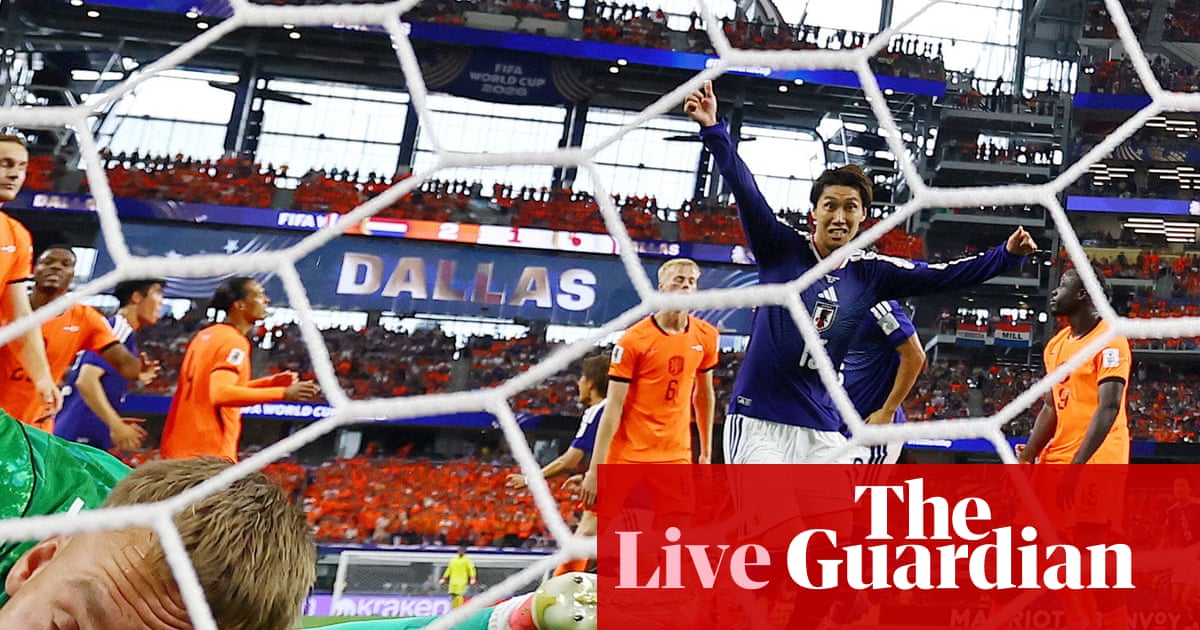
For Canadian viewers following a World Cup unfolding in North America, Group F already looks like one of the tournament’s tightest races. The Netherlands led twice against Japan in Dallas, but Japan answered twice to earn a 2-2 draw that keeps both teams under pressure. Virgil van Dijk and Crysencio Summerville scored for the Dutch, while Keito Nakamura and Daichi Kamada replied for Japan.
The Backstory
This match carried weight before kickoff because Group F was described by France 24 as a highly competitive group with the Netherlands, Japan, Sweden and Tunisia. In that setting, an opening win would have given either side room to manage the next two matches. A draw keeps both teams alive, but it also means neither has the cushion they wanted.
The Netherlands came in with pedigree and questions. CBS Sports pointed to a strong defensive core led by Virgil van Dijk and Micky van de Ven, with Ryan Gravenberch and Frenkie de Jong offering quality in midfield, but also raised concerns about the Dutch attack. That concern was sharpened by the decision not to start Memphis Depay, who has 109 caps and 55 goals for the Netherlands, according to Yahoo Sports Canada.
Japan arrived with a different kind of pressure. France 24 reported that they had put together five straight wins before the tournament, while Sports Illustrated noted that Japan had not conceded since an October 2025 friendly against Brazil. At the same time, Japan were without Kaoru Mitoma, who Bolavip reported was left out because of a hamstring injury suffered with Brighton.
Here's What Happened
The first half ended 0-0, but it was not empty. Japan created openings through Ritsu Doan, Daizen Maeda and Keito Nakamura, while the Netherlands grew into the game through set pieces and wide deliveries. Suzuki made an important early save, and Donyell Malen forced another stop with a header before halftime.
The breakthrough came soon after the restart. In the 51st minute, Gravenberch delivered a strong cross from the right and Van Dijk found space to head the Netherlands in front. The Guardian’s live coverage described the finish as perfectly placed, with the ball going back across Suzuki and inside the post.

Japan responded in the 57th minute. Nakamura moved into a central position and struck low from the edge of the area, with the ball taking a touch on its way past Bart Verbruggen. The goal was initially checked for offside, but the move stood.
The Dutch went back ahead in the 64th minute through Crysencio Summerville, a sign that Ronald Koeman’s side could still find production from younger attacking options with Depay held in reserve. But Japan’s persistence changed the result late, with Daichi Kamada scoring the equaliser in the 89th minute. France 24 described Japan as coming from behind twice, a detail that matters because it showed their structure did not collapse after either Dutch goal.
What People Are Saying
The available source material did not include post-match comments from either coach or named players, so the clearest reaction comes from live coverage and match framing. France 24 called it a decisive Group of Death encounter and said both teams’ knockout ambitions were left hanging in the balance after the draw.
The Guardian’s live report captured the rhythm of the match: controlled phases, few clear chances early, and then a second half that opened up quickly. Its running commentary noted that the Netherlands were well on top just before Japan’s first goal, which helps explain why Nakamura’s strike changed the emotional direction of the match.
CBS Sports had flagged the Dutch attacking question before the game, writing that the team’s build-up had a strong base but still needed an end product. Two goals suggest there is enough quality to hurt opponents, yet conceding two leads shows the Netherlands still have issues to solve if they want to be treated as more than an outside contender.
The Bigger Picture
The result keeps Group F balanced. With Sweden and Tunisia also in the group, neither the Netherlands nor Japan can treat this as a harmless missed opportunity. A win would have given one side control; a draw keeps the table compressed and makes the next round of fixtures more demanding.
For Japan, the performance strengthens the idea that they can compete with European heavyweights even without Mitoma. Bolavip described his absence as a major blow because of his pace and creativity, but Japan still produced two goals against a Dutch defence built around Van Dijk, Van de Ven and Premier League-level experience.

For the Netherlands, the draw keeps attention on Depay and the forward line. Yahoo Sports Canada reported that Depay, now with Corinthians, had 16 goals in 58 matches since joining the Brazilian club. He remains a proven scorer, but starting on the bench shows the Dutch are trying to balance experience with a faster, fresher attack.
The Road Ahead
Both teams now move deeper into Group F with no margin created by the opener. France 24 reported that the group also includes Sweden and Tunisia, making every remaining match directly tied to knockout qualification.
The draw does not damage either team beyond repair, but it changes the tone. Japan proved they can recover under pressure; the Netherlands showed quality, then left points behind.
FAQ
What was the final score between Netherlands and Japan?
The match finished Netherlands 2-2 Japan. The Netherlands led twice, but Japan equalised twice, with Daichi Kamada scoring late.
Who scored in Netherlands vs Japan?
Virgil van Dijk scored in the 51st minute and Crysencio Summerville in the 64th for the Netherlands. Keito Nakamura scored in the 57th minute and Daichi Kamada in the 89th for Japan.
Why did Memphis Depay not start for the Netherlands?
Yahoo Sports Canada reported that the Netherlands chose other attackers for the opener. Depay, 32, was still expected to play a role from the bench.
Was Kaoru Mitoma playing for Japan?
No. Bolavip reported that Mitoma was left out of Japan’s World Cup squad because of a hamstring injury suffered while playing for Brighton.
What does the draw mean for Group F?
The draw keeps both teams under pressure because neither took full control of the group. With Sweden and Tunisia also involved, the next matches carry added weight.