

Argentina and Spain battled through a scoreless, fiercely physical first half in the World Cup final at New York New Jersey Stadium in East Rutherford, New Jersey, on Sunday, July 19. The high-intensity stalemate leaves the world's ultimate football prize entirely up for grabs as both teams look to adjust their tactics for the final 45 minutes.

The Full Story
The 104th and final match of the expanded 48-team tournament kicked off with Spain establishing clear tactical dominance in possession. Dictating the tempo from the opening whistle, the Spanish side connected on twice as many passes as Argentina during the opening half, continuously forcing the defending champions to chase the ball. However, despite controlling the rhythm and accumulating multiple shot attempts, Spain was unable to breach a resilient, heavily physical Argentine defensive block.
Argentina leaned heavily into the same intense, aggressive style that defined their late comeback against England in the semifinals. The physical approach frequently pushed the boundaries of the rulebook, leaving several players fortunate to avoid cautions from Slovenian referee Slavko Vinčić. Alexis Mac Allister escaped punishment after a reckless, two-legged challenge on Dani Olmo that drew surprise from former Premier League official Graham Scott, while Nicolás Tagliafico also avoided a booking after bringing down teenage winger Lamine Yamal.
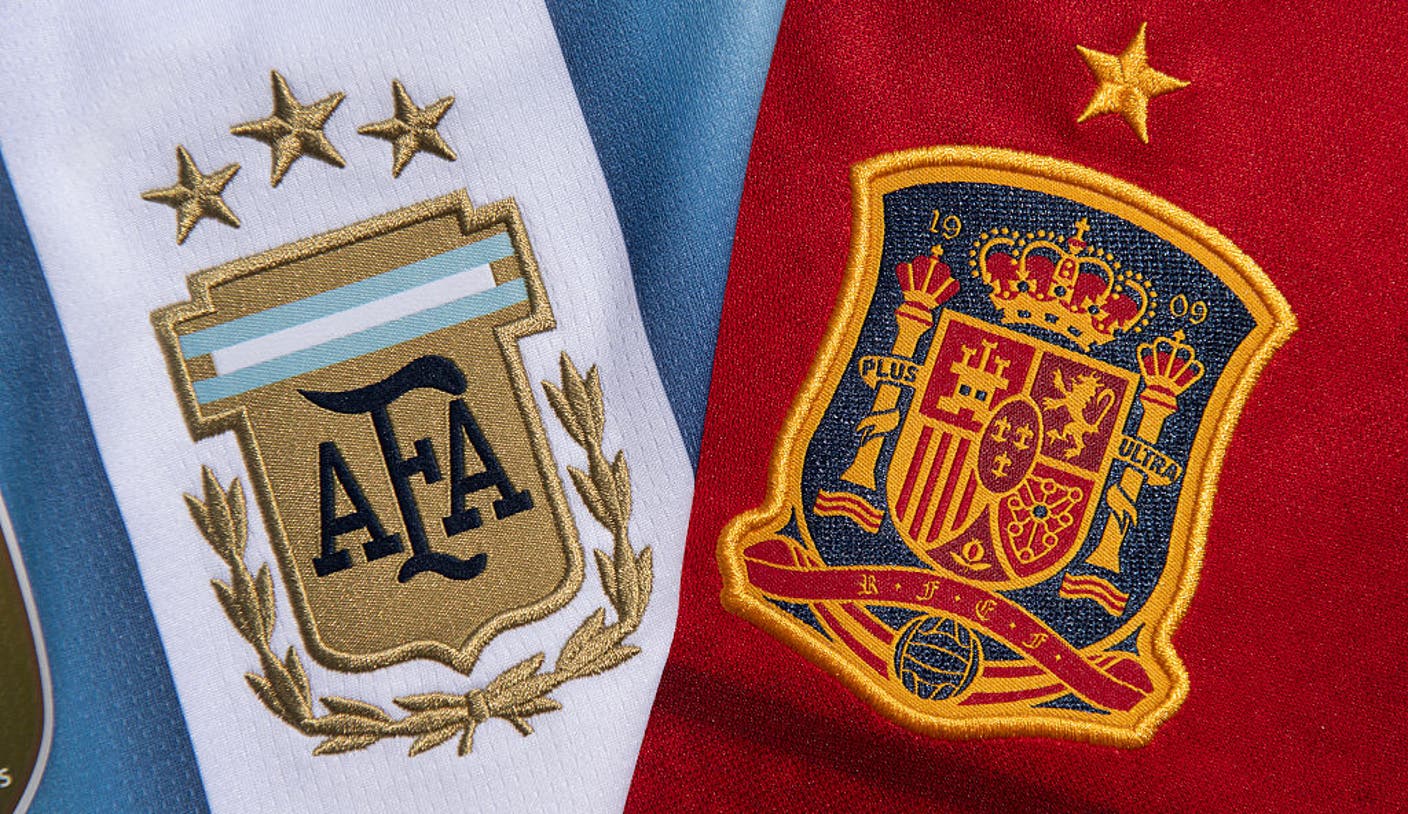
The physical toll of the half forced Argentina into an unplanned tactical adjustment late in the period. Defender Lisandro Martínez suffered an apparent injury, prompting manager Lionel Scaloni to send veteran center-back Nicolas Otamendi into the match. Meanwhile, the historical trend of cagey finals continued, marking the ninth time in 23 World Cup finals that a championship match stood at 0-0 at the intermission.
The Main Players
- Lionel Messi: The Argentine captain and global icon, heavily targeted by Spanish defenders as he chases a consecutive World Cup trophy.
- Lamine Yamal: Spain's teenage winger who faced intense physical pressure and heavy challenges throughout the first 45 minutes.
- Lionel Scaloni: The Argentina manager who altered his lineup by starting Gonzalo Montiel and Nico Gonzalez, and was forced into a late first-half defensive substitution.
- Luis de la Fuente: The Spain manager who opted for consistency, keeping his starting eleven entirely unchanged from the semifinal victory over France.
- Slavko Vinčić: The Slovenian match referee who faced heavy scrutiny for his lenient discipline during a highly combative first half.
Key Statistics
The first half delivered intriguing numbers that highlight the tactical narrative of the final:
- 2: The factor by which Spain outperformed Argentina in completed passes during the first 45 minutes.
- 9: The total number of World Cup finals in football history that have reached halftime with a 0-0 scoreline.
- 15: This final marks the 15th head-to-head meeting between these two nations since 1952, breaking a historical tie of six wins each and two draws.
- 307: The total goals scored across this tournament entering Sunday, establishing it as the highest-scoring World Cup in history.
What This Means
This tactical deadlock carries massive historical significance for both nations. Defending champions Argentina are attempting to cement a historic era by becoming only the third men's team ever to win back-to-back World Cups. For Spain, a victory would secure their second men's title and make them the first country to hold both the men's and women's World Cup trophies simultaneously.
For football fans watching across Canada, the final represents the culmination of a groundbreaking tournament co-hosted on North American soil. The physical intensity and lack of space on display show how the modern game prioritizes structure and athletic resilience when the ultimate prize is on the line. With 307 tournament goals already recorded, if these sides combine for just two goals in the second half, 2026 will achieve the highest goals-per-game average since 1956.
What to Expect
The second half will demand immediate adjustments from both coaching staffs. Spain must find a way to translate their overwhelming possession into genuine scoring opportunities, while Argentina faces the challenge of maintaining their high-energy pressing style without crossing into disciplinary trouble. With the threat of extra time and penalties looming, any single defensive error or moment of individual brilliance will decide the world champion.
FAQ
Why did Alexis Mac Allister not receive a yellow card?
The Argentine midfielder avoided a booking despite a reckless challenge on Dani Olmo. Former referee Graham Scott noted the fourth official had a perfect view but failed to advise the primary referee, Slavko Vinčić, to issue a yellow card.How many times have Spain and Argentina played each other before?
The teams have met 14 times previously, splitting the series evenly with six wins each and two draws. Their only prior World Cup meeting occurred during the 1966 group stage, where Argentina won -1.
Who performed during the World Cup final entertainment segments?
Post Malone headlined the pre-match closing ceremony. The first-ever official FIFA halftime show featured a massive lineup including Justin Bieber, Madonna, Shakira, BTS, Burna Boy, and the PS 22 Chorus with Coldplay.
Which players were changed in the Argentine starting lineup?
Manager Lionel Scaloni made two pre-planned changes from the semifinal, starting right-back Gonzalo Montiel over Nahuel Molina and Nico Gonzalez over Leandro Paredes. A third change occurred late in the first half when Nicolas Otamendi replaced the injured Lisandro Martínez.