
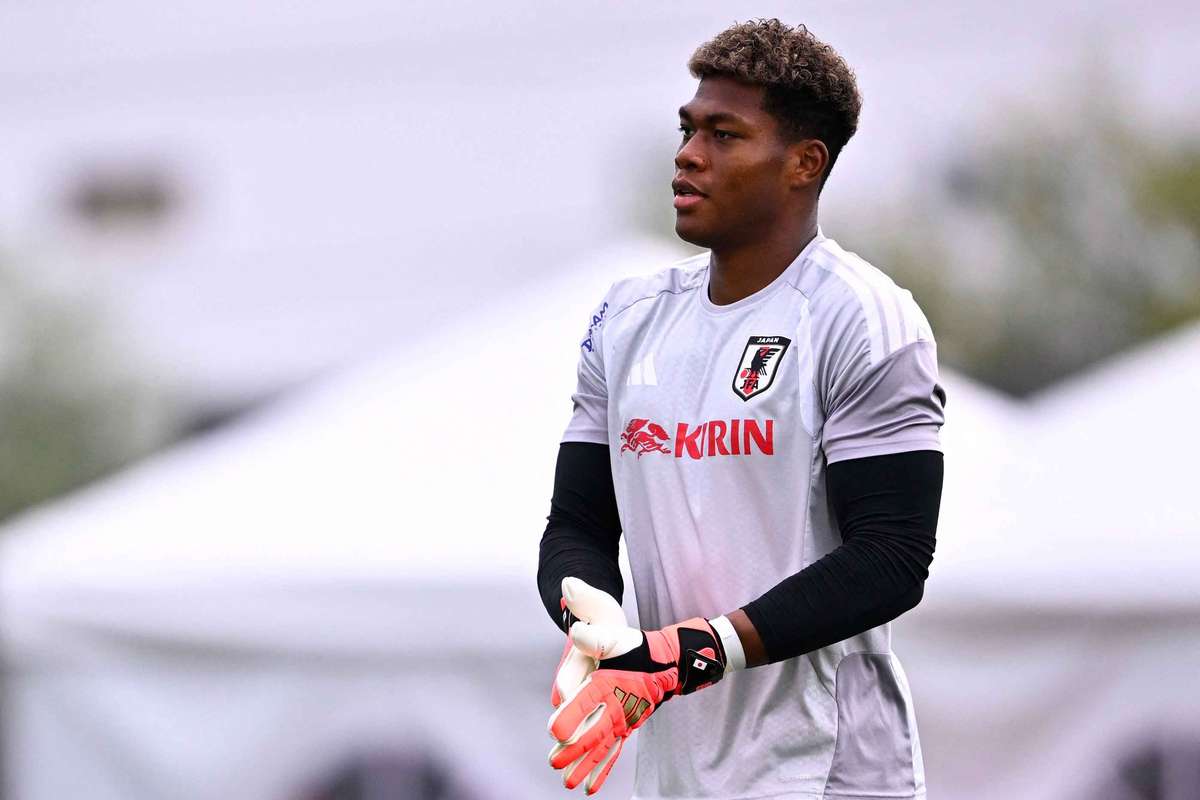
The Japan goalkeepers stepped out at AT&T Stadium, bowed towards the crowd, and started the warm-up routine. Zion Suzuki, the 23-year-old in the gloves, waved before settling into the small rituals of a World Cup starter. He began Japan’s Group F opener against the Netherlands as the face of a story that stretches from the United States to Urawa, Belgium, Parma and now the biggest stage in football. Born in Newark, New Jersey, to a Ghanaian father and Japanese mother, Suzuki has become Japan’s clear No 1 while carrying a wider conversation about identity, pressure and representation.
How Events Unfolded
Suzuki’s path began far from Japanese football’s usual route. Several reports state he was born in Newark on 21 August 2002, then moved with his family to Japan as a child and grew up in Urawa, Saitama. By kindergarten he was already playing football; by elementary school, he had chosen the goalkeeper position.
He joined the Urawa Red Diamonds academy and climbed through the age groups. His first big marker came at 16 years and five months, when he became the youngest player in Urawa’s history to sign a senior professional contract. International call-ups followed from U15 level upwards, which matters because Suzuki did not drift into Japan’s system late — he was built through it.
The move to Europe changed the pace. In August 2023, Sint-Truiden took him on loan, and he played 32 matches in Belgium. That season gave him the match rhythm he had struggled to secure at Urawa, and Parma then signed him in summer 2024 for around €10 million, described by Flashscore as a club-record fee for Sint-Truiden.
By the 2026 World Cup, he had become Parma’s starter and Japan’s expected tournament goalkeeper. Sporting News reported he entered the World Cup with 22 senior Japan appearances, while other source material puts him beyond two dozen caps. The common thread is clear: Suzuki arrived in North America not as a novelty pick, but as the player trusted to organise Japan from the back.
Under the Surface
Suzuki’s story has gained attention because it is not only about saves. Bolavip reported that he is the only player in Japan’s 26-man squad who was born outside Japanese territory, with the rest of Hajime Moriyasu’s roster born in Japan. That makes him a visible figure in a team already trying to push beyond its World Cup ceiling.

Japan have reached the Round of 16 in 2002, 2010, 2018 and 2022. The current squad is presented in the sources as disciplined, tactically mature and filled with European-based players. A goalkeeper starting regularly in Serie A gives Moriyasu a different kind of base: not just a shot-stopper, but someone used to pressure, build-up play and weekly scrutiny.
That visibility has also brought abuse. During the Asian Cup in Qatar in January 2024, after Japan lost 2-1 to Iraq, Suzuki was targeted with racist comments online. The Japanese federation condemned the behaviour and, according to the source text, reaffirmed a zero-tolerance policy. The episode explains why his rise is being discussed beyond tactics: he is succeeding while facing a form of scrutiny other players do not carry in the same way.
Voices & Opinions
Louis Yamaguchi, a Franco-Japanese goalkeeper for Kawasaki Frontale, is one of the most useful voices in the reporting because he understands both the position and the identity conversation around Suzuki. He framed the Europe move as a career decision made at the right moment.
He made the decision to leave at the right time, because he had very little playing time at Urawa, even though he was seen as one of Japan’s top goalkeeping prospects. But he was very young and lacked experience.
Yamaguchi also described Suzuki as complete: strong on his line, good with his feet and capable of making sound decisions. Those qualities are exactly what modern national teams want. A goalkeeper is now part defender, part passer, part organiser, especially against high-pressing opponents.
At first, I made a lot of mistakes and didn’t always live up to my role as the last line of defence.
Suzuki’s own admission adds texture to the Parma chapter. The pressure did not disappear when he reached Italy; it sharpened. He later said his ability to handle situations had become more refined, which fits the picture of a goalkeeper developing through mistakes rather than being protected from them.
Putting It in Perspective
The numbers show why Japan stuck with him. In Belgium, he played 32 matches and kept six clean sheets. At Parma, Flashscore’s source material says he had made 57 consecutive Serie A starts by the World Cup and kept 13 clean sheets in 59 matches in all competitions.

His comeback from injury is part of the same argument. In November 2025, he broke his left hand during a 2-2 draw with AC Milan, putting his World Cup availability in doubt. Four months later, he returned, then used Japan’s March wins over Scotland and England to prove his rhythm had come back.
For GB readers, the England detail lands hardest. Flashscore’s source material says Japan beat England 1-0 away, with Suzuki saving all three shots he faced. That is not just a confidence-builder for Japan; it is a warning to opponents in Group F that this side can frustrate European teams and then punish small mistakes.
Looking Ahead
Japan are in Group F with the Netherlands, Sweden and Tunisia. Suzuki was named in Moriyasu’s 26-man squad on 15 May 2026, and the reporting consistently describes him as the obvious first choice.
The next stage is about durability as much as talent. Japan want to move beyond the Round of 16 barrier. Suzuki gives them a goalkeeper with European minutes, World Cup exposure and a personal edge that makes his tournament one of the more compelling individual stories of the group stage.
FAQ
Who is Zion Suzuki?
Zion Suzuki is Japan’s 23-year-old starting goalkeeper at the 2026 World Cup. He plays club football for Parma in Italy’s Serie A.
Where was Zion Suzuki born?
Multiple provided sources state that Suzuki was born in Newark, New Jersey, on 21 August 2002 before moving to Japan as a child.
Where are Zion Suzuki’s parents from?
The source material says his father is Ghanaian or of Ghanaian descent, and his mother is Japanese.
Which club does Zion Suzuki play for?
Suzuki plays for Parma. He joined the Italian club in 2024 after a loan spell at Sint-Truiden in Belgium.
Why is Zion Suzuki important for Japan?
He is Japan’s first-choice goalkeeper, has regular Serie A experience, and is seen as a modern keeper who can save shots and build attacks from the back.
What injury did Zion Suzuki recover from?
He broke his left hand in November 2025 during Parma’s 2-2 draw with AC Milan, then returned before the 2026 World Cup.