
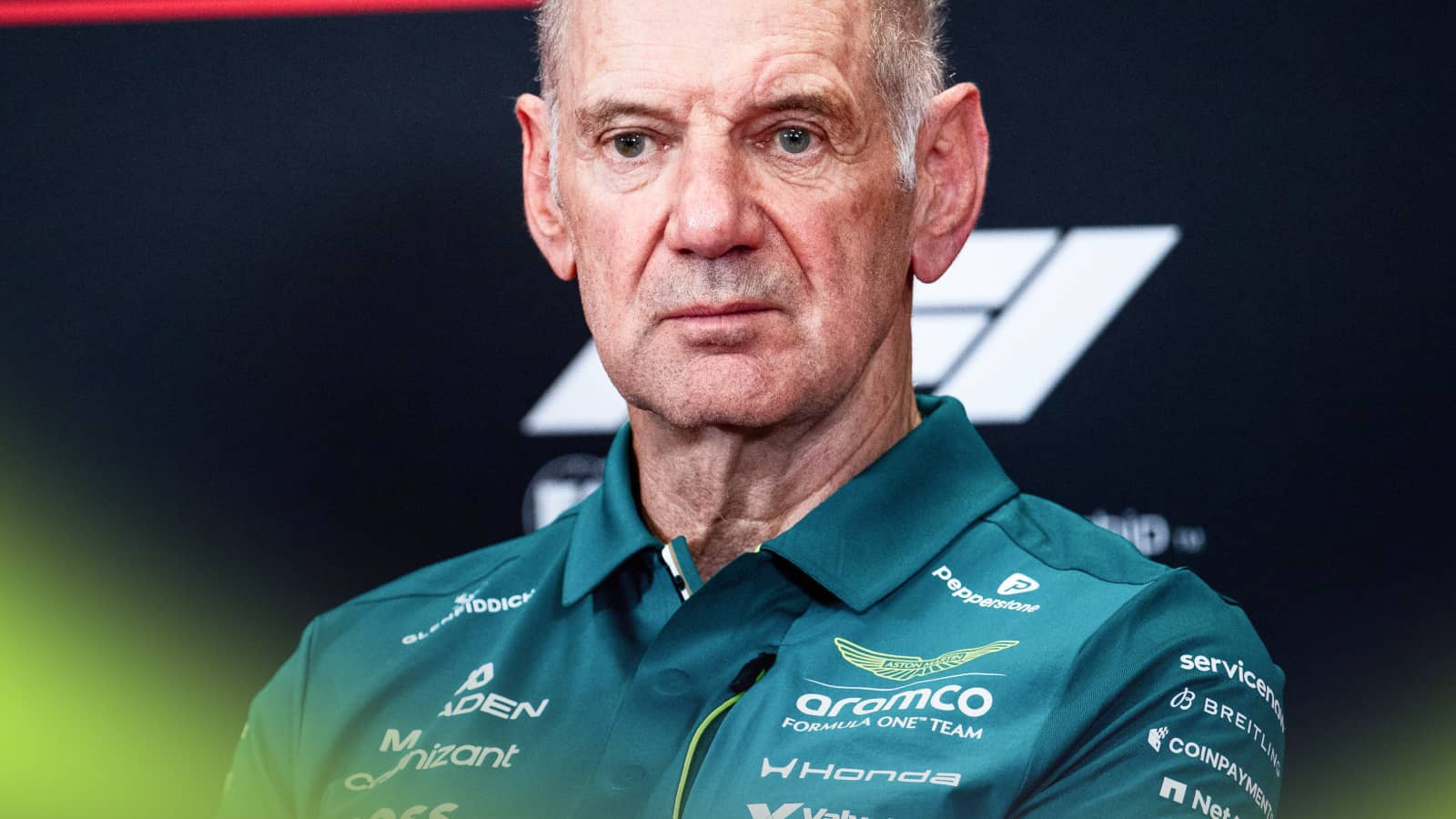
A designer who contributed to 26 world championship wins is now facing questions over whether his career has entered an irreversible downward spiral. The bold suggestion from former Grand Prix winner Johnny Herbert followed a brutal opening run for Aston Martin, where the team collected just a solitary point across the first 11 rounds of the campaign. Yet, with a massive mid-season overhaul yielding rapid lap time gains in Budapest, the paddock remains deeply divided over whether the sport's greatest technical mind is faltering or simply preparing a long-term resurgence.
What People Are Searching For
Motorsport enthusiasts across Britain and beyond are questioning whether Adrian Newey has lost his technical touch after Team Silverstone spent months languishing near the back of the grid. Fans and analysts want to know why an operation boasting a brand-new factory, an exclusive Honda works power unit partnership, and two-time champion Fernando Alonso struggled to outpace midfield rivals during the opening half of the year. The primary debate centres on whether the team's early-season collapse represents a genuine design decline or the calculated cost of holding back developments for a single, comprehensive car overhaul.
What Is Confirmed
The statistical realities of Aston Martin's early campaign were severe. Before the summer break, the Silverstone-based outfit sat second from bottom in the Constructors' Championship standings, having registered just a single 10th-place finish courtesy of Fernando Alonso at Monaco.

The root of these struggles involved severe early-season vibrations and battery-related reliability gremlins from the new Honda power unit, alongside a deficit from the initial chassis configuration. Team Principal Adrian Newey made the deliberate operational choice not to bring minor incremental tweaks, opting instead to withhold upgrades until delivering a comprehensive 16-component B-spec package at the Hungarian Grand Prix.
You look at what they’ve put together, Aston Martin, with Adrian Newey, the new factory and all that, and having Fernando on board at the same time, and it’s difficult to understand how it has gone so wrong.
That sweeping aerodynamic and mechanical revision brought tangible improvements. In Budapest, Fernando Alonso advanced to Q2 for the first time this season, while Lance Stroll and Alonso finished 13th and 14th respectively on race day, cutting their lap time deficit to rivals by approximately 1.4 to 2 seconds.
What Is Unconfirmed
While Johnny Herbert theorised that Newey might be entering a sporting 'demise', other paddock figures strongly dispute the claim. David Coulthard, who drove Newey-designed machinery across multiple teams, predicted Aston Martin will become the most improved team and win races within two years, while former driver Juan Pablo Montoya argued that Newey's true design influence is only now materialising.
Reports indicate that Honda's forthcoming engine update, introduced under the sport's concession framework, could produce a power increase of 30 to 50 horsepower. However, the precise on-track gain and whether it will allow Aston Martin to challenge established frontrunners on power-sensitive circuits remain unverified until competitive running resumes.
The Bigger Picture
Transforming a midfield team into a championship contender involves extensive structural integration. The AMR26 started life incorporating decisions made before Newey could fully mould the technical department. Adapting to an entirely new technical relationship with Honda created friction and drivability issues during early testing, putting the team on the back foot from round one.
Former Haas team boss Guenther Steiner noted that avoiding small, ineffective components in favour of a fully redesigned B-spec car required courage. For British motorsport fans following the Silverstone squad, the development trajectory illustrates how complex technical regulations punish early correlation errors, regardless of past championship pedigree.
Latest Status
Aston Martin enter the second half of the season targeting consistent midfield contention. Honda's revised power unit specification is scheduled to make its official race debut at the Dutch Grand Prix in Zandvoort, followed by further chassis modifications planned for Monza and Baku. Detailed race performance at these upcoming venues will establish whether the team's recovery continues on schedule.
Frequently Asked Questions
Why did Johnny Herbert claim Adrian Newey is in decline?
Johnny Herbert suggested Newey might be experiencing a downward spiral after Aston Martin scored just one point across the opening 11 races of the season despite extensive investment in a new factory and technical staff. Herbert argued that Newey had struggled to assemble a competitive package during the first half of the campaign.
What upgrades did Aston Martin bring at the Hungarian Grand Prix?
Aston Martin introduced a massive 16-component B-spec package at the Hungaroring. The overhaul included a lighter chassis and gearbox, alongside complete aerodynamic redesigns of the nose, front wing, floor, diffuser, sidepods, engine cover, and rear wing assembly.
How much time did Aston Martin gain with their B-spec car?
Independent analysis and team assessments estimated that the B-spec upgrades produced a lap time improvement between 1.4 and 2 seconds. This enabled Fernando Alonso to reach Q2 for the first time this season and allowed both cars to finish 13th and 14th on merit.
When will Honda introduce their upgraded Formula 1 engine?
Honda is introducing its upgraded power unit specification at the Dutch Grand Prix in Zandvoort. The revision focuses on internal combustion efficiency and friction reduction under the sport's concession regulations to help close the straight-line speed deficit.