
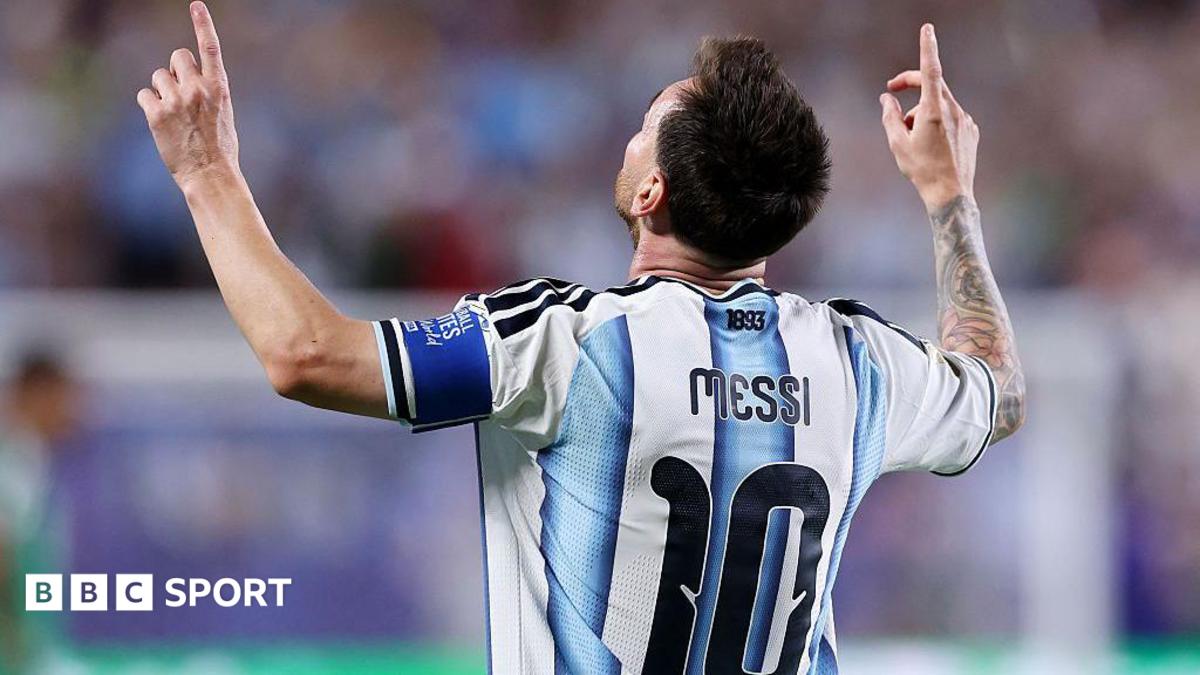
Lionel Messi became the all-time leading goalscorer in World Cup history as he scored twice to guide world champions Argentina to a 2-0 victory against Austria at the Dallas Stadium on Monday. The 38-year-old forward, who turns 39 on Wednesday, rebounded from an early penalty miss to strike once in each half, firing the defending champions firmly to the top of the Group J table. The result leaves Austria facing a crucial final group fixture against Algeria, while Argentina have secured their progression to the knockout stages with a perfect record of two wins from two matches.
The Full Story
The match began with high drama in the ninth minute when Argentina were awarded a spot-kick after Lautaro Martínez was fouled inside the area, a decision confirmed after a lengthy VAR check. Chants of Messi's name echoed around the arena as the captain stepped up, but he uncharacteristically spurned the golden opportunity, pulling his penalty wide of the target. Austria, organised efficiently under manager Ralf Rangnick, sought to restrict Argentina's space and look for quick turnovers in midfield, but Lionel Scaloni's side managed the tempo with composure.
Redemption arrived for the captain in the 38th minute to spark pandemonium in the stands. Starting the attack himself, Messi played the ball out wide before making an unmarked run into the penalty box. Facundo Medina delivered a precise, low cross from the left flank, which Thiago Almada cleverly dummied, leaving Messi to calmly stroke a deft, first-time left-footed curler into the bottom corner past Austria goalkeeper Alexander Schlager. It marked the sixth consecutive World Cup match in which Messi has scored, a milestone previously reached only by France's Just Fontaine and Brazil's Jairzinho in 1958.

Austria struggled to mount an effective response in the second half, registering just one shot on target across the entire 90 minutes. Rangnick introduced 37-year-old veteran Marko Arnautovic at half-time and pushed Konrad Laimer out to left-back to spark life into an attack missing the injured Christoph Baumgartner. Austria's absolute best chance to equalise came in the 93rd minute when Marcel Sabitzer floated a free-kick toward the back post for Kevin Danso, who headed it across goal, only for Patrick Wimmer's close-range effort to flash just wide of the far post.
Argentina quickly killed off any hopes of an Austrian comeback five minutes into added time. A rapid breakaway saw Messi thread a ball to Julian Alvarez; though Alvarez's initial effort was saved, Messi followed up the rebound. His first shot was blocked on the line, but he reacted instantly to bludgeon his second attempt into the roof of the net, sealing the 2-0 win and moving to 18 career World Cup goals.
Central Figures
Lionel Messi was the undisputed protagonist, executing a historic performance to surpass Miroslav Klose's men's record of 16 goals, whilst also overtaking Brazil's Marta (17 goals) across all senior World Cup football. Left-back Facundo Medina provided the crucial assist for the historic opening goal, while Liverpool midfielder Alexis Mac Allister anchored the central territory, breaking up Austrian counter-attacks and committing two fouls during a gritty display. For Austria, manager Ralf Rangnick orchestrated a disciplined mid-block that limited Argentina to five shots on target, while midfielder Marcel Sabitzer remained their primary creative outlet in the closing moments.
The Data
The final whistle statistics told the story of Argentina's controlled dominance in Arlington. The world champions enjoyed 54% of the ball possession, completing 12 total shots compared to Austria's six. Critically, Scaloni's strict defensive unit allowed only 1 shot on target from the Austrians. This victory extends Argentina's exceptional run to eight consecutive international wins, keeping a clean sheet in nine of their last ten matches. Furthermore, Messi's double means he has scored all 5 of Argentina's goals at this tournament so far, following his opening-day hat-trick against Algeria in what was his 200th international appearance and a Fifa-record 28th World Cup match.
What This Means
Beyond the immediate celebration of an immortal sporting legacy, this match underlines why Messi remains the king of world football, even whilst playing his club football in Major League Soccer (MLS). By moving two goals clear of Germany's Klose, Messi has raised the bar for a modern generation of superstars like Kylian Mbappe, Erling Haaland, and Vinicius Jr who are chasing his crown. This narrative provides an intriguing spectacle for football fans in GB, who can watch the tournament live on BBC iPlayer and BBC One. It also demonstrates how older athletes are utilizing modern sports science to sustain tournament-defining performances well into their late 30s.
What to Expect
Argentina's focus now shifts to their final Group J match on June 28, where they will take on tournament debutants Jordan in Dallas to wrap up the group stage. With qualification to the knockout rounds safely secured, Lionel Scaloni may opt to rotate his squad, potentially handing starts to Julian Alvarez or balancing his midfield options. Meanwhile, Austria remain in second place with three points and face a high-stakes showdown against Algeria in Kansas City on the same day, where a draw or victory will guarantee their place in the round of 16.
Frequently Asked Questions
How many World Cup goals does Lionel Messi have now?
Lionel Messi has scored 18 career goals at the World Cup finals, putting him clear as the all-time leading goalscorer in tournament history, ahead of Germany's Miroslav Klose (16 men's goals) and Brazil's Marta (17 women's goals).
What was the score in the Argentina vs Austria match?
Argentina defeated Austria 2-0 at the Dallas Stadium in Arlington, USA, thanks to two goals from captain Lionel Messi in the 38th and 95th minutes.
Which TV channel is showing Argentina's World Cup games in the UK?
Argentina's World Cup fixtures are being broadcast live on BBC One, with online streaming available via the BBC iPlayer app and website for viewers across the UK.
Can Austria still qualify for the World Cup knockout stages?
Yes, Austria currently sit second in Group J with three points from two games. They remain well poised to qualify for the round of 16 if they secure a positive result against Algeria in their final group match.