
Scotstoun Stadium in Glasgow opened its Commonwealth Games athletics programme on Monday, 27 July, after being rapidly converted from the home of Glasgow Warriors into the main track-and-field venue for Glasgow 2026. A new competition track, temporary stands, upgraded floodlights and improved toilets have reshaped the council-owned ground. The result is a smaller, more intimate venue that is already influencing the atmosphere around the opening sessions.

What Is Happening
Scotstoun is staging track, field and para athletics from 27 July to 1 August, with two sessions a day across six days. The programme brings more than 1,000 athletes into twelve sessions, while the venue is expected to welcome thousands of spectators daily.
The transformation was required because Glasgow stepped in at short notice after the Australian state of Victoria withdrew as host. Organisers are running a reduced Games with 10 sports rather than the 17 contested in Glasgow in 2014, using four main venues across an eight-mile corridor. At Scotstoun, temporary seating has increased capacity by roughly 2,500 seats.
The venue transformation includes a new blue DYNAMIK MONDO track, two temporary stands, fresh floodlighting and upgraded toilet facilities. Those changes have turned a rugby ground into the focal point for 59 athletics gold medals.
The Background
Glasgow’s previous Commonwealth Games used a temporary drop-in track at the 52,000-capacity Hampden Park. The 2026 edition has a lighter footprint, so organisers chose an existing community sports venue and adapted it quickly rather than recreating the scale of 2014.
That decision changes the character of the event. Scotstoun is much smaller, but the closeness of the stands gives competitors direct contact with the crowd. Australian sprinter Mia Gross told the Daily Record that the intimate set-up should improve the experience for athletes and fans.
The stadium is really close and intimate which will be good for that personal experience - especially on the start line.
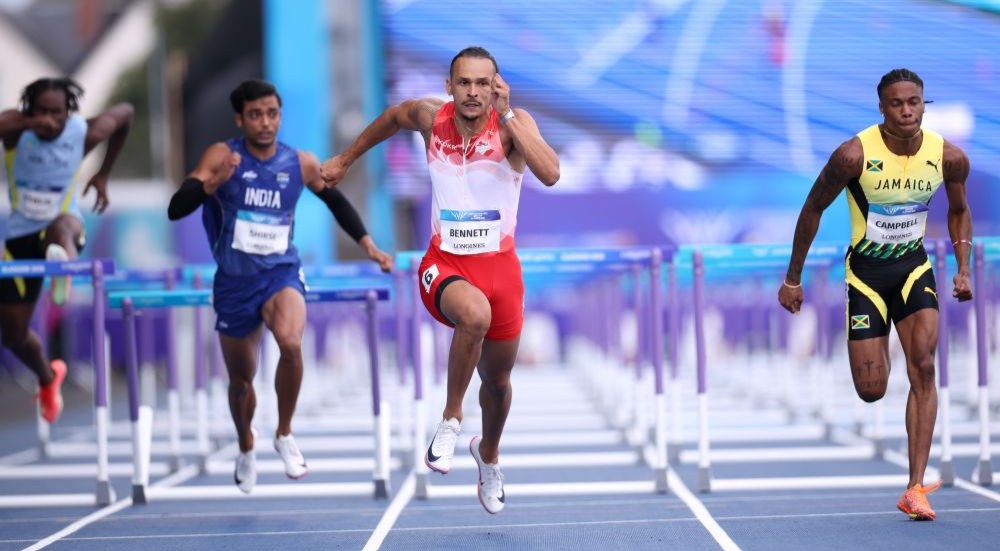
- DYNAMIK MONDO track
- The new surface uses elliptical-profile air cells designed to return energy to athletes more efficiently.
- Rankings bye
- The top eight ranked athletes in selected events advance directly to a later round without racing in the opening heats.
The Latest Development
The first morning showed that the venue could still produce fast performances despite cool, damp and blustery weather. England’s Sam Bennett won his 110m hurdles heat in 13.20 seconds, a wind-assisted mark that would otherwise have improved his lifetime best by 0.21 seconds. He and team-mate Tade Ojora both progressed.
In the men’s 100m, Ghana’s Benjamin Azamati clocked 10.00, Wales’s Jeremiah Azu won his heat in 10.10, and Lesotho’s Koneshe Mjoela set a national record of 10.07. England’s late call-up Elliot Jones matched 10.07 with a strong following wind, while Imani Lansiquot led the women’s 100m heats at 11.04.
Para athletics also opened strongly. Sophie Hahn won her T37/38 100m heat in 12.75, with Wales’s Olivia Breen and England’s Maddie Down also advancing. Jamaica’s Tajay Gayle led men’s long jump qualifying with 8.10m, while Camryn Rogers topped women’s hammer qualifying at 68.81m.

The opening session was described by Athletics Weekly as a promising start after several high-profile withdrawals had dominated the build-up. The crowd grew to around half of the reported capacity during the morning, with home-nation athletes receiving especially warm support.
What It Means
For spectators, the main difference is proximity. Fans are closer to the start line, jumping areas and throwing sectors, creating an atmosphere more like a compact arena than a vast stadium. That may help qualifying rounds feel lively even before the biggest finals begin.
For Glasgow, the new track is not intended to disappear after the closing ceremony. Organisers say it will be gifted to the city, leaving a high-performance surface for future athletes. The upgraded floodlights and toilets also remain practical improvements beyond the Games.
The event tests a different model for major sport: fewer venues, lower capacity and heavy use of existing infrastructure. Its success will be judged by the quality of competition, the spectator experience and whether the promised local legacy lasts.
What Remains Unclear
Published capacity figures are not fully consistent. The Scotsman reported that temporary stands would allow up to 12,000 spectators each day, while Athletics Weekly described the revamped capacity as almost 11,000. The supplied reports do not explain whether one figure refers to daily attendance across two sessions and the other to seats available at one time.
The reports confirm major venue upgrades but do not provide a full cost breakdown. Nor do they state how often the new track will be available to local clubs after the Games. Those details will shape how the legacy is judged once international competition ends.
Frequently Asked Questions
What is Scotstoun Stadium being used for in Glasgow 2026?
It is the main venue for track, field and para athletics from 27 July to 1 August.
How many athletics sessions are being held at Scotstoun?
There are twelve sessions across six days, with two sessions scheduled each day.
What upgrades were made to Scotstoun Stadium?
The venue received a new DYNAMIK MONDO track, temporary stands, upgraded floodlights and improved toilet facilities.
How many spectators can Scotstoun Stadium hold?
Reports cite almost 11,000 capacity, while another says up to 12,000 spectators can attend each day.
Who impressed in the opening athletics session?
Sam Bennett ran 13.20 in the 110m hurdles, Benjamin Azamati clocked 10.00 in the 100m, and Imani Lansiquot led the women’s qualifiers in 11.04.
Will the new track remain after the Commonwealth Games?
Yes. Organisers say the track will be gifted to Glasgow for future elite and grassroots athletics.