What's behind the tense Russian aircraft standoff near Britain's flagship carrier?
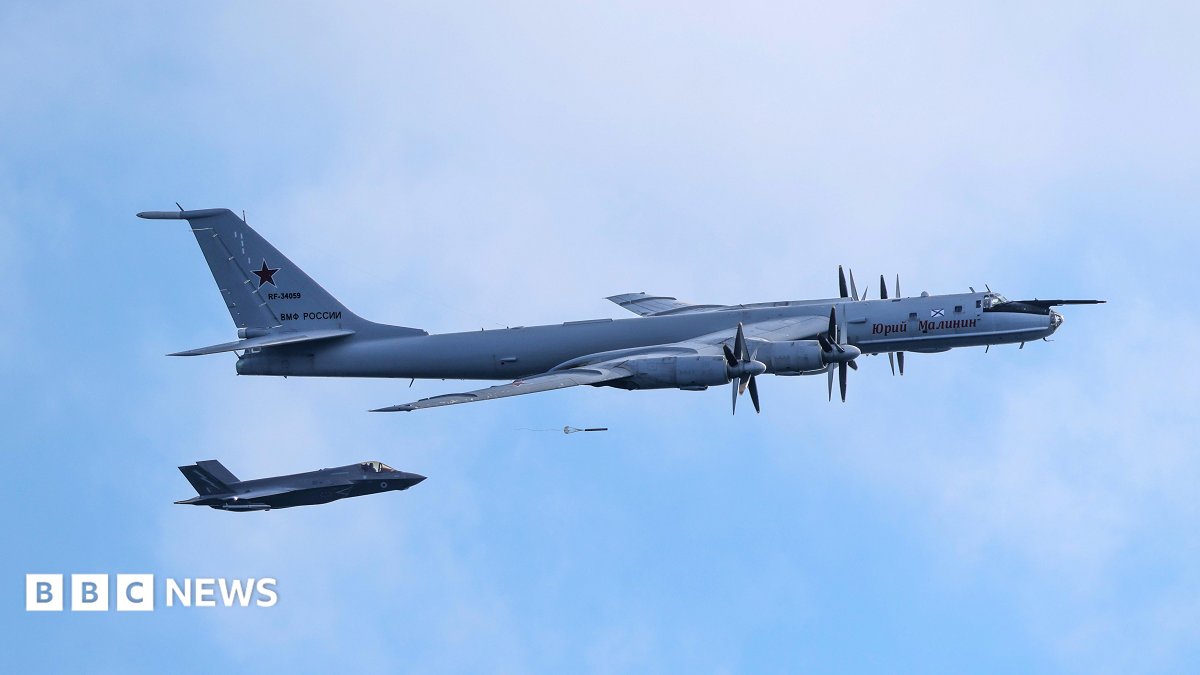
A Russian military patrol aircraft has staged a series of 'unsafe and unprofessional' maneuvers after repeatedly approaching a British carrier strike group at low altitude in the Arctic Circle. The Tu-142 'Bear-F' maritime reconnaissance plane flew dangerously close to the Royal Navy flagship HMS Prince of Wales before dropping a large cluster of tracking devices directly into the water. In a direct and rapid escalation of events, two British F-35 stealth fighter jets scrambled from the carrier deck to intercept and escort the hostile aircraft away from the fleet.
What We Know So Far
The high-stakes encounter unfolded on Thursday, July 2, 2026, during Operation Firecrest in the Norwegian Sea, a strategically sensitive region frequently referred to as the High North. The Ministry of Defence confirmed that the Russian Bear-F aircraft refused to respond to multiple attempts by British forces to establish contact on international radio frequencies. Instead, the turboprop plane breached standard safety-of-flight boundaries, closing in on the 65,000-ton aircraft carrier while flying at a precariously low altitude.
During its provocative runs, the Russian aircraft is believed to have dropped 10 sonobuoys—specialized acoustic devices that float on the water and use sonar to map underwater vessels—directly in the carrier's vicinity. Defence sources indicated that the intent behind dropping such a large number of devices so close to the flagship was likely deliberate harassment rather than an accurate tactical attempt to track submarines, especially given that no Royal Navy attack submarine was operating with the strike group at the time. To defuse the situation, two F-35B stealth jets from 809 Naval Air Squadron launched directly from the deck of HMS Prince of Wales, closely shadowing the Soviet-era aircraft until it finally broke away from the airspace.

This maritime standoff is part of a broader, 30% increase in Russian naval and intelligence-gathering assets operating near UK waters over the past two years. Just weeks prior to this encounter, Royal Marines launched a high-risk boarding operation on a Russian shadow fleet oil tanker in the English Channel. Chief of the Defence Staff Sir Richard Knighton previously warned that Moscow has been actively 'probing, challenging, and testing' Western defenses, raising the stakes to levels not witnessed since the height of the Cold War.
Voices & Opinions
The aggressive aerial maneuver drew immediate condemnation from top defense officials and political figures across the UK, coming right before a critical NATO summit scheduled to begin in Ankara, Turkey.
We should be clear-eyed about the fact that the threat from Russia exists in every domain, under the water, on the water, on the land, in the sky, in space and in cyberspace as well.
The incident has also intensified an ongoing political battle in Westminster over military expenditure. Outgoing Prime Minister Sir Keir Starmer recently unveiled a 10-year Defence Investment Plan committing £298 billion over the next four years, including a £15 billion funding boost. However, this fell drastically short of the £28 billion requested by the Ministry of Defence, triggering high-profile resignations from figures like John Healey and Al Carns, which ultimately accelerated the prime minister's political downfall.
Shadow Defence Secretary James Cartlidge lashed out at the current administration's strategy, stating that the encounter 'underlines once again that the threat from Russia is real.' Cartlidge argued that the government must establish firm funding for what he labeled a 'shambolic' investment strategy, adding that ministers must prioritize defense spending over a expanding welfare state to properly equip frontline forces.
Local Impact
For citizens in Britain, this Arctic confrontation directly highlights the growing reality of geopolitical instability and its strain on domestic resources. The deployment off Iceland involves more than 1,500 British military personnel operating aboard the carrier strike group, which includes the Type 45 destroyer HMS Duncan and the replenishment tanker RFA Tidespring. This mission represents the first time in NATO history that air policing operations have been conducted directly from a European aircraft carrier deck.
The economic impact of countering these threats is already hitting home. To secure the £15 billion military increase up to 2030—the exact year Western intelligence warns Russia could be ready to deploy military force against a NATO member—the government has been forced to slash budgets across other domestic public service departments and cancel several planned infrastructure projects. British taxpayers are effectively funding a massive rearmament effort, which includes a £240 million investment in jet-powered combat drones to build a new Hybrid Carrier Air Wing.
Coming Up
Tensions are expected to mount further as world leaders gather for the NATO summit in Ankara. The confrontation puts the UK on a potential collision course with US President Donald Trump, who is reportedly planning to reward or punish alliance members based on their defense contributions. Meanwhile, the Royal Navy is preparing its second carrier, HMS Queen Elizabeth, to serve as a floating headquarters for NATO's Allied Reaction Force later this year, while British elite special forces maintain their newly assumed command of the alliance's rapid deployment units.
At a Glance
- A Russian Tu-142 'Bear-F' patrol aircraft intercepted by British F-35 stealth jets after performing unsafe maneuvers over the Norwegian Sea.
- The Russian plane dropped 10 sonobuoys dangerously close to HMS Prince of Wales and ignored international radio frequency warnings.
- The encounter occurred during Operation Firecrest, marking the first time NATO has run air policing from a European carrier.
- The incident coincides with a reported 30% surge in hostile Russian maritime and intelligence operations near British waters.
- Political pressure mounts in London over a contentious £15 billion defense budget increase funded by domestic infrastructure cuts.
- Sonobuoy
- A deployable acoustic device dropped from aircraft onto the water's surface, using sonar technology to detect and track submarines.
- Carrier Strike Group
- An operational naval formation consisting of an aircraft carrier accompanied by destroyers, helicopters, and support vessels for sustained deployment.
Frequently Asked Questions
What happened between the UK and Russian aircraft in the Norwegian Sea?
A Russian 'Bear-F' patrol plane made low-altitude, unsafe approaches toward the British aircraft carrier HMS Prince of Wales and dropped tracking sensors into the water before being escorted away by two RAF F-35 fighter jets.
What are sonobuoys and why did the Russian plane drop them?
Sonobuoys are underwater microphones used to find and track submarines. The Russian aircraft dropped 10 of them close to the British carrier flagship, a move defense sources described as deliberate harassment.
Where did the military interception take place?
The interception occurred in the Norwegian Sea within the Arctic Circle, where the UK's Carrier Strike Group is currently deployed off Iceland under NATO command.
How is the UK government responding to the threat from Russia?
The government has committed to a £15 billion increase in military spending over the next four years as part of a wider £298 billion defense program, partially funded by cutting infrastructure projects in other departments.
Why is this specific deployment historic for NATO?
This operation marks the very first time that NATO has conducted official air policing and air defense operations utilizing F-35 fighter jets launched from a European aircraft carrier.

Resources
Sources and references cited in this article.