The SAVE America Act Legislative Push: A Comprehensive Trend Summary
Congressional Republicans are advancing the Safeguard American Voter Eligibility (SAVE) Act in March 2026 to mandate documentary proof of citizenship for federal election registration. Backed by Donald Trump, the legislation faces intense opposition from Senate Democrats as it moves toward a critical floor vote. The bill aims to reshape national voting standards ahead of the 2026 midterm elections, sparking a fierce debate over election security and voter access.

TL;DR
- The SAVE Act requires proof of citizenship, such as a passport or birth certificate, to register for federal elections.
- Republicans are pushing for a Senate floor vote to force a record of positions before the 2026 elections.
- Senate Democrats have unified to oppose the bill, arguing it creates unnecessary barriers for eligible voters.
- The outcome could significantly impact voter registration processes and Senate political dynamics.
What Happened
In mid-March 2026, the Republican leadership in the Senate fast-tracked the SAVE America Act for a floor vote following immense pressure from Donald Trump. The legislation seeks to amend the National Voter Registration Act of 1993 to require that individuals provide physical documentation of U.S. citizenship when registering to vote in federal contests. Currently, most states require a sworn statement of citizenship under penalty of perjury, but the new bill would mandate documents like a U.S. passport, a certified birth certificate, or naturalization papers.
Democratic leaders have mobilized to defeat the measure, characterized by a strategy to keep their caucus unified against what they describe as a partisan effort to disenfranchise legitimate voters. The White House has also signaled its opposition, citing that it is already illegal for non-citizens to vote in federal elections. Republicans, however, argue that the current system lacks sufficient safeguards to prevent potential non-citizen voting, despite little evidence of widespread occurrences.
Key Developments
The legislative push has moved beyond mere rhetoric into active procedural maneuvering. Senate Republicans have filed for cloture to end debate and move to a final vote, a move intended to put vulnerable Democrats on the record regarding election integrity. Key components of the bill include a requirement for states to remove non-citizens from existing voter rolls and the establishment of a private right of action, allowing citizens to sue election officials who fail to enforce these new documentation requirements.
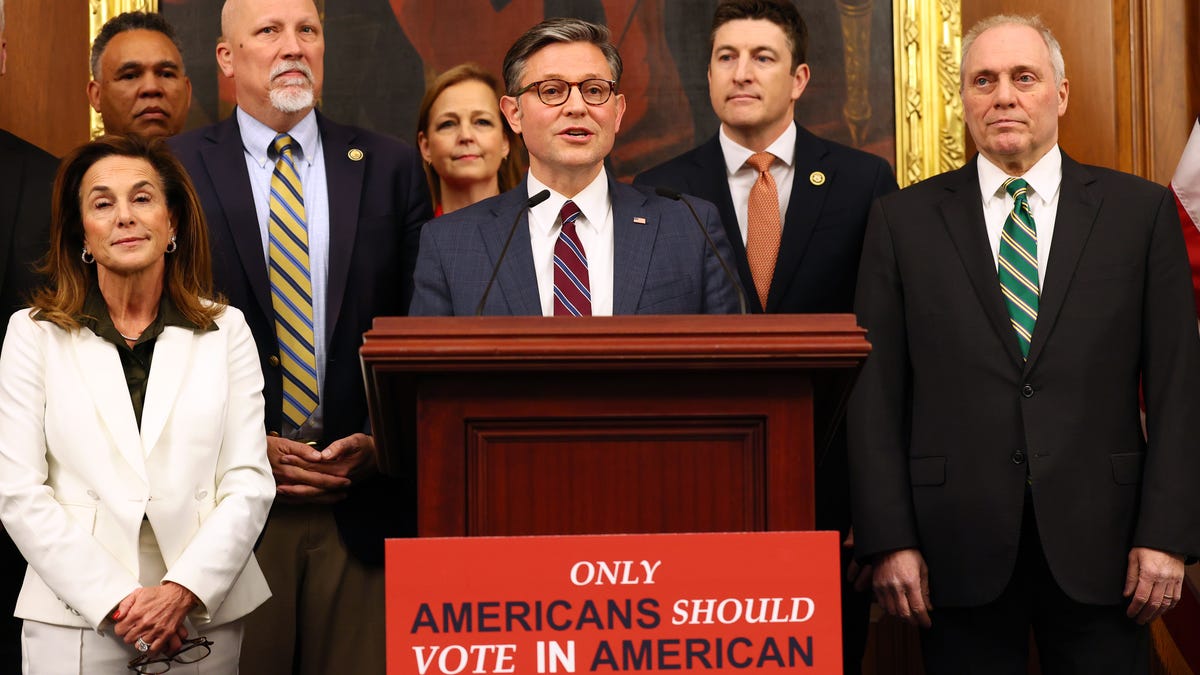
This is about making sure that only Americans decide American elections. It is a common-sense measure that the vast majority of the public supports.
Critics of the bill highlight that millions of Americans do not have easy access to the required documents, particularly low-income individuals, students, and the elderly. Data suggests that obtaining a replacement birth certificate or a passport can cost between $15 and $165, which opponents argue acts as a modern-day poll tax.
Why This Matters
The SAVE America Act is a central pillar of the 2026 Republican platform, designed to frame the upcoming midterm elections around the issue of border security and election integrity. Factually, the bill's passage would force states to overhaul their registration systems in a matter of months, potentially leading to significant administrative backlogs. For the Senate, the vote serves as a political litmus test that could determine the fate of moderate members in battleground states. If enacted, the law would impact all 50 states, overriding existing state-level registration procedures for federal offices.

What Happens Next
The Senate is scheduled to hold a procedural vote on the SAVE Act by Thursday, March 19, 2026. If the bill fails to reach the 60-vote threshold required to overcome a filibuster, Republicans have indicated they will use the failed vote as a primary campaign theme through the summer. Legal experts anticipate that if any portion of the bill were to pass, it would face immediate challenges in federal court regarding its constitutionality under the 14th and 15th Amendments.
Key Terms & Concepts
- Documentary Proof of Citizenship (DPOC)
- Physical legal documents, such as a passport or birth certificate, required to verify an individual's legal status as a citizen.
- Cloture
- A Senate procedure used to end a filibuster and bring a bill to a final vote, requiring a three-fifths majority (usually 60 votes).
- National Voter Registration Act (NVRA)
- A 1993 federal law, often called the 'Motor Voter' law, that expanded voting access by requiring states to offer voter registration at DMV offices.
Frequently Asked Questions
What is the SAVE America Act?
The SAVE Act is a proposed federal law that requires individuals to provide physical proof of U.S. citizenship to register for federal elections. It seeks to update the 1993 National Voter Registration Act with stricter ID requirements.
Is it currently legal for non-citizens to vote?
No, it is already a federal crime for non-citizens to vote in federal elections under the Illegal Immigration Reform and Immigrant Responsibility Act of 1996. Violators can face fines, imprisonment, and deportation.
Why are Democrats opposing the SAVE Act?
Democrats argue the bill is unnecessary because non-citizen voting is extremely rare and that the requirement for physical documents would prevent millions of eligible Americans from registering. They claim it targets marginalized groups who may lack easy access to passports or birth certificates.
When is the Senate vote on the SAVE Act?
The Senate is expected to conduct a floor vote on the legislation during the week of March 16, 2026, following recent procedural moves by Republican leadership.
Will the SAVE Act affect state and local elections?
The bill specifically targets registration for federal elections (President, Senate, and House). However, because most states use a unified registration system, the administrative changes would likely impact all levels of voting in the 50 states.
Resources
Sources and references cited in this article.