
Archaeologists Discover Ancient Evidence of Doggerland Lost World: A North Sea Trend Summary
Archaeologists and divers have discovered new evidence of Doggerland, an ancient landmass that once connected Great Britain to mainland Europe, deep beneath the North Sea in March 2026. The discovery of ancient sediment cores and DNA samples reveals that this submerged territory was once a lush landscape of forests and wildlife before being swallowed by rising sea levels. This find provides a critical link in understanding how early humans migrated across Europe during and after the last Ice Age.

TL;DR
- Archaeologists found physical evidence of a 'lost world' called Doggerland beneath the North Sea.
- Ancient DNA samples from sediment cores confirm the presence of vast Ice Age forests.
- The discovery proves Great Britain was physically connected to Europe until approximately 8,000 years ago.
- These findings upend previous timelines regarding human migration and environmental change in prehistoric Europe.
What Happened
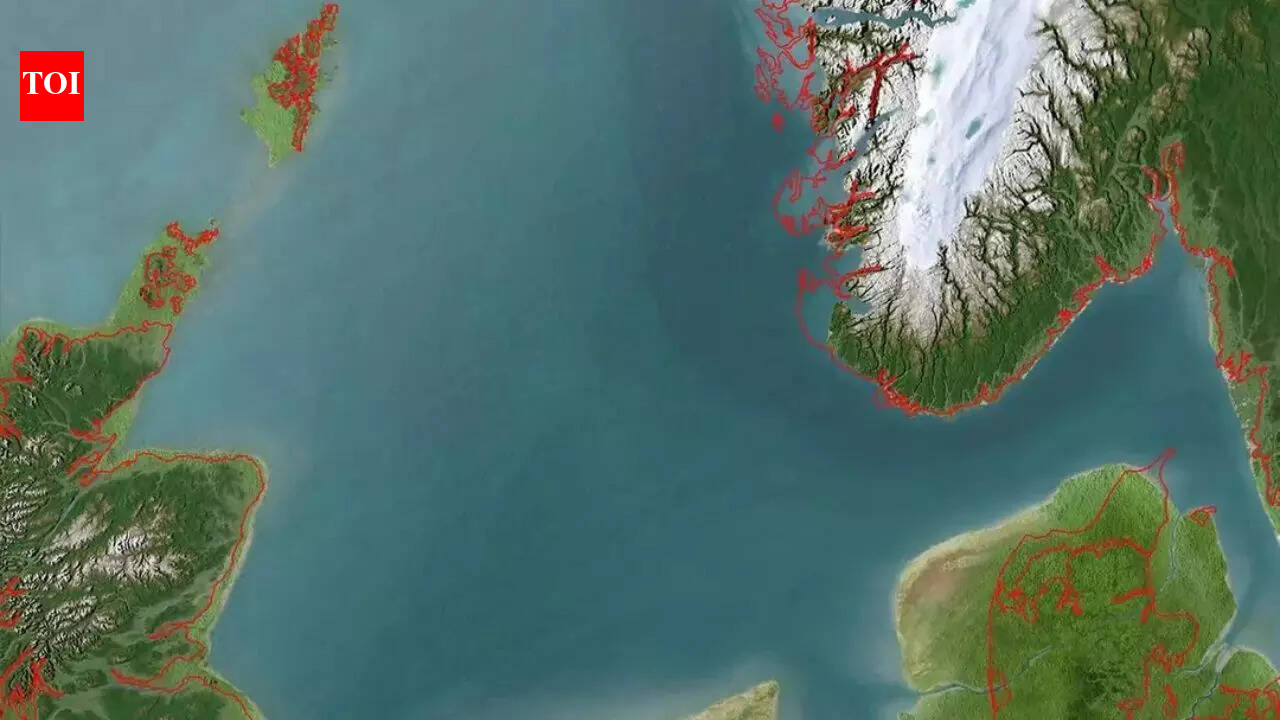
A team of international researchers conducted a series of deep-sea drilling operations in the North Sea to extract sediment cores from the seabed. These cores contained preserved organic material, including ancient DNA, which confirms that the area now covered by water was once a terrestrial environment. The exploration focused on the region known as Doggerland, which was a vast plain extending from the eastern coast of Britain to the present-day Netherlands, Germany, and Denmark.
Divers and underwater archaeologists identified physical markers of ancient human habitation and environmental transition. The data suggests that as the Ice Age ended, melting glaciers caused sea levels to rise significantly, eventually flooding the land bridge. By approximately 6,000 BC to 5,000 BC, the final land connections were severed, turning Britain into an island. This research marks the first time that such specific genetic markers of ancient flora have been retrieved from these depths.

Key Developments
The recent expedition utilized advanced genomic sequencing to analyze 'environmental DNA' (eDNA) found within the mud of the North Sea floor. These samples revealed the presence of oak, birch, and pine forests, as well as evidence of large mammals like mammoths and reindeer that once roamed the area. The extraction of these cores occurred at depths of over 30 meters below the current sea level, providing a vertical timeline of the region’s submersion.
The discovery of these ancient forests through DNA samples upends our previous understanding of Doggerland’s timeline and its capacity to support complex ecosystems.
Furthermore, technical teams have mapped the 'palaeo-river' systems that once flowed through Doggerland. These river valleys are believed to have been the primary locations for Mesolithic human settlements. The findings confirm that the transition from a terrestrial landscape to a marine one was not a single event, but a series of gradual floods punctuated by catastrophic events like the Storegga Slide tsunami.
Why This Matters
This discovery is factually significant because it provides a precise biological record of climate change and its direct impact on geography. Understanding the disappearance of Doggerland offers a historical parallel to modern concerns regarding rising sea levels and coastal displacement. It also fills a massive gap in the archaeological record of Europe, explaining how Mesolithic hunter-gatherers moved across the continent before the formation of the English Channel.
What Happens Next
Researchers plan to launch a more extensive 3D mapping project of the North Sea floor to identify potential sites of preserved human settlements. Future expeditions are scheduled for late 2026 to collect more targeted core samples from the 'palaeo-valleys.' These efforts aim to find actual tools or dwellings preserved in the anaerobic environment of the seabed mud.
Key Terms & Concepts
- Doggerland
- A prehistoric landmass that connected Great Britain to continental Europe during the last glacial period.
- Environmental DNA (eDNA)
- Genetic material collected from environmental samples such as soil or water, rather than directly from an individual organism.
- Mesolithic
- The Middle Stone Age, a period of human development between the Paleolithic and Neolithic eras, characterized by hunter-gatherer cultures.
- Sediment Cores
- Cylindrical samples of soil and rock extracted from beneath the earth or sea floor to study historical layers.
Frequently Asked Questions
What is Doggerland?
Doggerland was a vast area of land that connected the eastern coast of England to mainland Europe. It existed until rising sea levels submerged it roughly 8,000 years ago, creating the North Sea.
How did scientists find this lost world?
Archaeologists used deep-sea drilling to extract sediment cores from the North Sea floor. They analyzed these cores for ancient DNA and physical evidence of forests and animal life that existed before the area was flooded.
When did Great Britain become an island?
Britain was officially separated from mainland Europe between 6,000 BC and 5,000 BC. The final separation was likely accelerated by a massive underwater landslide known as the Storegga Slide.
What animals lived in Doggerland?
DNA evidence and fossil remains show that Doggerland was home to mammoths, woolly rhinoceroses, reindeer, and red deer. The land was covered in thick forests of oak and birch during its peak habitability.
Why is this discovery important now?
This discovery provides a factual record of how prehistoric climate change and rising sea levels permanently altered human geography. It helps historians understand ancient migration patterns across Europe.