14.01% was the decline reported for Nvidia shares in a November 21 investment article, while Broadcom fell 12.19% in the same market snapshot. The weakness comes as Nvidia faces a leadership transition following the loss of co-founder and CEO Jensen Huang, according to The Motley Fool. Meanwhile, competing chip businesses are attracting attention for their growth forecasts, custom processors and cash generation. For investors, the central question is whether falling stock prices reflect deteriorating businesses or changing expectations about the artificial intelligence industry.
What Changed
Nvidia's recent stock weakness has coincided with uncertainty about its leadership. The Motley Fool's November 21 report describes the company's board searching for a successor to Jensen Huang, creating an additional question for shareholders beyond the competitive pressures already facing the business.
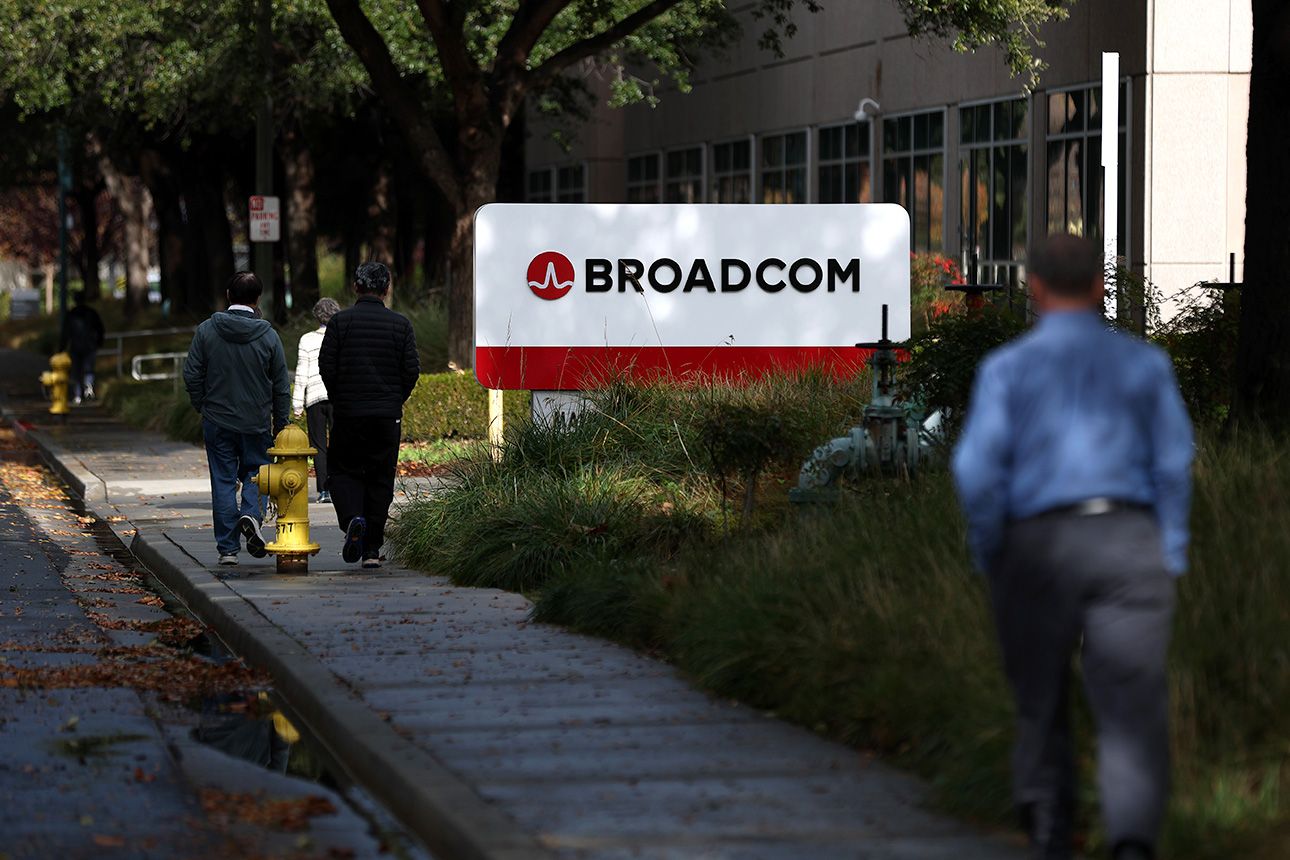
Broadcom, a competing semiconductor company, has emerged as one alternative receiving attention. Its shares closed at $304.41 on November 20, 2026, down $42.24, or 12.19%, according to the market figures included in that report.
The distinction between the two companies involves their chip strategies. Nvidia specializes in graphics processing units, or GPUs, capable of handling many calculations simultaneously. Broadcom works with customers to develop processors designed for specific computing workloads.
Alphabet has collaborated with Broadcom on Tensor Processing Units, or TPUs. The Motley Fool reports that companies including Anthropic have built significant computing infrastructure around these processors, partly because specialized hardware can offer cost advantages for certain workloads.
Who Is Affected
Nvidia shareholders face questions about executive succession, competitive positioning and the valuation of AI-related businesses. Broadcom investors face a different challenge: deciding how much of the company's ambitious growth outlook is already reflected in its share price.
Broadcom management expects AI semiconductor revenue to reach $115 billion in 2027 and $230 billion in 2028, according to the reported company guidance. Those figures are projections, not completed sales, and depend on Broadcom delivering the anticipated expansion.
Investors in Taiwan Semiconductor Manufacturing Company, known by its ticker TSM, are also watching the sector's selloff. A Seeking Alpha discussion highlighted TSM's reported 73% share of the foundry market and its substantial operating cash flow.
Businesses purchasing AI computing infrastructure are affected through the availability and economics of different chip designs. Broadcom's custom processors offer an alternative for customers whose workloads can benefit from specialized hardware.
What It Means for Your Money
For an investor holding Nvidia, the reported decline illustrates how company-specific uncertainty can affect a stock even when the broader market opportunity remains substantial. Leadership questions and competition can influence expectations independently of current product demand.
Broadcom's reported valuation of approximately 17 times next year's earnings offers another way to evaluate the sector. That multiple compares a company's share price with anticipated annual earnings, but it relies on forecasts that can change.
Consider two hypothetical investors with equal dollar investments in semiconductor stocks. One holds a company whose price falls because of leadership uncertainty; the other owns a company whose price declines despite strong operating results. Both experience a reduction in portfolio value, but the business developments behind those losses may be different.
TSM offers a useful example. Seeking Alpha's discussion cited $98 billion in operating cash flow, an A-plus profitability grade and a B-minus momentum grade. Those measurements describe a company with strong reported operating performance despite weaker recent stock momentum.
The discussion also cited a trailing price-to-earnings-growth ratio of 0.36 and a forward ratio of 0.54. These measures compare valuation with earnings growth and can help investors assess whether market prices align with business expectations.
The Wider Economic Context
The semiconductor selloff highlights a distinction between demand for AI technology and demand for shares in companies supplying that technology. A falling stock price does not, by itself, establish that customers have reduced purchases.
That difference was central to the discussion between Seeking Alpha host Nicole Benjamin and quantitative strategist Kevin Sanford. Sanford emphasized revenue growth, earnings growth, market share and changes in analyst expectations as indicators of underlying business performance.
TSM's revenue mix also provides context. High-performance computing accounts for a reported 68% of revenue, while smartphones and automotive applications contribute to its business. This mix connects its financial results to several end markets rather than a single application.
Broadcom's outlook adds another dimension: customers are seeking alternatives to general-purpose GPUs for some AI workloads. If specialized chips deliver lower costs for particular tasks, spending could shift among suppliers without indicating a broad retreat from AI infrastructure.
These developments are occurring alongside wider pressure on technology shares. The competing signals are significant: weaker stock momentum on one side, and substantial revenue expectations and operating cash generation on the other.
Important Dates and Next Steps
- November 20, 2026: Broadcom closed at $304.41, according to the market snapshot published by The Motley Fool.
- November 21, 2026: The Motley Fool published its assessment of Broadcom as an alternative to Nvidia during the leadership transition.
- 2027: Broadcom projects $115 billion in AI semiconductor revenue.
- 2028: Broadcom projects $230 billion in AI semiconductor revenue.
Developments to monitor include Nvidia's leadership appointment, Broadcom's progress against its revenue forecasts, and TSM's earnings and analyst estimate revisions. Each offers a different measure of whether expectations for AI semiconductor businesses are being fulfilled.
Frequently Asked Questions
Why is Nvidia stock under pressure?
The Motley Fool reports that Nvidia has experienced a substantial share-price decline amid uncertainty following the loss of co-founder and CEO Jensen Huang. Investors are also evaluating competition from companies developing specialized AI processors.
What was Broadcom's stock price on November 20, 2026?
Broadcom closed at $304.41, down $42.24 or 12.19%, according to the market figures published by The Motley Fool. That figure represents the reported November 20 closing price, not a live quote.
How does Broadcom compete with Nvidia?
Broadcom collaborates with customers on custom AI chips designed for particular computing tasks. Its partnership with Alphabet on Tensor Processing Units provides an example of hardware that can offer cost advantages for certain workloads.
What is Broadcom forecasting for AI chip revenue?
Broadcom management projects AI semiconductor revenue of $115 billion in 2027 and $230 billion in 2028, according to The Motley Fool. These are management forecasts rather than realized revenue figures.
Why are investors watching TSM stock?
Seeking Alpha highlighted TSM's reported 73% foundry market share and $98 billion in operating cash flow. Its discussion contrasted strong profitability with weaker recent share-price momentum.