
Millions of Americans will gain an extra hour of sleep when daylight saving time ends at 2 a.m. local time on Sunday, November 1, 2026, returning most of the country to standard time. The change follows Halloween night, giving partygoers an additional hour and moving daylight toward earlier mornings. But the clock adjustment also means earlier sunsets, disrupted sleep schedules for some families, and renewed attention on a congressional effort to make daylight saving time permanent.
Why This Is Trending
The 2026 clock change has attracted attention for two reasons: its unusual timing alongside Halloween and the ongoing political debate over whether Americans should continue changing their clocks twice a year.
Halloween falls on Saturday, October 31, immediately before daylight saving time officially ends. That means people attending costume parties and other celebrations get an extra hour overnight. According to AL.com, the combination of Halloween falling on a Saturday and the end of daylight saving time occurring immediately afterward will not happen again until 2037.
However, the extra hour comes with a trade-off. Once standard time returns, daylight shifts toward the morning, while evening darkness arrives earlier. For people who finish work in the late afternoon, that can mean less daylight for outdoor activities, commuting and family time.
The timing has also revived discussion about the Sunshine Protection Act, legislation that could eliminate the twice-yearly clock adjustment by establishing permanent daylight saving time.
What Happened
At 2 a.m. on Sunday, November 1, clocks across most of the United States move back one hour to 1 a.m. local time. This is commonly called falling back. Rather than losing an hour, Americans effectively gain an additional hour during the overnight transition.
The adjustment affects most states, although Hawaii and most of Arizona do not observe daylight saving time. The Navajo Nation, which extends into Arizona, continues to observe the change to remain aligned with communities in neighboring New Mexico and Utah.
For many people, the most noticeable difference will come on Sunday evening. FOX 8 reported that Cleveland's sunset moves from 6:22 p.m. on Halloween to 5:21 p.m. the following day. That one-hour shift illustrates how quickly the change can affect everyday schedules.
Meanwhile, firefighters in Asheville, North Carolina, are using the occasion to encourage residents to check their smoke alarms and replace batteries. The National Fire Protection Association recommends changing smoke alarm batteries when clocks change, making the annual adjustment a useful reminder to review household safety equipment.
What We Know So Far
Here are the confirmed details for the 2026 transition:
- Clock change: Sunday, November 1, at 2 a.m. local time.
- What happens: Clocks move backward one hour, from 2 a.m. to 1 a.m.
- Sleep: Most Americans gain one hour overnight.
- Next change: Daylight saving time returns Sunday, March 14, 2027, at 2 a.m. local time.
- States that do not generally participate: Hawaii and most of Arizona.
- Territories: American Samoa, Guam, the Northern Mariana Islands, Puerto Rico and the U.S. Virgin Islands also do not observe daylight saving time.
The current system dates back to changes established by the Energy Policy Act of 2005. Since 2007, daylight saving time has started on the second Sunday in March and ended on the first Sunday in November.
The United States first adopted daylight saving time in 1918 as an energy conservation measure during World War I. Its rules subsequently changed several times before Congress established a more uniform national framework through the Uniform Time Act of 1966.

Phones should update automatically overnight when their automatic date and time settings are enabled. People using clocks that do not adjust themselves should change them manually.
Why It Matters
The debate is about more than an extra hour of sleep. Changing the clocks affects morning routines, evening activities, school schedules and the amount of natural light people experience during their daily commutes.
Supporters of permanent daylight saving time argue that later sunsets would give Americans more daylight after work and more opportunities for leisure activities. The golf industry has been identified as one supporter of longer evening daylight. Advocates have also pointed to possible benefits for economic activity and crime rates.
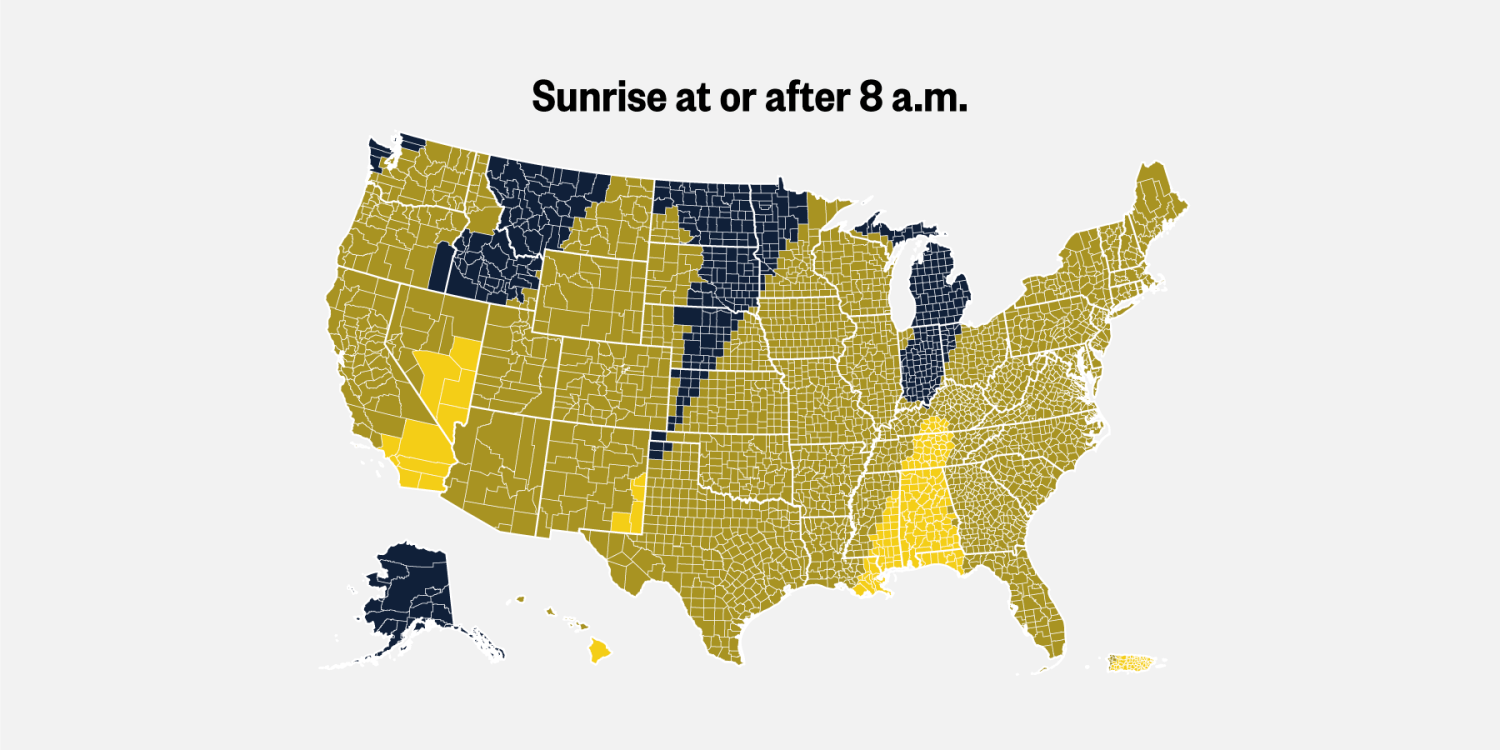
Critics, however, argue that permanent daylight saving time would create very dark winter mornings, particularly in western parts of time zones. NBC News reported that most of the country could experience dozens more sunrises at or after 8 a.m. under the proposed approach.
The health argument is another consideration. The American Academy of Sleep Medicine considers permanent standard time the healthier option because it better aligns with human circadian rhythms. That creates an important distinction: eliminating clock changes does not necessarily mean keeping daylight saving time throughout the year.
For households with young children, the immediate adjustment can also be challenging. CBS News reported that the transition may disrupt children's sleep schedules until they adapt to the new timing. The seasonal change can therefore affect family routines even when adults welcome the additional hour.
What Happens Next
The next major development concerns the Sunshine Protection Act. The bill passed the House in July 2026 and moved to the Senate, where it remains awaiting action.
President Donald Trump has publicly supported making daylight saving time permanent and has criticized Arkansas Republican Senator Tom Cotton over the delay. Cotton has argued against repeating the experiment, pointing to the problem of extremely late winter sunrises.
According to CBS News, the legislation faces a deadline in early January, when the new class of lawmakers elected in the November midterm elections takes office. If Congress does not approve the legislation before that transition, the bill will expire and the process will have to begin again with approval from both chambers.
Nineteen states have already passed laws supporting permanent daylight saving time, according to Vox. Those measures cannot take effect without the necessary congressional action.
Readers following the legislative debate can also explore why the Senate is stalling on permanent daylight saving time.
For the immediate future, the next scheduled adjustment remains March 14, 2027. Whether that will be one of the final clock changes depends on congressional action before the current legislation expires.
Frequently Asked Questions
When does daylight saving time end in 2026?
It ends on Sunday, November 1, 2026, at 2 a.m. local time, when clocks move backward one hour.
Do Americans gain or lose an hour in November 2026?
Most Americans gain one hour of sleep because clocks move backward from 2 a.m. to 1 a.m.
When does daylight saving time start again in 2027?
It starts on Sunday, March 14, 2027, at 2 a.m. local time, when clocks move forward one hour.
Which US states do not observe daylight saving time?
Hawaii and most of Arizona do not observe the change. The Navajo Nation in Arizona does observe it.
Will the United States permanently stop changing clocks?
Not yet. The Sunshine Protection Act passed the House in July 2026 but is awaiting Senate action. Its future remains uncertain, and the legislation is scheduled to expire in early January if it is not approved.