
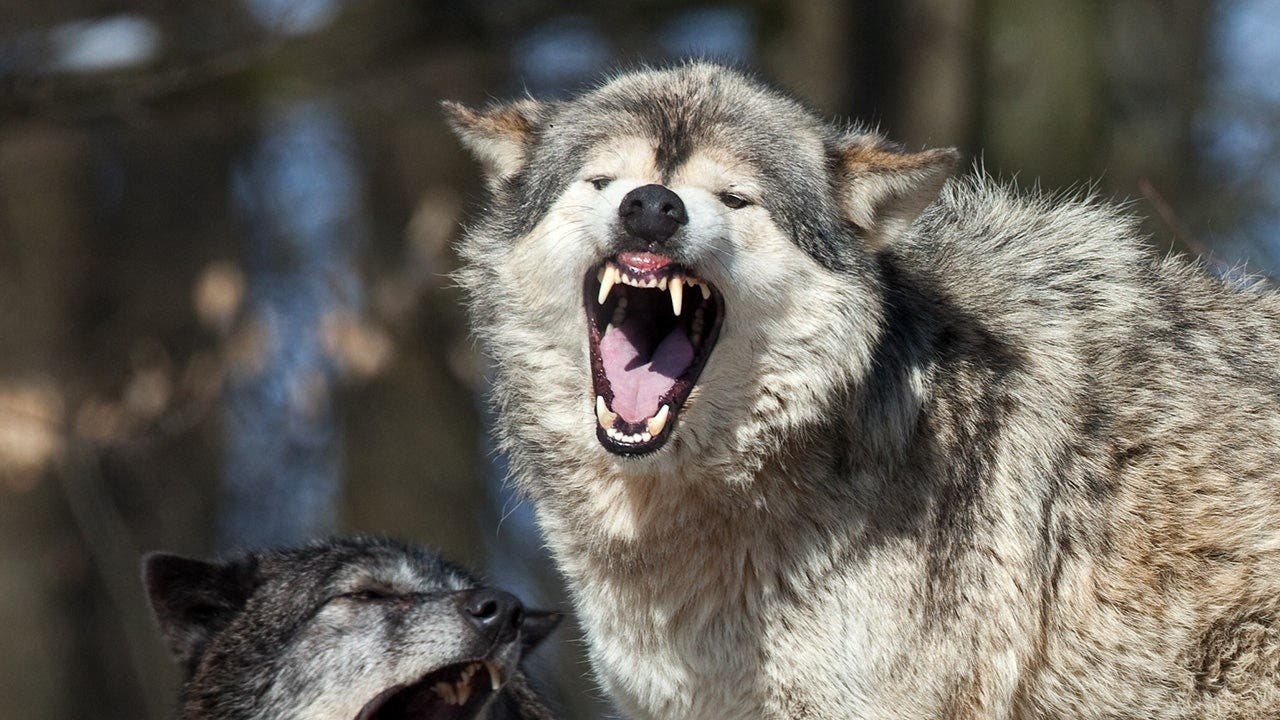
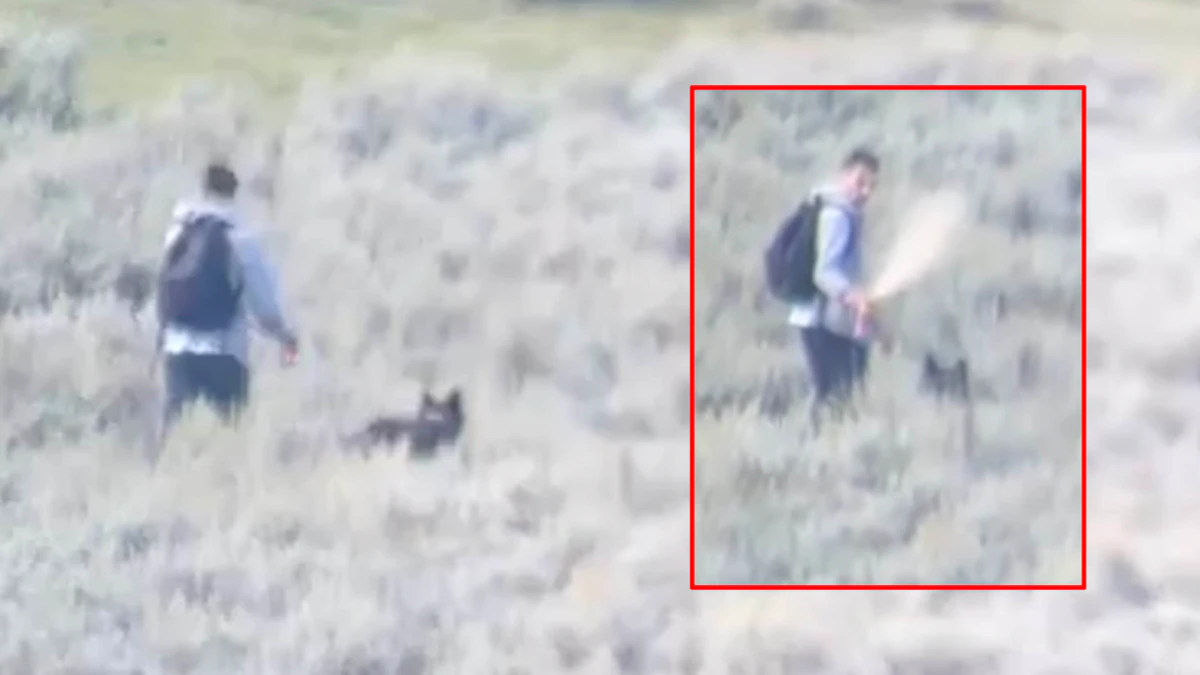
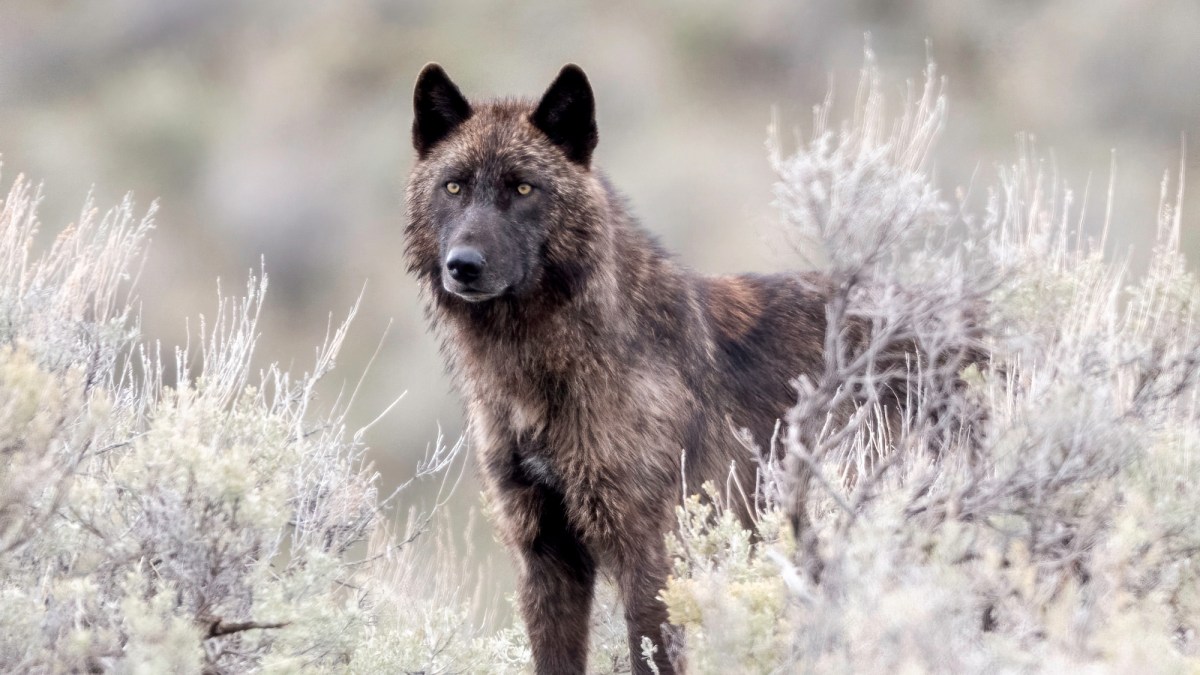
A solo hiker visiting Yellowstone National Park found himself trailed at close range by a young black wolf on Sunday morning, August 23, 2026, in the park's Lamar River Valley. The visitor maintained his composure and deployed two bursts of bear spray to keep the apex predator at bay across a tense ten-minute encounter. Footage captured through a spotting scope quickly circulated online, offering a rare glimpse into the curious behavior of adolescent wildlife in America's oldest national park.
What Is Happening
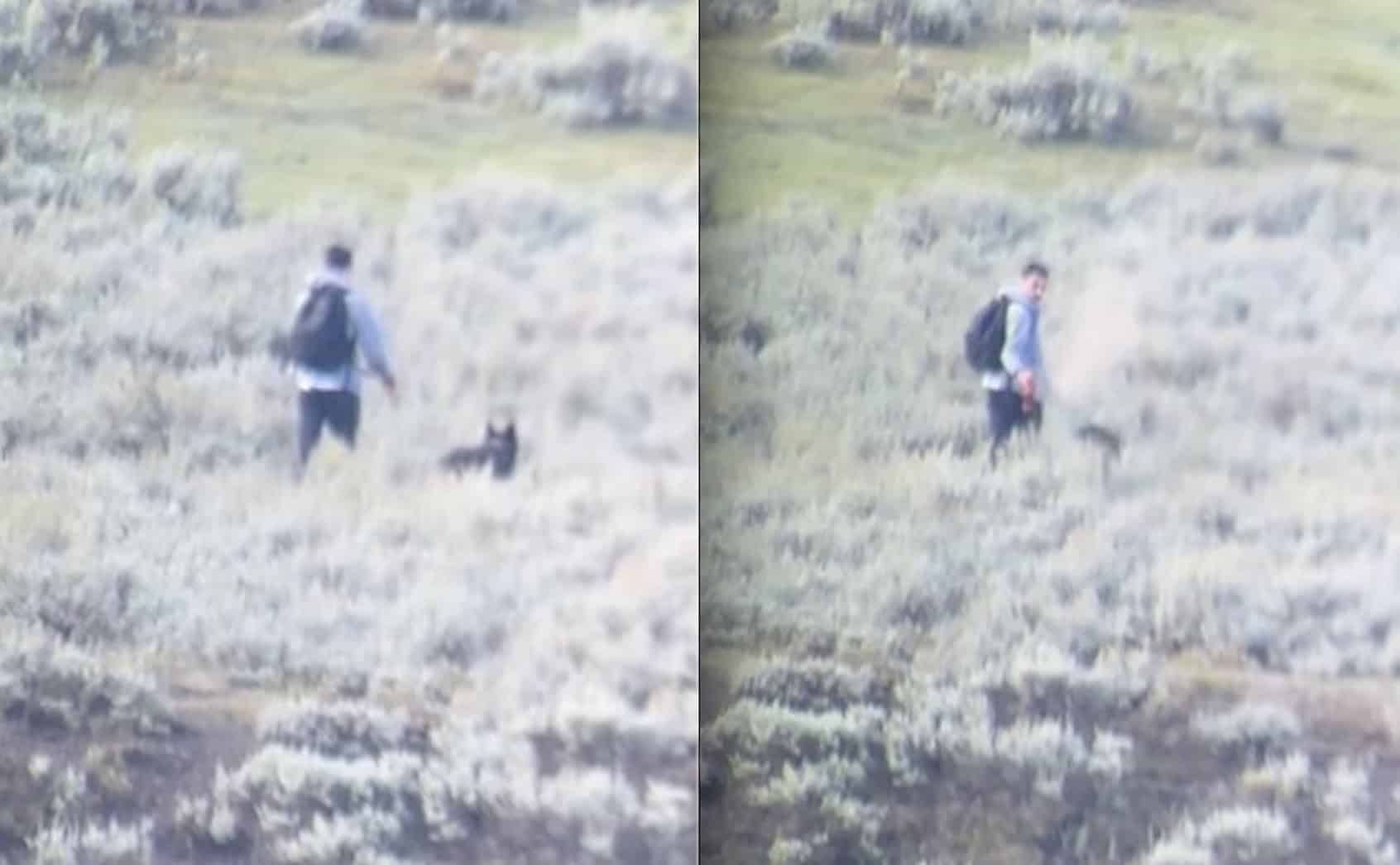
Ignazio Zanin, a resident of Houston, Texas, was fifteen minutes into a solo hike on his first full day visiting Yellowstone National Park when a wild canid began following in his footsteps. The animal, identified as a young collared black wolf, matched Zanin's pace across the sagebrush along the Lamar River Trail. As the wolf drew within touching distance, Zanin drew his canister of bear spray, released a short burst, and continued walking steadily without breaking his stride or panicking.
The standoff was documented by Deric Smith of Fenton, Missouri, who was observing wildlife through a tripod-mounted spotting scope from an overlook above the valley. Smith's video shows the wolf trotting directly behind Zanin, prompting onlookers in the parking lot to initially mistake the predator for an off-leash domestic dog. When the animal closed the gap along Zanin's right side, the hiker deployed a second burst of deterrent spray, forcing the wolf to pause roughly 20 feet back before it eventually moved away to rejoin other pack members.
The Background
Gray wolves were historically native to the Greater Yellowstone Ecosystem until hunting and eradication campaigns drove them to local extinction inside park borders by 1926. In 1995, federal wildlife managers launched a historic reintroduction program by releasing 14 Canadian wolves into the park, establishing what is now one of the most thoroughly monitored predator recovery operations in North America. Today, Yellowstone hosts roughly 100 wild wolves distributed across multiple distinct packs, with the northern range's Lamar Valley recognized as a primary habitat for pack territories.
Official park regulations require visitors to maintain a mandatory buffer of at least 100 yards from wolves and cougars at all times. While wolf attacks on humans are exceedingly rare—with zero documented human injuries caused by wolves in Yellowstone since the 1995 reintroduction—wildlife managers monitor habituation closely. Animals that lose their innate wariness of people or learn to associate humans with food pose severe management challenges, occasionally forcing park officials to euthanize habituated individuals, as occurred with single problem wolves in 2009 and 2011.
The Latest Development
Following the encounter, Yellowstone National Park staff confirmed the animal involved was a black yearling male belonging to the Junction Butte Pack. Park officials reviewed the video footage with Zanin and Smith, determining that the hiker acted properly by remaining calm, refusing to run, and utilizing non-lethal deterrents.
It is not unusual for a sub-adult wolf to be curious towards people, and the aversive use of bear spray was appropriate.
As a safety precaution following the incident, rangers temporarily closed the trail area to monitor animal movements and ensure the wolf rejoined its pack without further human interactions.
What It Means
For visitors traveling to national parks across the American West, the encounter underscores the necessity of carrying proper deterrent gear on every trail. Bear spray contains approximately two percent capsaicin (derived from hot chili peppers) and expels a broad aerosol cloud capable of halting aggressive or overly inquisitive predators, including bears, wolves, and mountain lions. Zanin had purchased his canister at Bozeman airport upon arrival and used approximately two seconds of spray during the encounter, leaving roughly 80 percent of the canister's capacity available.
Wildlife safety protocols emphasize standing tall, making noise, traveling in groups, and never running away from an approaching predator. Running can trigger a chase instinct in large carnivores, whereas standing ground and deploying defensive spray reinforces an animal's natural boundary avoidance.
What Remains Unclear
Park biologists have not determined whether the yearling male wolf had previously received food rewards from irresponsible tourists or if its approach was driven purely by juvenile curiosity. While the wolf departed to rejoin its pack and no subsequent incidents were reported, park staff continue to observe the Junction Butte Pack to determine if further hazing measures or temporary trail restrictions will be required in the Lamar Valley corridor.
Frequently Asked Questions
Who was the hiker involved in the Yellowstone wolf video?
The hiker was Ignazio Zanin, a resident of Houston, Texas, who was on the first day of his vacation in Yellowstone National Park when the wolf approached him on the Lamar River Trail.
Why was the wolf following the hiker so closely?
Yellowstone National Park officials identified the animal as a curious adolescent yearling male from the Junction Butte Pack. Young wolves occasionally test boundaries and investigate novel movement in their territory.
Did bear spray work against the wolf?
Yes. Zanin fired two short bursts of bear spray containing capsaicin, which created a protective barrier, caused the wolf to back away roughly 20 feet, and prevented any aggressive contact.
What should you do if approached by a wolf in a national park?
Do not run. Stand your ground, make yourself look large, wave your arms, shout, and prepare to deploy bear spray if the animal approaches within close range.
How far must visitors stay from wolves in Yellowstone?
National Park Service regulations require all visitors to maintain a minimum distance of at least 100 yards (91 meters) from wolves and cougars at all times.