Rain swept across Wellington just as India were trying to close out a difficult chase, leaving both teams waiting for a decision that would determine the second ODI. When play was finally abandoned, India were four runs ahead of the Duckworth-Lewis-Stern (DLS) par score, securing a narrow victory. The result gives Shubman Gill's side a commanding 2-0 lead in the five-match series, with one more win needed to seal it.

The Result
India defeated New Zealand by four runs under the DLS method in the second ODI at Wellington's Hnry Stadium on Saturday, November 7, 2026. The rain-affected match was reduced to 47 overs per side, and New Zealand were dismissed for 134 in 41 overs after being put in to bat.
India's reply reached 113 for seven after 26 overs when the weather stopped play. With the DLS par score standing at 109, the visitors were four runs ahead when officials abandoned the contest.
The victory followed India's five-wicket win in the opening ODI in Auckland on Wednesday. That match also involved a revised target under the DLS method, making it a second consecutive rain-affected result in the series.
How the Match Unfolded
India's fast bowlers immediately took advantage of conditions that offered bounce and movement. New Zealand struggled to establish partnerships, and the home side's innings repeatedly lost momentum as wickets fell.
Daryl Mitchell provided the strongest resistance, scoring 55, while captain Mitchell Santner contributed 31. However, the remaining New Zealand batters could not build on those efforts. No other home batter scored more than 11.
Gurnoor Brar was India's leading wicket-taker, finishing with outstanding figures of 4-30. His double strike in the 20th over removed Tom Latham and Glenn Phillips, leaving New Zealand struggling at 53-5. Auqib Nabi also made an important contribution, claiming his first two international wickets by dismissing Will Young and Tim Seifert. He finished with 2-31.
India's chase proved considerably more uncomfortable than the modest target suggested. Jacob Duffy delivered an early blow by dismissing captain Shubman Gill for a golden duck before removing Virat Kohli for seven. Kyle Jamieson also troubled the batting lineup, eventually finishing with 3-35.
Rohit Sharma made 23 before falling to Jamieson, while Shreyas Iyer top-scored for India with 30. Iyer and KL Rahul added 39 runs for the fifth wicket, briefly giving the visitors some stability. Jamieson broke that partnership by dismissing Iyer, leaving India at 86-5.
Rahul then became central to India's survival. As Naman Dhir and Anshul Kamboj departed at important moments, the chase became increasingly dependent on the remaining batters. Dhir scored 12 before being caught near the boundary by Tim Seifert off Duffy, while Jamieson dismissed Kamboj for one.
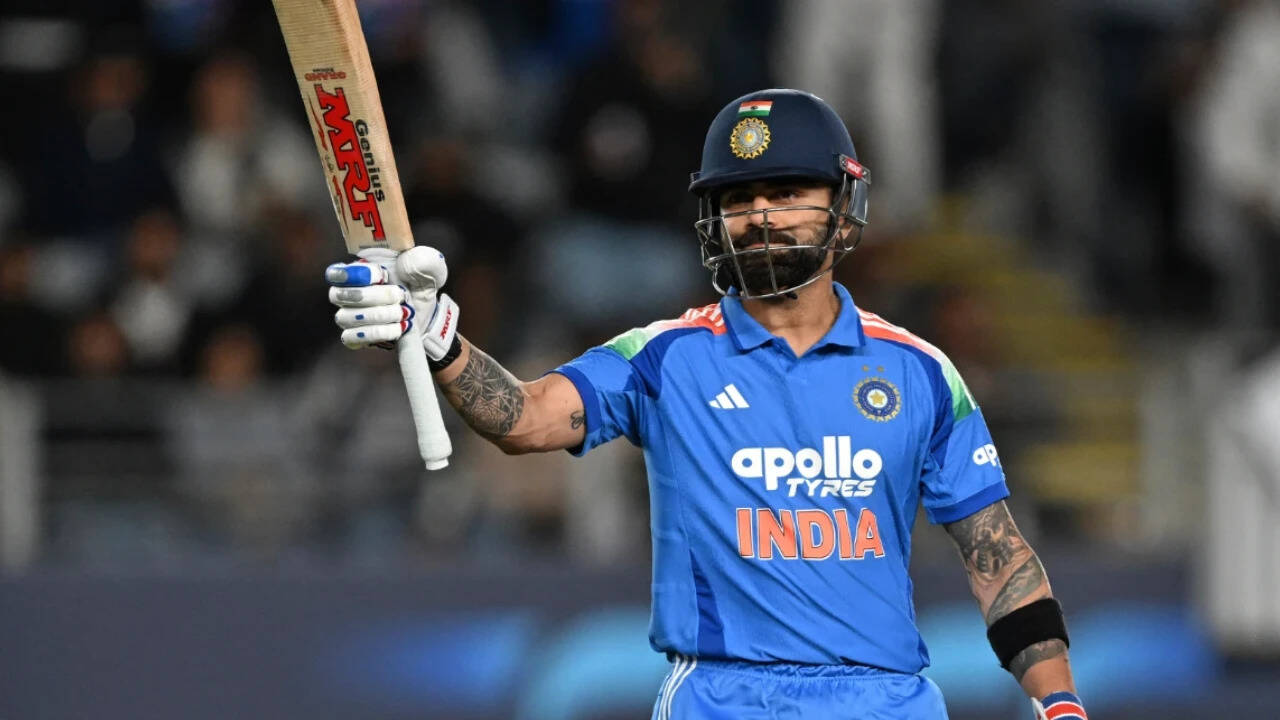
Rain ultimately prevented any further progress. Rahul remained unbeaten on 26 from 38 deliveries, while Auqib Nabi was unbeaten on one. India's score of 113-7 was enough to put them above the required DLS benchmark, ending New Zealand's hopes of defending their total.
Standout Performances
Gurnoor Brar was the defining performer with the ball. His 4-30 dismantled New Zealand's middle order and helped restrict the hosts to a total that ultimately proved insufficient. His ability to exploit bounce and attack the batters with short deliveries made a substantial difference.
Auqib Nabi also enjoyed a significant personal milestone by claiming his first two international wickets. His dismissals of the New Zealand openers helped India establish control early in the innings.
For New Zealand, Daryl Mitchell's 55 was the most substantial batting contribution. Santner's 31 offered support, but the lack of meaningful partnerships left the hosts with only 134 to defend.
Kohli, meanwhile, reached a notable career milestone despite another relatively short innings. According to The Times of India, his seven runs took his ODI tally against New Zealand to 1,975, moving him past Australia's Ricky Ponting, who had scored 1,971. Sachin Tendulkar occupies third place on the list with 1,750 runs.
What the Result Means
India now lead the five-match ODI series 2-0 and need just one more victory to secure the series. Winning both opening matches despite challenging weather conditions gives the visitors a significant advantage heading into the remaining fixtures.
The result also highlights the effectiveness of India's seam attack in New Zealand conditions. Their bowlers have restricted the hosts to 185 in Auckland and 134 in Wellington, taking control of both contests before the weather intervened.
For New Zealand, the immediate concern is their inability to produce competitive batting totals. Mitchell and Santner provided resistance in Wellington, but the rest of the lineup struggled against India's pace and bounce. Santner acknowledged after the match that his side could have pushed its total towards 160-180, a level that might have made the chase considerably more difficult.
There is also a wider lesson from the second ODI: rain and the DLS method can make an apparently straightforward chase much more complicated. India's four-run advantage was enough to settle the contest, but their seven lost wickets showed that New Zealand had created genuine pressure despite defending a relatively low score.
What Comes Next
The teams move to Hamilton for the third ODI on Tuesday, November 10, with India looking to complete the series victory. The visitors need only one more win, while New Zealand must respond quickly to avoid falling further behind.
Weather could again become a factor. The forecast for the Hamilton match was described as unfavorable in the match coverage, raising the possibility of another interruption. India will hope their bowlers can maintain their current form, while New Zealand need a stronger batting performance if they are to keep the series alive.
Frequently Asked Questions
Who won the second ODI between India and New Zealand?
India won by four runs using the Duckworth-Lewis-Stern method after rain ended play in Wellington on November 7, 2026.
What was India's score when the second ODI was abandoned?
India were 113-7 after 26 overs, with KL Rahul unbeaten on 26 and Auqib Nabi on one.
Why did India win using the DLS method?
India were four runs ahead of the DLS par score of 109 when rain stopped the match, giving them the victory.
Who was the leading wicket-taker in the second ODI?
India's Gurnoor Brar took four wickets for 30 runs, helping dismiss New Zealand for 134.
When is the third India vs New Zealand ODI?
The third match is scheduled for Tuesday, November 10, 2026, in Hamilton, New Zealand. India lead the five-match series 2-0.