
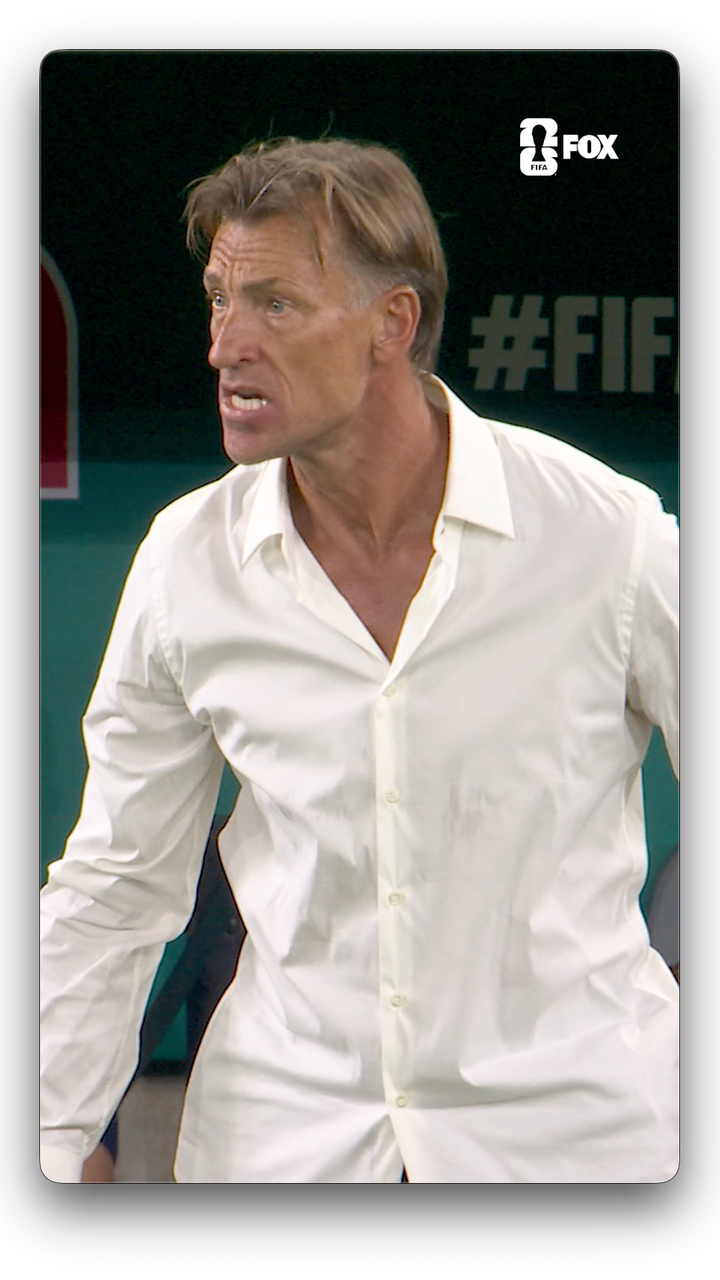
The pristine white shirt of Hervé Renard was never supposed to be anywhere near Mexico this summer. Yet, just 48 hours after a brutal five-goal demolition in Monterrey left Tunisian players staring blankly at the grass, the charismatic Frenchman was officially handed the reins of a broken World Cup campaign. In an unprecedented move that shattered tournament history, the Tunisian Football Federation booted head coach Sabri Lamouchi after exactly one game, turning to a legendary international firefighter to pull off a miracle.
How Events Unfolded
The Carthage Eagles reached their absolute breaking point during a catastrophic 5-1 loss against Sweden in their Group F opener. The nightmare began just seven minutes into the match when Yasin Ayari—ironically of Tunisian descent through his father—struck the opening blow for the Swedes. Tunisia never recovered, succumbing to further goals from Alexander Isak, Viktor Gyokeres, and Mattias Svanberg in what supporter Omar Belghith described as the country's "worst World Cup defeat in history."
Beyond the scoreboard, the team's internal chemistry completely dissolved on television. When Sheffield Wednesday defender Yan Valery was substituted in the 72nd minute, he threw a highly visible, angry tantrum directed straight at Lamouchi, exposing deep fractures in the dressing room. Recognizing that total chaos had overtaken the squad, federation officials acted instantly, firing Lamouchi on Tuesday and immediately appointing Renard until the end of the tournament.
The dismissal etches Lamouchi's name into the record books for the wrong reasons, making Tunisia the first country ever to sack a manager after a single game at a World Cup finals. The 54-year-old departed having won just one of his five matches in charge since his January appointment, leaving his players to pick up the pieces before facing Japan in Monterrey.
Critical Details
While a single-game firing looks like a wild knee-jerk reaction, the fuse had been lit months before the tournament began. Lamouchi, who replaced Sami Trabelsi following a disappointing Africa Cup of Nations exit, ruffled feathers immediately by entirely freezing out the old guard. He controversially dropped captain Ferjani Sassi and defender Yassine Meriah—veterans who anchor the squad with more than 200 international caps between them—in an aggressive attempt to force a youth transition.

The gamble failed spectacularly. A fragile backline featuring over-30 veterans like Ali Abdi, Rani Khedira, and Ellyes Skhiri struggled to protect a system that lacked any defined identity, while young prospects like Khalil Ayari and Hannibal Mejbri were left exposed. Alarm bells rang loud and clear when Belgium crushed Tunisia 5-0 in their final pre-tournament warm-up match. Furthermore, federation officials grew increasingly furious over non-sporting distractions, reportedly demanding an explanation from Lamouchi after discovering his son had been granted unauthorized access to the team's private training camp.
This is not actually the first time Tunisia has fired a coach mid-tournament. At the 1998 World Cup, they famously dumped Henryk Kasperczak after two group-stage defeats. However, that 1998 firing occurred after mathematical elimination. The critical difference today is the expanded 48-team tournament format: because eight of the 12 third-placed teams advance to the knockout rounds, Tunisia is still very much alive.
Reactions & Responses
The swift coaching change sparked blunt assessments from players and staff alike, highlighting a team caught between embarrassment and sudden motivation. "Ten goals in two games is crazy," admitted a brutalized defender, Omar Rekik. "I want to say sorry to the Tunisian people. This is not good enough."
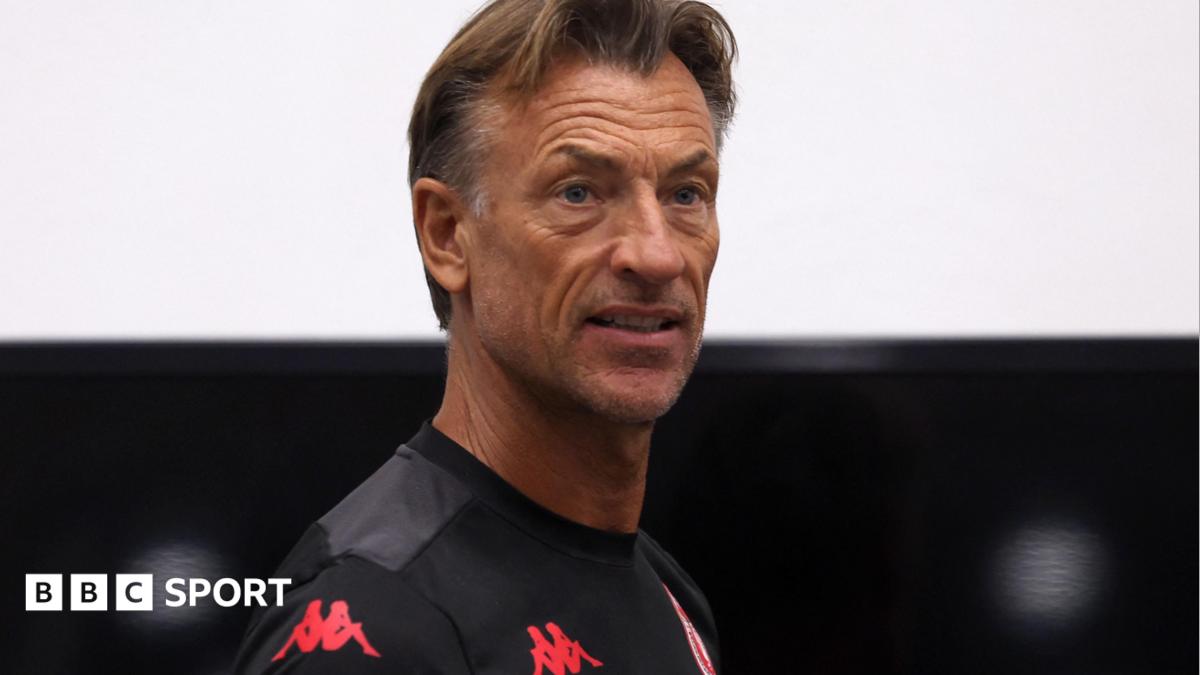
Renard, who was conveniently available after being dismissed by Saudi Arabia in April, revealed he did not hesitate when the opportunity arose. The Frenchman relies heavily on his reputation as a master motivator to spark instant turnarounds on the pitch.
The federation contacted me, I didn't hesitate for a second. It's a challenge that isn't easy, but it's a motivating challenge.
Zambian sports journalist Nkweto Tembwe, who witnessed Renard lead Zambia to a historic AFCON title in 2012, insists the manager's intense preparation makes him a perfect fit for last-minute firefighting. "Herve is a very, very focused person and knows what he wants," Tembwe noted, emphasizing that Renard studies his opponents like he is preparing for a high-stakes exam.
Putting It in Perspective
The federation is rolling the dice against staggering financial and mathematical odds. According to player valuation site Transfermarkt, the entire Tunisian roster is valued at just under 70 million Euros (around $80 million). To stay alive in Group F, Renard must mastermind results against tournament dark horses whose squads dwarf his in value: Japan sits at over 270 million Euros, while their final group opponent, the Netherlands, commands a staggering squad value exceeding 750 million Euros.

Historically, Tunisia has secured just three World Cup wins across its entire soccer history. Stepping into a transitional squad that is fundamentally unbalanced makes advancing to the round of 32 a massive uphill climb. However, Renard belongs to an elite club of managers—including Bora Milutinovic, Carlos Alberto Parreira, and Guus Hiddink—who have led different countries at three consecutive World Cups, famously guiding Saudi Arabia to a shocking group-stage upset over Lionel Messi's Argentina in 2022.
Looking Ahead
Renard's high-stakes rescue mission begins immediately on the global stage. Tunisia is confirmed to face Japan at the Monterrey Stadium on Sunday, June 21, with kickoff scheduled for 0:00 PM ET. The team will then have exactly four days to rest and prepare before their final group fixture against the formidable Netherlands on June 25. With tactical structure completely vacant in the opening match, Renard's immediate priority is tightening up a defense that has leaked 10 goals in its last 180 minutes of soccer.
Frequently Asked Questions
Why was Sabri Lamouchi fired after only one World Cup game?
Lamouchi was dismissed following a humiliating 5-1 defeat to Sweden, which capstoned a poor run of three losses in five games. The decision was accelerated by visible player frustration on the pitch, a pre-tournament 5-0 loss to Belgium, and internal federation tension regarding his squad selection and family access to the training camp.
Who is the new head coach of Tunisia?
Hervé Renard has been appointed as the head coach until the end of the tournament. The 57-year-old Frenchman is highly regarded for winning the Africa Cup of Nations with both Zambia (2012) and Ivory Coast (2015), and for coaching Morocco and Saudi Arabia at previous World Cups.
Can Tunisia still qualify for the World Cup knockout stage?
Yes. Under the expanded 48-team format, eight of the 12 third-placed teams advance to the round of 32. If Renard can secure a positive result in the remaining group matches against Japan and the Netherlands, Tunisia still has a mathematical pathway to progress.