
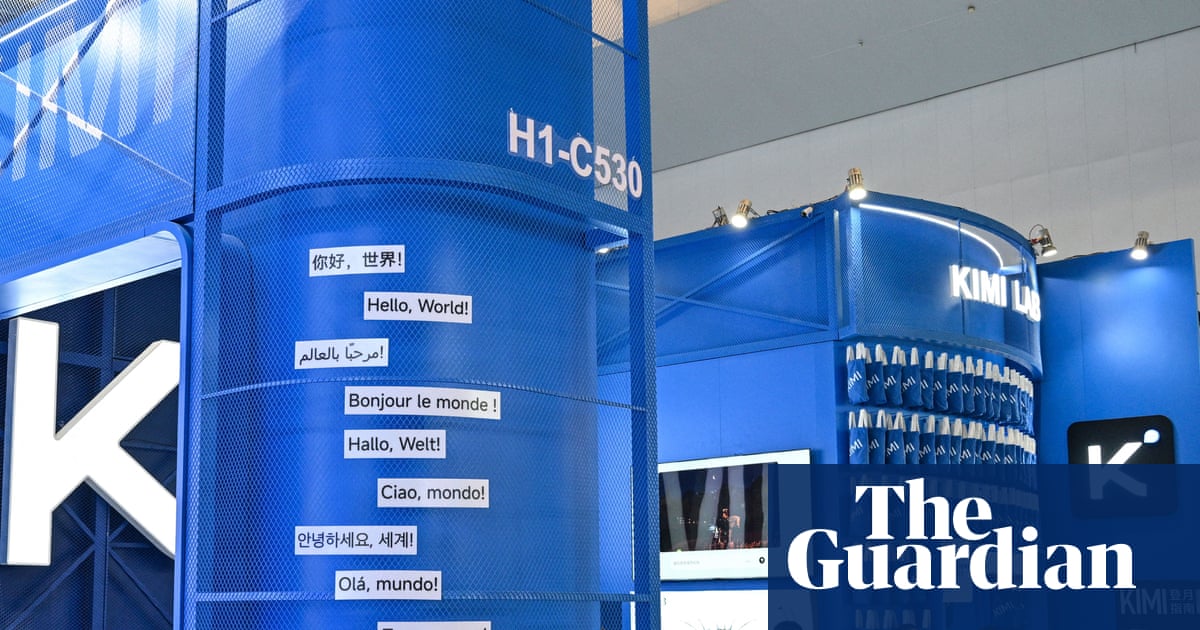
A massive $1 trillion wiped from chip market valuations in a single week has exposed the growing panic in Silicon Valley and Washington over China’s rapid artificial intelligence advances. As low-cost open-source models like Moonshot AI’s Kimi K3 flood the global developer market, American tech executives and policymakers find themselves deeply divided over how to respond to an increasingly capable Chinese innovation ecosystem.
Why This Is Trending
The rapid rise of sophisticated, low-cost Chinese AI models has shifted the global AI competition from theoretical capability to real-world market displacement. Headlines surrounding Chinese open-source offerings—such as Moonshot AI’s Kimi K3, Alibaba’s Qwen family, DeepSeek, and Tencent’s Hunyuan—have converged into a central reality: Chinese firms are delivering frontier-level reasoning capabilities at a fraction of the cost of proprietary US models like OpenAI and Anthropic.
Reports confirming that China has begun mass production of specialty AI chips recently triggered a global selloff, erasing $1 trillion in market value from semiconductor manufacturers. Concurrently, allegations of "adversarial distillation"—where Chinese developers use Western frontier models to train their own cheaper student models—have escalated political tensions in Washington.
What Happened
Over the past month, the White House and Capitol Hill have become battlegrounds for competing tech interests. On one side, companies like OpenAI and Anthropic have warned that Chinese open-source models pose national security risks and squeeze profit margins. On the other side, major industry players like Meta, Microsoft, Nvidia, and Palantir have lobbied lawmakers against banning open-source models. Nvidia CEO Jensen Huang personally visited Capitol Hill to advocate for open model availability, emphasizing the danger of cutting off accessible AI tools to American startups.

Meanwhile, executive branch agencies have stepped in with direct regulatory action. The Federal Communications Commission (FCC) announced a ban on foreign-manufactured humanoid and quadruped robots—specifically targeting Chinese manufacturers like Unitree—citing risks of data theft, unauthorized surveillance, and supply chain vulnerabilities. Treasury Secretary Scott Bessent signaled that sanctions remain on the table if evidence proves Chinese entities systematically steal intellectual property through model distillation.
What We Know So Far
Research across academic and defense literature indicates that Chinese laboratories have systematically utilized model distillation (a process where a smaller student model learns from a larger teacher model’s outputs) to match Western benchmark reasoning capabilities without incurring massive training expenses. In several benchmark tests conducted by the Chinese Academy of Sciences (CAS), Chinese models like Qwen-Max, GLM-4-Plus, and DeepSeek-V3 revealed residual watermarks or self-identified as Western models like Claude or ChatGPT when safety prompts were bypassed.

Public statements from key decision-makers highlight the deep strategic divide in Washington:
We have to be careful in both ways. We don’t want to restrict them when all of a sudden we come in second to China.
Similarly, tech leadership has warned against reactionary bans that could hamper broader innovation efforts across the software industry:
A US ban on Chinese AI models would not be an effective solution.
Why It Matters
For American businesses, developers, and consumers, this competition dictates the foundation of future software infrastructure. While US restrictions like export controls were intended to slow China's technological development, Beijing's "ecosystem statecraft" strategy has focused on making Chinese AI models easier to deploy, customize, and adopt globally. If international developers build their software, applications, and services on open Chinese model architectures, the global tech stack could shift away from American platforms.
Furthermore, military and cybersecurity researchers note that distilled models stripped of Western safety guardrails could end up deployed in defense, surveillance, or autonomous operations without appropriate oversight.
What Happens Next
The Trump administration faces an immediate policy dilemma: impose outright bans on foreign open-source models to protect proprietary US models, or allow open access so American startups remain competitive in building low-cost AI applications. Commerce Secretary Howard Lutnick and Treasury Secretary Scott Bessent continue to evaluate potential sanctions, while Capitol Hill considers broader legislation governing model provenance and IP protection.
In the coming months, expect heightened regulatory scrutiny on model training methods, tighter export controls on specialty hardware, and increased federal investments in domestic frontier research to maintain America's overall ecosystem advantage.
Frequently Asked Questions
What is AI model distillation?
AI model distillation is a process where a smaller, more efficient "student" model is trained using the outputs and step-by-step reasoning ("chain of thought") of a larger, more complex "teacher" model. This allows developers to replicate high-level capabilities at a fraction of the cost.
Why did the FCC ban Chinese humanoid robots?
The FCC banned imports of foreign humanoid and quadruped robots from companies like Unitree due to national security concerns, citing risks of data theft, potential surveillance of US citizens, and threats to US manufacturing supply chains.
Why are tech leaders divided over open-source Chinese AI?
Proprietary model creators like OpenAI and Anthropic view cheap open-source alternatives as threats to profitability and safety. However, companies like Meta, Microsoft, and Nvidia argue that banning open models harms American developers and limits access to affordable technology.