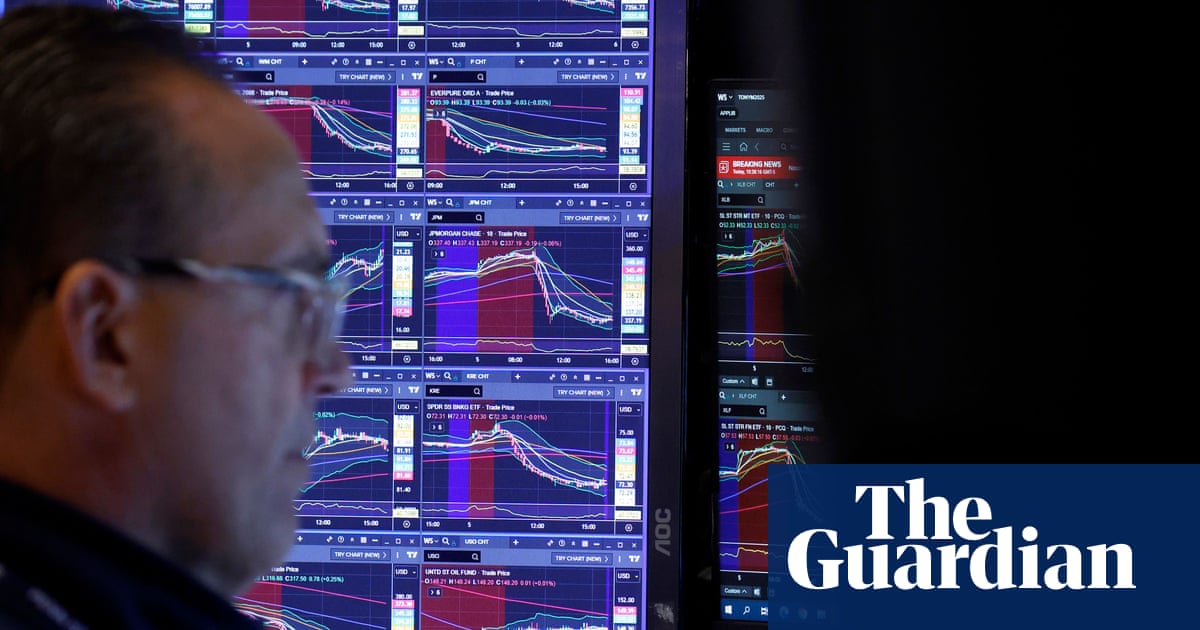
American investors, retirement savers and technology companies are facing fresh uncertainty after a dramatic sell-off exposed growing doubts about the financial promises of artificial intelligence. US stocks suffered their worst single-day losses since April 2025, with technology shares bearing much of the damage. The turmoil followed the November midterm elections, disappointing semiconductor earnings and renewed concerns about whether enormous AI investments can deliver sustainable returns.
What Was Announced
There was no single product announcement behind the market disruption. Instead, investors reacted to a combination of political developments and financial results that challenged confidence in the AI investment boom.
According to NBC News, disappointing earnings reports from semiconductor companies Qualcomm and Arm Holdings on Wednesday night helped trigger the decline. The results arrived as Democrats secured significant victories in the November 2026 midterm elections, including governorships, attorney general positions and congressional seats.
Several newly elected Democratic candidates had pledged to slow or halt the construction of AI data centers. These facilities require substantial resources, and opposition to their expansion has become an important political issue in several states.
The Guardian reported that more than $3.2 trillion disappeared from the value of the US stock market during Thursday's sell-off. Investors were concerned that a Democrat-controlled Congress could introduce tighter oversight of AI development and data center construction, potentially affecting one of the technology industry's major growth drivers.
The political developments did not create the underlying valuation concerns. Rather, they intensified questions that had already been building about the relationship between AI spending, corporate profits and future economic growth.
Key Features and Specifications
The most striking feature of this episode is the concentration of risk in America's largest technology companies. AI-related investment has helped drive stock market gains, but it has also made major indexes increasingly dependent on a relatively small group of businesses.
The seven companies commonly grouped as the Magnificent Seven are:
- Nvidia
- Apple
- Microsoft
- Meta
- Amazon
- Tesla
Together, these companies account for more than one-third of the S&P 500, according to The Guardian. That concentration means a significant decline in their shares can affect index-tracking investment funds and retirement portfolios even when other parts of the economy perform differently.
The reported market movements illustrate the scale of the disruption:
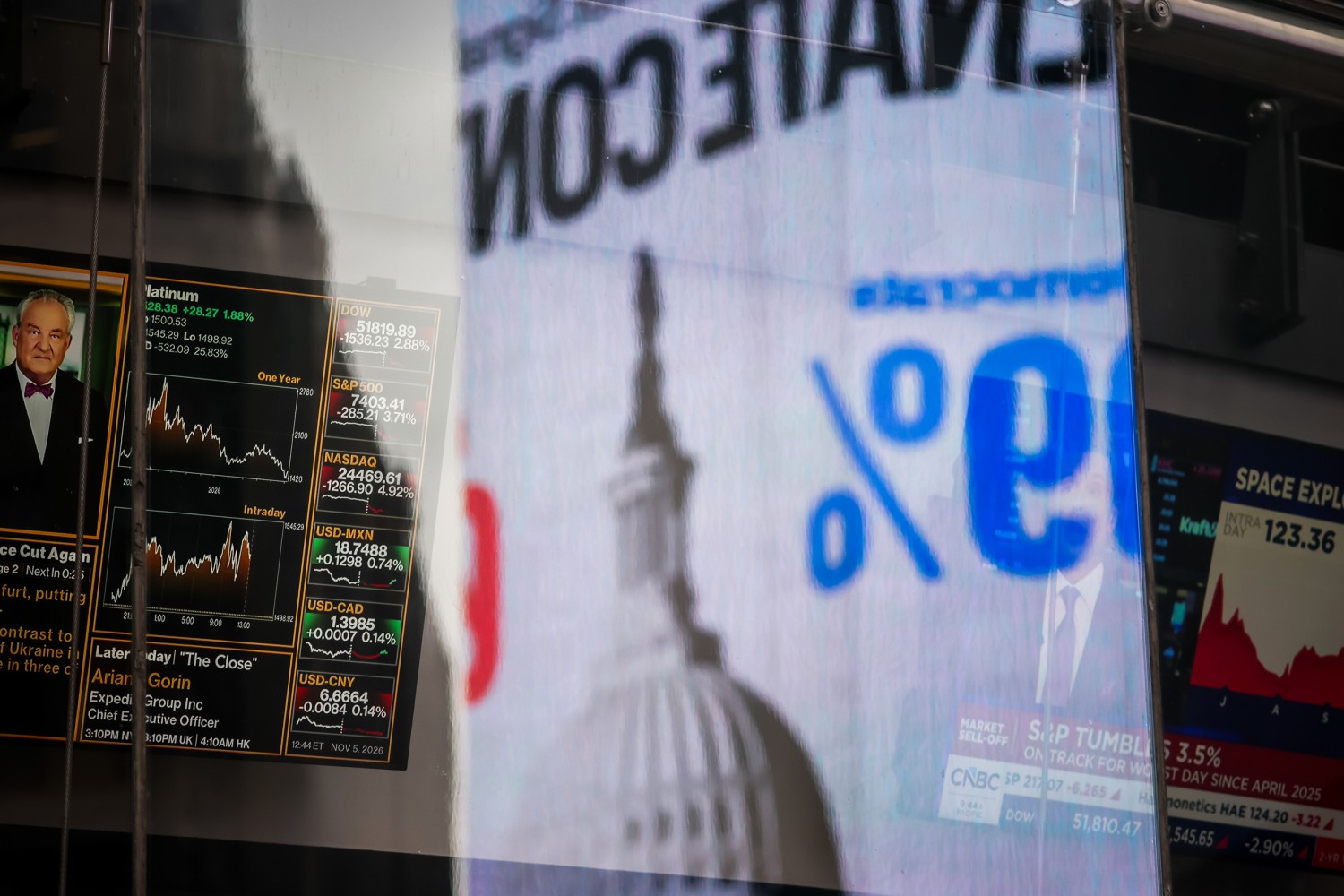
- Nasdaq: NBC News reported a 6.3% decline, representing approximately $2.3 trillion in lost market value.
- S&P 500: The index dropped 4.4%, according to both reports.
- US stock market: The Guardian reported more than $3.2 trillion in lost value during Thursday's trading session.
- International markets: Asian and European shares also experienced pressure following the Wall Street decline.
The Nasdaq and S&P 500 recorded their worst single-day performances since April 2025, when President Donald Trump's global tariffs triggered another major market disruption, according to NBC News.
Another warning sign involved market valuations. The Guardian reported that the cyclically adjusted price-to-earnings ratio, commonly known as the CAPE ratio, had reached its highest level since 2000. The measure compares stock prices with inflation-adjusted earnings over a longer period, helping investors assess whether valuations have become unusually high.
Alphabet also experienced a major decline after reporting lower-than-expected profits, with more than $500 billion wiped from its market value, according to The Guardian.
Price and Availability
This story concerns financial markets rather than a commercial product, so there is no official purchase price, launch date or preorder schedule. The relevant figures are the reported stock market losses and the potential financial exposure for investors.
US households may feel the effects through investment accounts, retirement savings and funds that track major market indexes. Because the Magnificent Seven represent more than a third of the S&P 500, investors holding funds linked to that index have substantial exposure to the performance of major technology companies.
The wider economic implications could extend beyond stock portfolios. The Guardian reported that the Middle East war had contributed to an inflation shock and higher interest rates from central banks around the world. A prolonged technology slowdown could complicate the economic outlook if weaker growth coincides with rising consumer prices.
How It Compares to the Competition
The current sell-off has similarities to previous technology market corrections, but its immediate triggers combine political uncertainty with questions about corporate earnings.
The Guardian compared the latest concerns with the dot-com-era valuation environment, pointing to the CAPE ratio reaching its highest level since 2000. However, the available reporting does not establish that the current market situation will follow the same trajectory as the earlier technology downturn.
The April 2025 tariff-related market disruption offers another recent comparison. NBC News identified that episode as the last time the Nasdaq and S&P 500 suffered losses of comparable daily severity.
There is also a disagreement among market participants about what the latest decline means. Some see a necessary correction that could reduce the danger of a more damaging crash. Others remain concerned that falling confidence could encourage further selling.
Mark Haefele, chief investment officer at UBS Global Wealth Management, argued that the AI investment cycle remained intact despite what he described as market indigestion. He said the underlying fundamentals did not justify a prolonged downturn.
Meanwhile, Ben Barringer, head of technology research at Quilter Cheviot, cautioned against assuming that Democratic election victories would automatically halt data center development. He pointed to comments from Texas governor-elect Gina Hinojosa suggesting a more pragmatic approach to resource allocation and construction.
What Users Should Know
For American households, the immediate concern is not whether AI technology will disappear. It is how much financial exposure they have to companies whose valuations have benefited from expectations of continued AI growth.
Investors with retirement accounts or index funds may be affected even if they do not directly own individual technology stocks. The concentration of the largest technology companies within the S&P 500 makes their performance relevant to a broad range of portfolios.
The political dimension also matters. Opposition to data center construction has grown as communities debate the allocation of resources required by large facilities. Several states had effectively put restrictions or moratoriums on data center construction on the ballot during the midterms.
Elon Musk's involvement highlighted the political and commercial stakes. The Guardian reported that the SpaceX and Tesla chief executive spent nearly half a billion dollars supporting Republicans during the election campaign. Shares in both companies subsequently fell sharply.
Nevertheless, demand for AI products and semiconductor technology has not disappeared. New AI tools are continuing to launch, and data center construction remains part of the industry's longer-term investment plans.
For investors, the central question is whether companies can translate enormous spending into profits that justify their market valuations. For policymakers and local communities, the challenge is balancing technology development against concerns about resources, safety and the pace of infrastructure expansion.
The next phase of the market's direction will depend partly on whether confidence returns and whether technology companies can demonstrate that their AI investments are generating sustainable financial results.
Frequently Asked Questions
Why did US technology stocks fall in November 2026?
Disappointing Qualcomm and Arm earnings, concerns about AI company valuations and expectations of tighter data center regulation following Democratic midterm victories contributed to the sell-off.
How much did the US stock market lose?
The Guardian reported that more than $3.2 trillion was wiped from the US stock market's value during Thursday's decline. NBC News separately reported a $2.3 trillion decline in Nasdaq market value.
Is the AI investment bubble bursting?
The sell-off reflects concerns about valuations and the financial returns from AI investment. However, UBS Global Wealth Management's Mark Haefele said the underlying AI investment cycle remained intact.
How could the AI stock sell-off affect American retirement savings?
Retirement accounts invested in funds tracking the S&P 500 may be exposed because the seven largest technology companies account for more than one-third of the index.
Will US Democrats stop AI data center construction?
Several Democratic candidates campaigned on slowing or halting data center construction, but the available reports do not establish a nationwide construction ban or a finalized federal policy.