Aussies warned over ATO data matching as hundreds of thousands receive tax letters
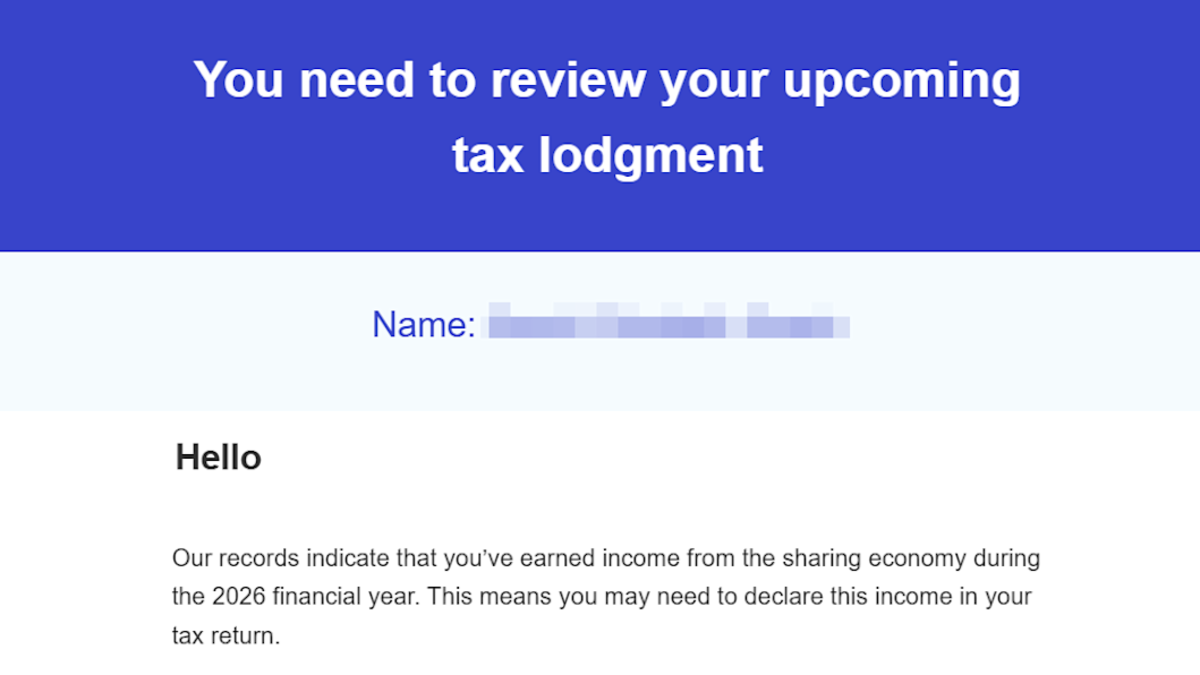
Hundreds of thousands of Australians are receiving formal warnings from the Australian Taxation Office (ATO) as the end of the financial year approaches. Social media platforms have been flooded with images of these letters and emails, leaving many taxpayers questioning their legitimacy and scrambling to understand their obligations. The targeted campaign signals a major compliance push ahead of the 2026 tax time, specifically targeting undeclared income from digital platforms, investments, and property.
Context & Background
The sudden influx of correspondence stems from the ATO's expanded data-matching protocol, a system that grants authorities deep visibility into financial transactions across the country. Because Australia operates on a self-assessed tax system, the tax office collects vast data loads from third-party institutions and waits for individuals to declare it. For years, terms like "side hustle" have been used to casually describe casual income streams, but tax authorities evaluate the activity based on commercial indicators rather than casual labels.
The distinction between a hobby and a business depends on factors such as profit intention, business-like execution, regularity of sales, and advertising efforts. While an occasional market seller might run a hobby, individuals operating online stores, managing inventory, or consistently offering services are legally deemed to be running a business. This definition changes the tax equation completely, requiring proper record-keeping and potentially an Australian Business Number (ABN) from the day operations commence.
Here's What Happened
The letters currently landing in myGov inboxes and mailboxes explicitly put taxpayers on notice regarding transactions involving cryptocurrency, shares, and rental returns. One version of the letter states that records indicate a taxpayer may have disposed of shares on or after 1 July 2025, noting that disposals encompass selling, gifting, buybacks, and similar transfers. Another letter, sent to a pet-sitter registered on an online platform, warned that sharing economy earnings must be declared regardless of whether the work is casual, lacks an ABN, or had no tax withheld.Crucially, this data does not automatically pre-fill into tax returns, meaning individuals must manually input their total earnings from digital applications. The tracking system captures income from accommodation-sharing like Airbnb and Stayz—even if a resident is only renting out a single room within their home—as well as platforms like Uber, Airtasker, Uber Eats, DoorDash, and Mabel. Online marketplaces and payment processors including eBay and PayPal are similarly integrated into the data-matching dragnet.

Alongside income tracking, the ATO is closely analyzing work-related expenses following widespread confusion over a proposed $1,000 instant tax deduction outlined in the federal budget. Experts warn that many taxpayers incorrectly view this as an automatic $1,000 cash refund, whereas it is actually a deduction off taxable income. For the average worker, the real benefit equates to a couple of hundred dollars depending on their specific tax rate, meaning hybrid workers, teachers, tradies, and nurses with higher actual expenses could lose out if they default to the shortcut deduction without checking their records.
The Response
Tax professionals have verified that the correspondence is entirely authentic, urging the public not to dismiss the notifications as digital scams. Accountancy compliance specialists have noted a significant uptick in individuals turning to public artificial intelligence tools like ChatGPT and Claude to navigate these complex rules, a move that is resulting in widespread errors. Research commissioned by accounting platform Dext revealed that 76% of accountants observed an increase in clients using public AI for financial advice over the past year, with the Northern Territory recording the highest adoption rate at 83%.
However, automated advice is proving highly problematic, with 82% of accountants reporting that they frequently encounter client mistakes driven by inaccurate AI summaries. The most common errors include the incorrect interpretation of deductible expenses (45%) and faulty GST treatment (43%), leading to direct financial losses for 67% of individual taxpayers surveyed. Officials are urging Australians to rely on verified resources or registered tax professionals rather than automated tools to avoid severe compliance penalties.
This isn’t a scam, this is a legitimate email. This is a letter sent to hundreds of thousands of Aussie taxpayers already in the lead up to the 2026 tax time. Now, as part of the ATO’s extended data matching protocol, they already know a lot of what has happened to you this financial year and because we have a self-assessed tax system, they are just waiting for you to report it on your tax return or forget to report it.
The ATO now receives information from a wide range of third-party sources, meaning taxpayers should assume the ATO already has visibility over much of their financial activity. The best thing taxpayers can do is start gathering records before June 30 rather than waiting until tax time.
The Bigger Picture
The data-matching clampdown highlights a permanent shift in how the digital economy is regulated in Australia. Cryptocurrency transactions are facing identical scrutiny to traditional shares, with digital exchanges delivering full reports to the ATO regardless of whether a transaction resulted in a $1 gain or loss. Swapping one cryptocurrency token for another—such as Lithium to Bitcoin—constitutes a taxable capital gains event that must be declared using precise Australian dollar values at the time of the transaction.
Taxpayers who trade crypto frequently risk being classified as a business, which subjects them to standard income tax rules rather than capital gains concessions. Failure to report these figures accurately can result in immediate adjustments, substantial penalties, and accumulating interest charges. While taxpayers can claim legitimate deductions against side earnings—such as equipment, software, and proportional internet or phone bills—they must possess clear records to substantiate every claim long after the return is lodged.
The Road Ahead
Taxpayers are being advised to compile all receipts, rental documentation, and digital statement histories before the June 30 financial year deadline. Complete transaction reports generally become visible under the reported transactions section of myGov accounts from September onwards, though individuals remain legally responsible for ensuring accuracy before lodging. ATO assistant commissioner Anita Challen confirmed that specific occupation and industry guides are available online to help Australians check their exact deduction eligibilities before filing.
FAQ
Are the tax letters being sent out by the ATO a scam?
No, these letters and emails are completely legitimate communications sent by the ATO as part of its data-matching program. They are designed to notify taxpayers that the office has already received third-party records concerning their digital platform income, share trading, or cryptocurrency transactions.Does the ATO automatically pre-fill side hustle income into my tax return?
No, information collected from sharing economy platforms and digital marketplaces does not automatically pre-fill into your tax return. Taxpayers must manually calculate and declare all additional income streams when lodging their paperwork.Is swapping one cryptocurrency for another taxable in Australia?
Yes, swapping one cryptocurrency for another is classified as a clear disposal event by the ATO and can trigger capital gains tax. You must report the transaction using the equivalent Australian dollar value at the exact time the swap occurred.
What happens if I make an error on my tax return due to using AI tools?
The ATO holds individual taxpayers legally responsible for the accuracy of their returns regardless of the tools used to prepare them. Relying on incorrect AI financial advice can lead to formal compliance reviews, tax adjustments, penalties, and interest charges.

Resources
Sources and references cited in this article.