
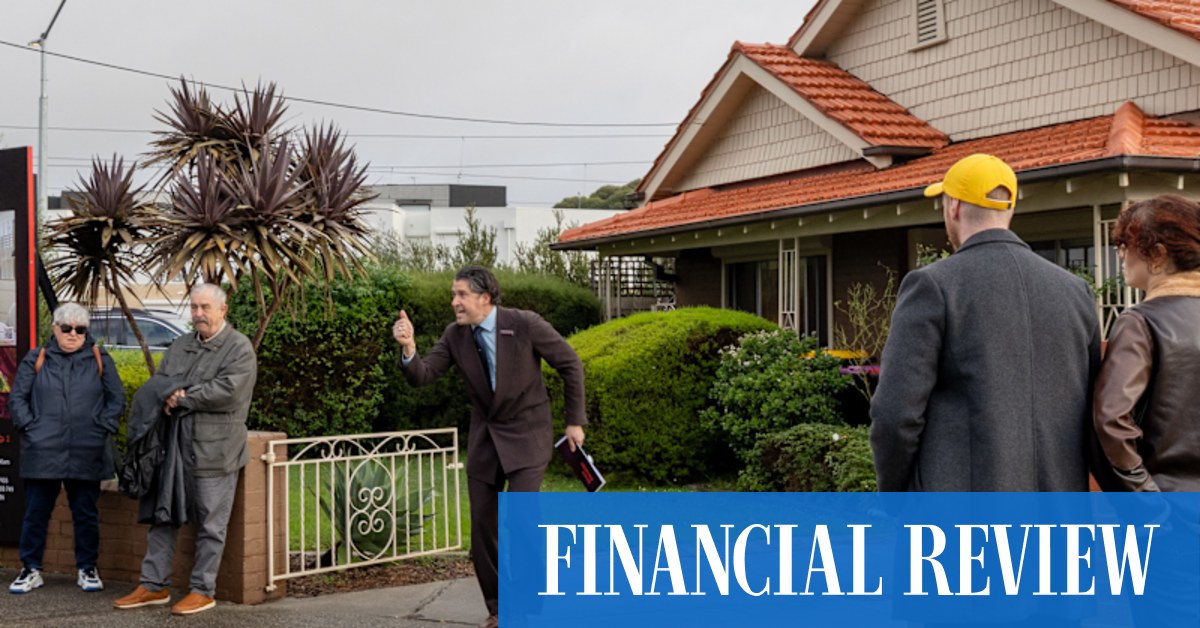
Australia's auction market has recorded its strongest preliminary result in seven weeks, offering buyers and sellers a tentative sign that the recent property slump may be stabilising. The combined capital-city clearance rate rose to 54.8 per cent, after three consecutive weeks below 50 per cent. However, the improvement came as fewer homes went under the hammer, and final results have recently been substantially weaker than preliminary figures.
Context & Background
Auction clearance rates measure the share of reported auctions that result in a sale. They are closely watched in Melbourne and Sydney, where auctions account for a significant part of property activity and can reveal whether buyer and seller price expectations are aligned.
The national market entered July under considerable pressure. Cotality figures showed the preliminary rate at 49.8 per cent in the previous week, before it was revised to 46 per cent. Another report said the final combined rate had remained below 50 per cent for six consecutive weeks and was 21.9 percentage points below the comparable week of 2025.
Housing researchers linked the slowdown to higher borrowing costs, affordability constraints, cost-of-living pressures, increased listings and reduced investor demand following federal budget changes affecting negative gearing and capital gains tax treatment. Winter also typically produces fewer auctions, although analysts said this year's slowdown had been more pronounced than usual.
Here's What Happened
Cotality's latest preliminary data put the combined capital-city clearance rate at 54.8 per cent, its highest early reading in seven weeks. The rise followed three weeks of preliminary results below 50 per cent and represented a sizeable increase from the previous week's initial 49.8 per cent.
The rebound coincided with reduced activity. A total of 1,318 auctions were held, with volume down 8.7 per cent from the previous period and 8 per cent below the same week last year. With fewer properties available, buyers faced less choice, which can lift the proportion of homes sold without necessarily indicating a broad recovery in prices or confidence.
The result followed an unusually weak period. Earlier Cotality figures showed fewer than half of properties offered nationally had sold, while Melbourne recorded 54.5 per cent, Sydney 51.6 per cent, Canberra 50 per cent and Adelaide 45.7 per cent. Brisbane fell to 23.8 per cent, compared with 69.6 per cent at the same time a year earlier.
Conditions also differ sharply between states. Auctions represent about one per cent of Western Australian property listings, with fewer than 20 typically held in Perth each week during 2026. That means Perth clearance rates can swing dramatically on a handful of reported results and are not considered a reliable measure of the broader WA market.
The Response
Cotality research director Tim Lawless said the earlier sequence of sub-50 per cent results showed a mismatch between buyer and seller expectations. He attributed the softer market to affordability and serviceability challenges, interest rate increases, investor retreat after the budget and a rise in advertised listings.
It's pretty rare to see clearance rates this low.
Housing Industry Association executive Simon Croft described the weaker market as a potential buying opportunity, while buyer's advocate Cate Bakos said investors had largely withdrawn from established Melbourne locations. Treasurer Jim Chalmers argued that clearance rates had already been moderating before the budget and said the government's reforms were aimed at improving affordability and assisting first-home buyers.
The Bigger Picture
For prospective buyers, lower clearance rates generally mean more negotiating power and less pressure to make an immediate offer. Quality renovated homes in sought-after locations were still attracting competition, particularly in the $1 million to $2 million range, but buyers had become more selective and were prepared to wait.

Sellers face a different calculation. Sydney recorded a 39 per cent auction success rate in one recent PropTrack reading, while new listings fell from 15,641 in May to 12,549 in June. Melbourne's median house value declined to $984,000 in June, and agents warned that sellers may need to lower expectations if weak demand persists.
Investor withdrawals could also affect renters. Industry figures said investors were considering selling existing properties while new construction remained insufficient, potentially reducing the number of rental homes available. The extent of that effect will depend on whether properties are bought by other investors, owner-occupiers or first-home buyers.
The Road Ahead
The latest preliminary rebound may indicate that buyers and sellers are adjusting to changed market conditions, but the lower auction volume and recent downward revisions mean one week's result cannot confirm a recovery. Final clearance figures will provide a clearer test of how much of the improvement survives once outstanding results are reported.
Winter activity is expected to remain subdued before listings traditionally increase in spring. The next phase will depend on whether sellers adjust reserve prices, buyers regain confidence and investor demand responds to the new tax settings.
Frequently Asked Questions
What is Australia's latest auction clearance rate?
The preliminary combined capital-city auction clearance rate reached 54.8 per cent. It was the highest early result in seven weeks after three consecutive weeks below 50 per cent.
Why did auction clearance rates rise?
The rise coincided with fewer homes being offered for sale. Auction volume fell 8.7 per cent, limiting buyer choice and helping a greater proportion of listed properties secure a sale.
Does a 54.8 per cent clearance rate mean the market has recovered?
Not necessarily. The figure is preliminary, and the previous week's 49.8 per cent reading was later revised down to 46 per cent once more results were collected.
Why have Australian auction markets been weak?
Researchers identified higher interest rates, affordability pressures, increased property listings and weaker investor participation. Federal budget changes involving negative gearing and capital gains tax also affected market confidence.
Are auction clearance rates useful in every Australian city?
They are most useful in auction-heavy markets such as Sydney and Melbourne. In Perth, auctions represent about one per cent of listings, so weekly rates are based on very small numbers and can be misleading.
What do lower clearance rates mean for buyers?
They usually provide buyers with more choice, negotiating power and time to assess a property. Sellers may also become more willing to revise price expectations when homes repeatedly fail to sell.