Australian investors tracking retirement portfolios and superannuation funds are feeling the fallout after Wall Street gave up its post-election relief rally in a volatile session. The benchmark S&P 500 dropped 3.2% on Thursday as traders liquidated artificial intelligence and semiconductor shares. That pullback erased previous gains and sent ripples through international bourses, following a temporary surge triggered by the United States midterm election results.

The Story at a Glance
Wall Street underwent a rapid change in sentiment within 24 hours of the US midterm elections. On Wednesday, the S&P 500 jumped 1.6% to record its best single-day advance in three months, while the Dow Jones Industrial Average added 1,569 points, or 3 per cent. Markets initially welcomed the news that the Democratic Party won control of both the House of Representatives and the Senate, which investors traditionally view as a recipe for legislative gridlock and fiscal restraint.
By Thursday morning, however, the mood soured significantly across New York trading desks. The S&P 500 fell 3.2%, the tech-heavy Nasdaq Composite dropped 4.9% into correction territory, and the Dow shed 1,136 points. Fears that incoming lawmakers will implement tighter regulatory checks on artificial intelligence data centers and energy consumption triggered heavy selling in market leaders.
How the Story Developed
Trading desks had initially rallied behind two major catalysts on Wednesday: lower Treasury yields and a sharp fall in global crude oil. Brent crude plummeted more than 8 per cent overnight to settle below $US95 a barrel, easing acute inflation concerns and briefly fuelling optimism across equity markets. That wave swept into the Australian market during Thursday day trade, where the local S&P/ASX 200 surged 230.60 points, or 2.6%, to finish at 9,065.19 in an $80 billion relief rally led by miners and technology names.
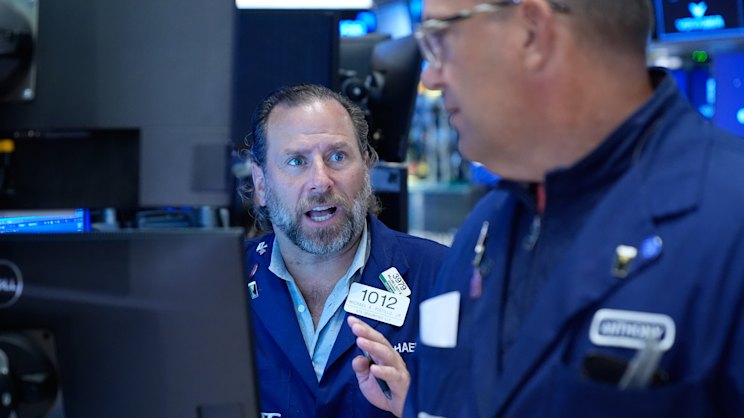
The momentum reversed sharply once New York trading resumed on Thursday. A fierce sector rotation unfolded as institutional funds unloaded speculative tech holdings and moved capital into defensive assets like utilities, consumer staples, and precious metals. Gold futures jumped to $US4,155.80 an ounce, while silver rose to $US53.49.
A shakeout among the most speculative parts of the theme is underway. The U.S. mid-term election results will add to headwinds for big tech and the data center buildout.
Key People and Details
The tech sell-off hit semiconductor manufacturers and infrastructure builders hardest. Shares of chip giants Broadcom and Nvidia tumbled 9% each, while Micron and AMD dropped 16%. Qualcomm beat third-quarter earnings targets but slid 13% due to a cautious forward outlook. The iShares Semiconductor ETF lost 11% in the session.
Valuation models are also pointing to historic shifts. Research published by Ned Davis Research revealed that the S&P 500 forward price-to-earnings ratio fell 4.4 points over the year through October, resting at 18.8x compared to 23.2x a year earlier. Chief US strategist Ed Clissold observed that a drop of this scale has occurred only six times since 1983, typically appearing alongside an echo bear market or an active economic contraction.
In response to intensifying scrutiny over grid capacity, OpenAI chief executive officer Sam Altman reaffirmed public commitments that the group will cover the complete power costs of running its data centers, seeking to ease voter and regulatory pushback.
Reaction and Response
Market analysts highlighted that the swift political shift will directly reshape industry winners and losers over the coming congressional term.
AI and data centres may face greater bipartisan scrutiny, potentially weighing on sentiment and delaying some projects, even without significant new legislation.
In the energy sector, crude oil reversed part of its slump on Thursday, with West Texas Intermediate futures rising more than 2% above $90 a barrel. Meanwhile, the CBOE Volatility Index, known as Wall Street's fear gauge, climbed above 22.59, reflecting heightened uncertainty among derivatives traders.
What to Watch
Investors face several immediate data releases that could dictate market direction over the coming sessions. The United States Labor Department reported initial weekly jobless claims of 189,000, beating consensus forecasts and hovering near historic lows, while nonfarm business productivity jumped 3.6% in the third quarter.
Traders are now awaiting the release of the comprehensive US non-farm payroll report, with consensus projections anticipating 63,000 positions added in October alongside an unemployment rate of 4.2%. Market participants will also monitor whether the Democratic majorities formally table new legislative restrictions on corporate artificial intelligence infrastructure as the new Congress prepares to convene.
Frequently Asked Questions
Why did the S&P 500 drop after initially rallying?
The S&P 500 staged a brief relief rally immediately following the US midterm elections before falling 3.2% on Thursday. Traders rotated out of major tech and artificial intelligence companies due to concerns that a Democratic-controlled Congress will impose tighter regulatory scrutiny and environmental conditions on data center projects.
How does the US market swing affect Australian investors?
Wall Street performance directly influences the Australian sharemarket and retirement assets invested in balanced superannuation funds. While the S&P/ASX 200 gained 2.6% during Thursday trade on earlier US momentum and resource gains, sharp overnight drops on Wall Street typically create pressure on opening local equity sessions.
What is happening to the S&P 500 price-to-earnings ratio?
According to Ned Davis Research, the S&P 500 12-month forward price-to-earnings ratio dropped 4.4 points over the past year to 18.8x. Historical data shows that steep declines of this magnitude have occurred only six times since 1983, usually coinciding with significant economic slowdowns or bear market phases.
Which sectors showed strength during the market sell-off?
While technology and chip stocks suffered steep declines, capital rotated into defensive sectors. Consumer staples rose more than 1%, while precious metals surged, pushing gold futures to $US4,155.80 an ounce and lifting gold mining equities across global exchanges.