
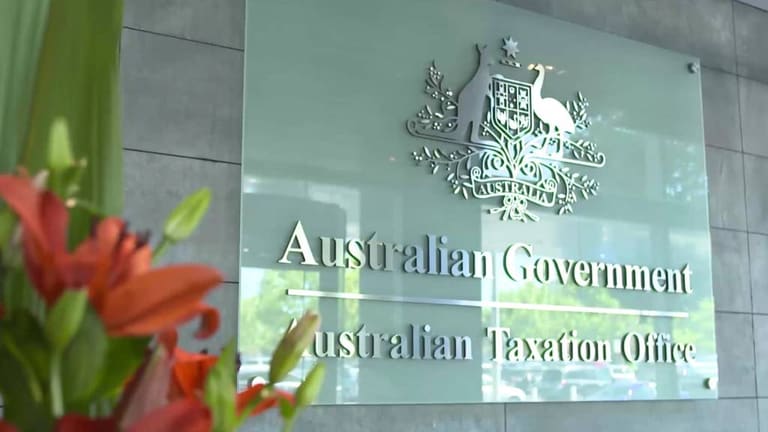
A suburban accountant has beaten the Australian Taxation Office in the High Court, wiping away more than $1 million in additional taxes, penalties and interest. The ruling in Steven Bendel’s tax dispute turns on a highly technical question with very practical consequences: whether an unpaid entitlement from a trust to a company should be treated as a loan. On Wednesday, the High Court said it should not. For private groups, small businesses and advisers using discretionary trusts, the decision changes the risk around arrangements that have sat under ATO pressure for years.

What We Know So Far
The High Court dismissed the Commissioner of Taxation’s appeal on 10 June 2026, finding in favour of Melbourne accountant Steven Bendel and Gleewin Pty Ltd, the trustee of the Steven Bendel 2005 Discretionary Trust. The case centred on unpaid present entitlements, commonly called UPEs: amounts a trust sets aside for a beneficiary, without that beneficiary actually collecting the money.
The ATO’s position was that these unpaid amounts could be treated as loans under Division 7A of the Income Tax Assessment Act 1936. Division 7A is designed to stop private companies from making tax-free distributions of profits to shareholders and associates through payments or loans. In Bendel’s case, the ATO had treated UPEs used in his affairs between 2014 and 2017 as loans back to the trustee, creating a significant tax bill.

Bendel challenged that view and won before the Administrative Appeals Tribunal. The ATO then appealed to the Federal Court, where Bendel again succeeded. The tax office pushed the dispute to the High Court, which handed down a 5-2 majority ruling rejecting the ATO’s final argument.
The practical finding is clear: when a corporate beneficiary does not demand payment of a UPE, that does not by itself amount to financial accommodation or a loan of money. The High Court said the unpaid entitlement reflected an entitlement to income, not an advancement of funds that automatically triggered Division 7A consequences.
That distinction matters because the ATO’s construction could have taxed the same economic arrangement more harshly than if the corporate beneficiary had never been made presently entitled at all. For trust structures, the ruling draws a firmer line between income being allocated and money actually being advanced.
Reactions & Responses
Tax professionals welcomed the clarity, while warning that the ruling does not give trustees and private companies a blank cheque. The Tax Institute said the decision could open the door for some taxpayers to review past assessments issued on the ATO’s former UPE position.
This ruling brings long-awaited judicial certainty to an area of trust taxation that has been the subject of significant controversy and compliance activity for more than a decade
Abdalla also cautioned that Division 7A can still apply where funds are actually advanced, loaned or made available to shareholders or associates. That warning is important: the judgment narrows one ATO position on UPEs, but it does not remove anti-avoidance rules around private company profits.
Taxpayers should nevertheless continue to exercise care, as Division 7A will still apply where funds are actually advanced, loaned, or otherwise made available to shareholders or associates
The ruling also has a possible flow-on issue for self-managed superannuation funds. Phil Broderick, a business law principal at Sladen Legal, had previously noted similarities between the expanded definition of loan in the income tax legislation and the Superannuation Industry (Supervision) Act.
The expanded definition of loan in the SIS Act is almost identical [to that in the ITAA] and the concept is almost identical. So, the expanded definition is designed in the SIS Act to capture loan and loan-like arrangements
On the Ground
For Australian small business owners, family groups and advisers, the immediate impact is not just technical. Many discretionary trusts use corporate beneficiaries as part of their tax and cash-flow planning. A ruling that UPEs do not automatically become Division 7A loans can reduce uncertainty for those structures.
Some taxpayers may now consider objection rights or amendment opportunities where assessments were issued solely because of the Commissioner’s former UPE view. The Tax Institute said previous rulings or administrative practices dealing with UPEs are likely to be withdrawn or amended. That creates a practical next step: affected taxpayers should review their records, but not assume every past arrangement can be easily unwound.
The ruling also matters because compliance costs are real. Businesses that changed structures, documented arrangements or paid tax because of the ATO’s long-held view may now need advice on whether those decisions still make sense. The benefit is certainty; the complication is history.
Coming Up
The next confirmed development is the ATO’s response to the High Court decision. Taxpayers and advisers will be looking for guidance on how the Commissioner intends to administer Division 7A after the ruling, and what options may be available for those who relied on the previous ATO position.
The Tax Institute also expects possible statutory revision of these rules alongside recent trust tax changes announced in the Federal Budget. That means the High Court has settled the legal dispute before it, but Parliament may still revisit the policy settings behind trust and company beneficiary arrangements.
At a Glance
- Steven Bendel and Gleewin Pty Ltd won against the ATO in the High Court on 10 June 2026.
- The court dismissed the Commissioner of Taxation’s appeal in a 5-2 majority ruling.
- The case centred on whether unpaid present entitlements from a trust to a company count as Division 7A loans.
- The High Court found a UPE does not, by itself, represent a loan or financial accommodation.
- The ruling could affect taxpayers previously assessed under the ATO’s former UPE position.
- Division 7A can still apply where funds are actually advanced, loaned or made available.
FAQ
Who is Steven Bendel?
Steven Bendel is a Melbourne accountant involved in a High Court tax dispute with the Australian Taxation Office over trust distributions and unpaid present entitlements.
What did the High Court decide in Bendel v ATO?
The High Court dismissed the ATO’s appeal on 10 June 2026 and ruled that an unpaid present entitlement from a trust to a corporate beneficiary is not automatically a loan under Division 7A.
What is a UPE in Australian tax?
A UPE, or unpaid present entitlement, is an amount a trust sets aside for a beneficiary but which has not actually been paid to that beneficiary.
Does the Bendel ruling remove Division 7A risk?
No. The ruling says a UPE is not automatically a loan, but Division 7A can still apply where funds are actually advanced, loaned or made available to shareholders or associates.
Can taxpayers challenge old ATO assessments after Bendel?
Some taxpayers may be able to consider objection rights or amendment opportunities if their assessment was issued solely on the basis of the ATO’s former UPE position.