

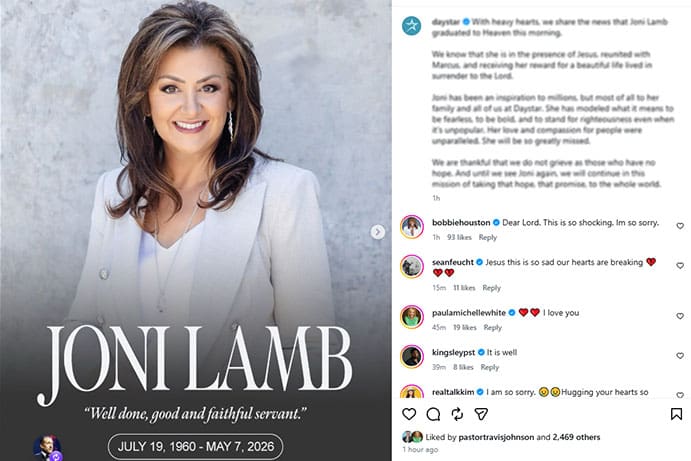
For Australians who follow global faith broadcasting, Joni Lamb’s death marks the end of an era that shaped Christian television far beyond the United States. Lamb, the co-founder and president of Daystar Television Network, died at 65 after reports of ongoing health complications linked to a back injury. Her passing has triggered tributes from church leaders, viewers and broadcasters who watched Daystar grow from a small regional station into one of the world’s largest Christian TV networks.
Meanwhile, the news is also raising fresh questions about the future direction of faith-based media at a time when traditional television ministries are under pressure from streaming platforms and changing audiences. Fair dinkum, few religious broadcasters have had a reach quite like Daystar’s.
Setting the Scene
Joni Lamb co-founded Daystar Television Network alongside her late husband Marcus Lamb in the late 1990s. What began as a regional Christian broadcasting effort in Texas eventually expanded into a global operation carried across satellite, cable and streaming services.
The network became particularly influential in evangelical Christian communities through talk shows, worship programming and high-profile interviews with pastors, authors and political figures. In Australia, Daystar programming has long circulated through Christian television packages and online viewing platforms, giving the network an audience well beyond North America.
Her public role also evolved after Marcus Lamb’s death in 2021. Joni Lamb stepped into a more visible leadership position, guiding the network during a turbulent period that included internal family disputes, criticism from former staff and broader debates around the future of televangelism. If you’ve followed religious media over the years, you’d know Daystar often sat right in the middle of those conversations.
Here’s What Happened
Reports confirming Lamb’s death began emerging this week from multiple faith-based media outlets and Christian organisations. Early details suggested she had been dealing with complications linked to a serious back injury, although no comprehensive medical statement has yet been publicly released.
Daystar confirmed the news through official announcements honouring Lamb’s legacy and describing her as a central force behind the network’s growth. Programming on the channel reportedly continued following the announcement, with hosts and guests paying tribute during broadcasts.

According to coverage surrounding the announcement, Lamb remained involved in the organisation’s direction even while dealing with health issues. That ongoing involvement matters because Daystar is not a small niche outlet. The network reportedly reaches millions of households worldwide through television and digital streaming.
What's interesting is how quickly the story spread outside religious circles. Searches for Lamb’s name surged online as viewers tried to understand both her role in Christian media and what happens next for Daystar itself.
Reactions & Responses
Christian leaders and television personalities described Lamb as a determined builder who helped modernise faith broadcasting during the satellite television boom.
Joni’s passion was bringing hope and faith into homes around the world.
Other tributes focused on her resilience following personal and organisational challenges over recent years. Several broadcasters noted that Lamb maintained a visible on-air presence even while navigating criticism and internal pressure.
She remained committed to ministry and media outreach through every season.
For some observers, though, the response has also reopened wider discussions around transparency and leadership inside large televangelist organisations. Daystar has faced public scrutiny before, and Lamb’s death is likely to renew attention on how these ministries transition power.
The Bigger Picture
Lamb’s death lands at a complicated moment for religious broadcasting globally. Traditional Christian television networks are competing with YouTube creators, podcasts and social-first ministries that attract younger audiences with lower production costs and more direct engagement.
That shift matters in Australia too. Local churches and ministries increasingly rely on digital-first strategies rather than expensive television airtime. Daystar’s future leadership decisions could influence how international faith broadcasters adapt over the next decade.

There’s also the financial side. Large religious networks rely heavily on donations and loyal viewer communities. Leadership transitions can directly affect audience trust, advertising relationships and fundraising stability. That’s the million-dollar question many industry watchers are now asking.
The Road Ahead
Daystar is expected to continue regular programming while internal leadership arrangements move forward. Family members and senior executives have not yet outlined a detailed long-term succession plan publicly.
Memorial tributes and special broadcasts are expected in coming days as supporters reflect on Lamb’s role in shaping Christian television for more than three decades.
FAQ
Who was Joni Lamb?
Joni Lamb was the co-founder and president of Daystar Television Network, one of the world’s largest Christian broadcasting organisations.
How old was Joni Lamb when she died?
She was 65 years old at the time of her death.
What caused Joni Lamb’s death?
Early reports linked her death to complications connected to a serious back injury, though detailed medical information has not been fully released.
What is Daystar Television Network?
Daystar is a global Christian television network that broadcasts faith-based programs, interviews and ministry content across cable, satellite and streaming platforms.
Will Daystar continue after Joni Lamb’s death?
Yes. The network has continued broadcasting while leadership plans are expected to develop in the weeks ahead.