
172 minutes, more than 2 million feet of film and resale tickets reportedly nearing $1,400: Christopher Nolan's The Odyssey has arrived with the scale of a cultural event rather than an ordinary cinema release. The film transforms Homer's ancient homecoming tale into a war-scarred blockbuster starring Matt Damon, Anne Hathaway, Tom Holland and Robert Pattinson. Australian reviews agree that it looks extraordinary, but sharply divide over whether Nolan's ambition produces a masterpiece or an exhausting procession of famous faces, monsters and exposition.
The Bottom Line
- The Odyssey runs for 172 minutes and is presented as a vast retelling of Odysseus's journey home after the Trojan War.
- It is described as the first narrative feature filmed entirely with IMAX cameras, using more than 2 million feet of film across a 91-day shoot.
- Australian critics praised its landscapes, practical effects and artistic commitment, while disagreeing over pacing, dialogue and casting.
- Matt Damon plays Odysseus, with Anne Hathaway as Penelope, Tom Holland as Telemachus and Robert Pattinson as the suitor Antinous.
- Melbourne is among the limited number of locations able to show the original IMAX 70mm presentation, while Sydney screenings use a digitised IMAX format.
Breaking It Down
Nolan begins with a familiar premise: Odysseus is trying to return to Ithaca after the Trojan War while Penelope waits and Telemachus searches for him. The film then stretches that journey across battles, hallucinations, gods, monsters and memories. The Guardian's review interprets the voyage as an account of postwar trauma, with Odysseus unable to recover emotionally even when physical survival remains possible. Matt Damon's warrior is portrayed less as an untouchable hero than a commander carrying guilt from the deception that brought down Troy.
The adaptation keeps many of the poem's defining encounters. The Cyclops towers over the Ithacan soldiers, Samantha Morton's Circe transforms men into swine, Charlize Theron plays Calypso and Zendaya appears as Athena, Odysseus's divine ally. Penelope, meanwhile, delays the suitors occupying her home, while Antinous emerges as the most threatening rival for Odysseus's kingdom.
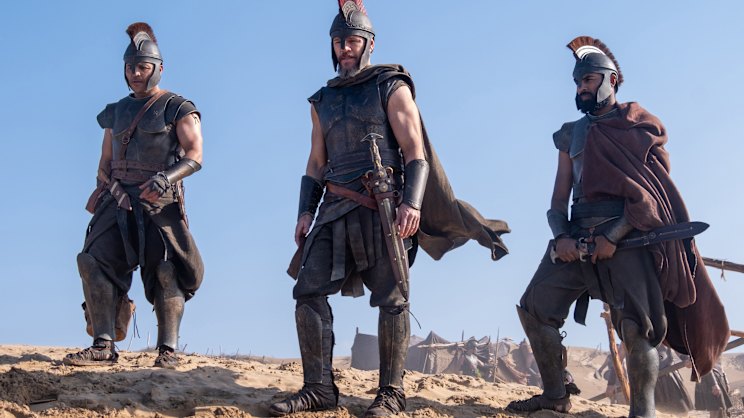
The visual response has been consistently strong. The Sydney Morning Herald awarded the film four stars and praised its hallucinatory contrasts of scale, practical effects and artistic conviction. The Atlantic similarly highlighted its real waves, stone landscapes and mechanical transformations, arguing that Nolan preserves the humanity of Odysseus beneath the mythic scale. Early reactions collected by Variety called the film a staggering and astonishing achievement, with particular praise for Damon, Pattinson and John Leguizamo.
ABC's Australian review was considerably less enthusiastic. It admired the opening, art direction and enormous set pieces, but argued that the film packs too many characters and plot beats into one feature. Its critic found the dialogue excessively explanatory, felt several major actors were reduced to cameos and suggested the adaptation might have worked better as a limited series. That split explains the film's unusual reception: few reviewers deny its technical force, but they disagree over whether its density feels monumental or suffocating.
Why This Matters
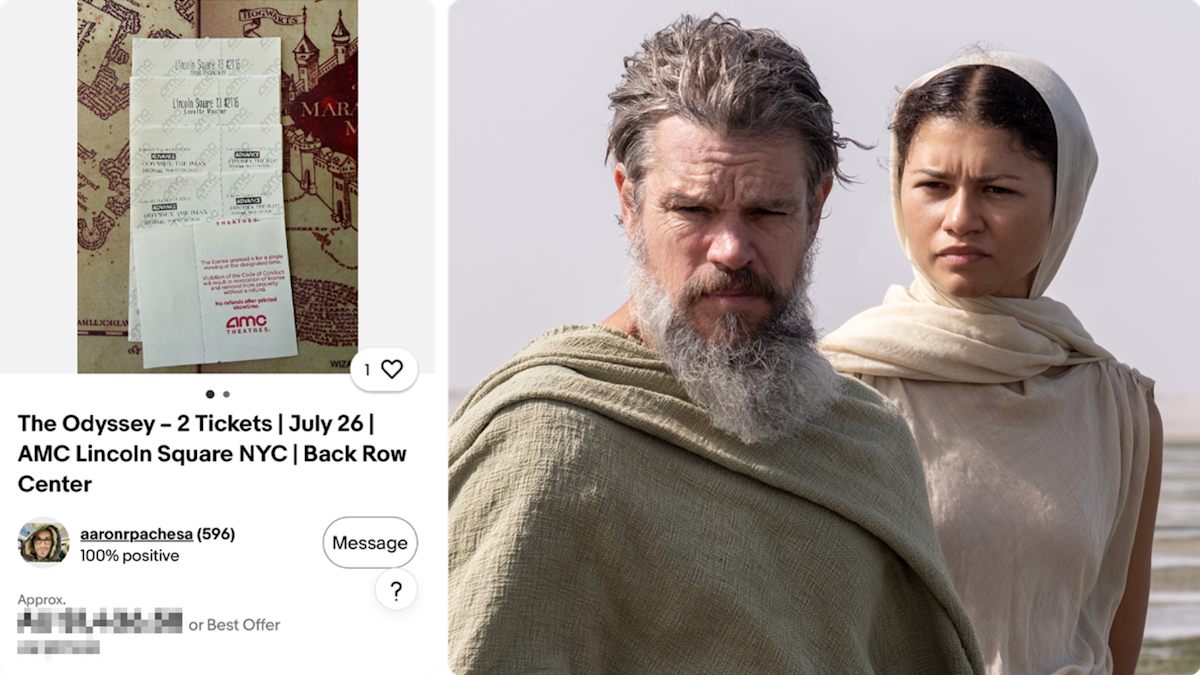
The release is also testing how much audiences value premium cinema formats. The film was shot entirely for IMAX, and original 70mm screenings are available at only an estimated 30 to 40 cinemas worldwide. Nine reported that US resale listings reached about $US990, roughly $1,436, after demand overwhelmed ticketing systems. For Australian moviegoers, the practical distinction matters: Melbourne has access to the original 70mm format, while Sydney's IMAX presentation is digitised.
The renewed attention also changes how audiences may read Homer's story. A BBC examination stresses that women repeatedly determine Odysseus's fate: Penelope resists 108 suitors, Athena engineers his survival, and figures including Circe, Calypso and the Sirens test his judgement. Nolan's film is still centred on Odysseus, but the source material's struggle over power, loyalty and manipulation gives the blockbuster more to work with than a simple sequence of monsters and battles.
What Comes Next
The Odyssey is in Australian cinemas, with screenings available in standard and IMAX formats. The strongest point of agreement among reviewers is that its scale was designed for the largest screen possible, even among critics who found the nearly three-hour experience overstuffed.
Its next test will be whether broad audiences share the enthusiasm of the early press reactions or side with critics who found Nolan's retelling too crowded. Box-office performance and awards attention will determine whether the film's technical gamble becomes a benchmark for future large-format productions.
Frequently Asked Questions
How long is Christopher Nolan's The Odyssey?
The film runs for 172 minutes, or just under two hours and 53 minutes.
Who plays Odysseus in The Odyssey?
Matt Damon plays Odysseus, the Ithacan commander trying to return home after the Trojan War.
Who else is in The Odyssey cast?
The ensemble includes Anne Hathaway, Tom Holland, Robert Pattinson, Zendaya, Lupita Nyong'o, Charlize Theron, Samantha Morton, John Leguizamo and Elliot Page.
Was The Odyssey filmed entirely in IMAX?
Yes. Variety reported that it is the first narrative feature shot entirely with IMAX cameras, using more than 2 million feet of film.
Can Australians watch The Odyssey in IMAX 70mm?
Melbourne is identified as one of the limited locations showing the original 70mm format. Sydney's IMAX screenings use a digitised presentation.
Are reviews of The Odyssey positive?
Many early reactions were highly enthusiastic, but Australian reviews are divided. Critics broadly praise the visuals while disagreeing over the pacing, dialogue and crowded cast.