
Christopher Nolan's The Odyssey is screening in Australian cinemas from Thursday, 16 July, with Matt Damon leading a three-hour retelling of Odysseus's long journey home after the Trojan War. Local reviews agree on the film's immense scale and striking IMAX imagery, but they sharply disagree over whether its crowded storytelling matches its technical ambition.
The Full Story
The film follows Odysseus, played by Damon, as he attempts to return to Ithaca after the fall of Troy. Anne Hathaway plays Penelope, who is left to manage a dangerous power vacuum while waiting for her husband, and Tom Holland appears as their son, Telemachus. Robert Pattinson plays the threatening suitor Antinous, while Zendaya, Samantha Morton, Charlize Theron, Lupita Nyong'o, John Leguizamo and Elliot Page fill out the large ensemble.
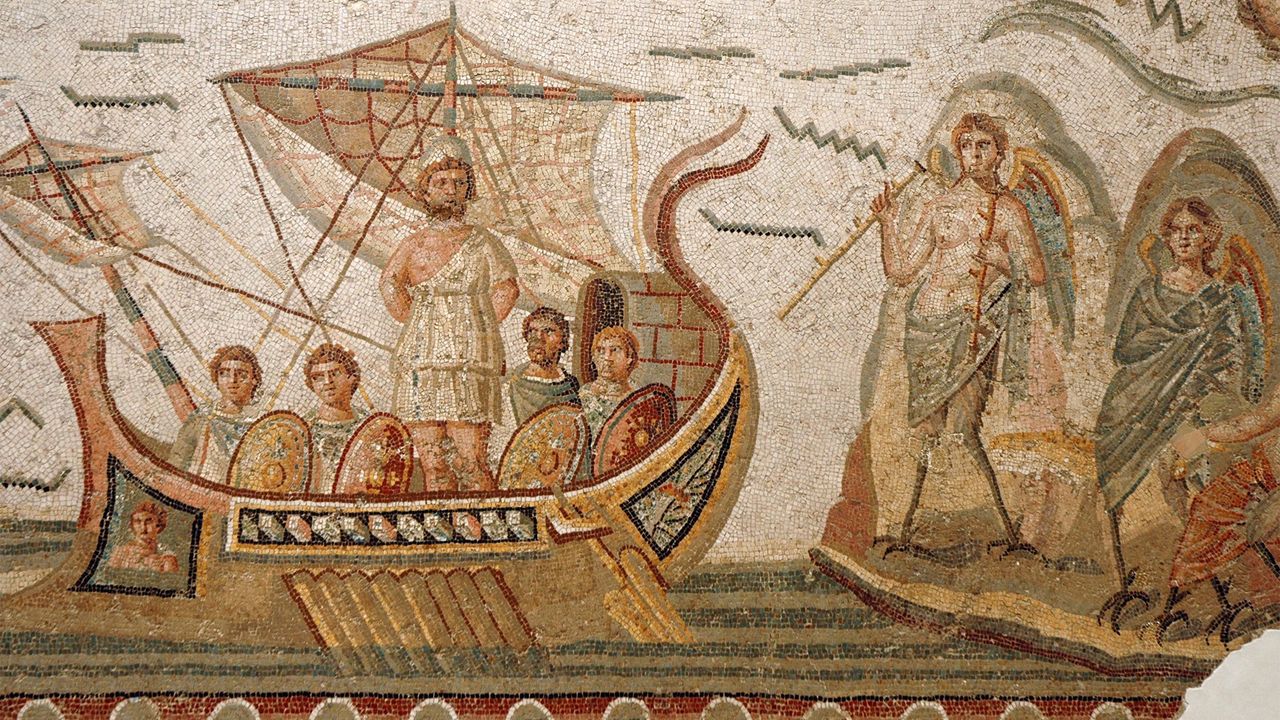
Nolan presents the story through memories, flashbacks and shifting accounts rather than a simple chronological voyage. The production moves from the Trojan Horse and the aftermath of war to encounters with the Cyclops, Circe, Calypso and the Sirens. The Australian Broadcasting Corporation's review praised the opening atmosphere, costumes and scenery, but argued that the film becomes overwhelmed by its cast, exposition and relentless succession of famous episodes. Its critic described the result as closer to a montage of Odysseus's greatest hits than a story given enough room to breathe.
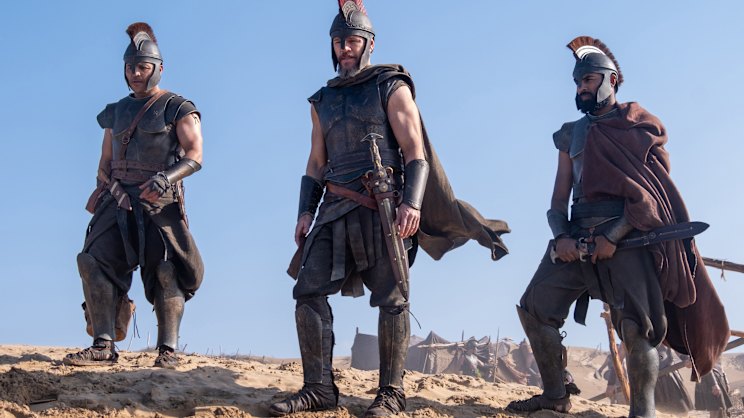
The Sydney Morning Herald took a warmer view, awarding the film four stars and calling it a Hollywood blockbuster made with artistic conviction. That review highlighted Nolan's practical effects, the vast landscapes photographed by Hoyte van Hoytema and the contrast between tiny human figures and enormous mythical threats. It also identified the dialogue as a weakness, particularly when modern phrases clash with the archaic setting.
Other Australian responses sit at opposite ends of the scale. Nine's reviewer called the film an extraordinary achievement and praised its pacing, practical effects, score and performances. The Saturday Paper was far more critical, admiring sequences involving the Cyclops, Circe and Hades while arguing that Nolan's writing, exposition and sombre tone drain the original tale of humour and sensuality.
Central Figures
Damon's Odysseus is presented as both warrior and damaged survivor. Several reviews frame the journey as a story about the lingering psychological cost of war, guilt over the destruction of Troy and the difficulty of returning emotionally to family life.
Hathaway's Penelope anchors the Ithaca storyline as she delays the suitors who want to replace her absent husband. The source poem gives her an active strategic role: she promises to choose a new husband after completing a funeral shroud, then secretly unpicks her weaving at night. Critics differed over whether Nolan's adaptation gives her intelligence enough space, although Hathaway's performance drew strong praise.
Morton's Circe and Pattinson's Antinous were repeatedly singled out. Circe transforms Odysseus's men into pigs, while Antinous represents the escalating threat inside Odysseus's home. John Leguizamo's portrayal of the loyal servant Eumaeus also received enthusiastic notices.
- In medias res
- A narrative that begins in the middle of events rather than at the chronological start.
- IMAX
- A large-format cinema system used here to capture expansive landscapes, battles and practical effects.
- Ithaca
- Odysseus's kingdom and the home he spends years trying to reclaim.
The Data
The film runs for 172 minutes, placing it just under three hours. Variety reported that it was filmed over 91 days and used more than 2 million feet of film. It is also described as the first narrative feature shot entirely with IMAX cameras.
Homer's poem centres on a journey that lasts 10 years after the Trojan War. During Odysseus's absence, Penelope resists 108 suitors, while the story opens after Odysseus has spent seven years with Calypso on Ogygia.
What This Means
For Australian moviegoers, the key question is not whether the film looks impressive. Across positive and negative reviews, its scale, locations, practical effects and IMAX photography receive consistent attention. The disagreement is about whether spectacle strengthens the human story or crowds it out.
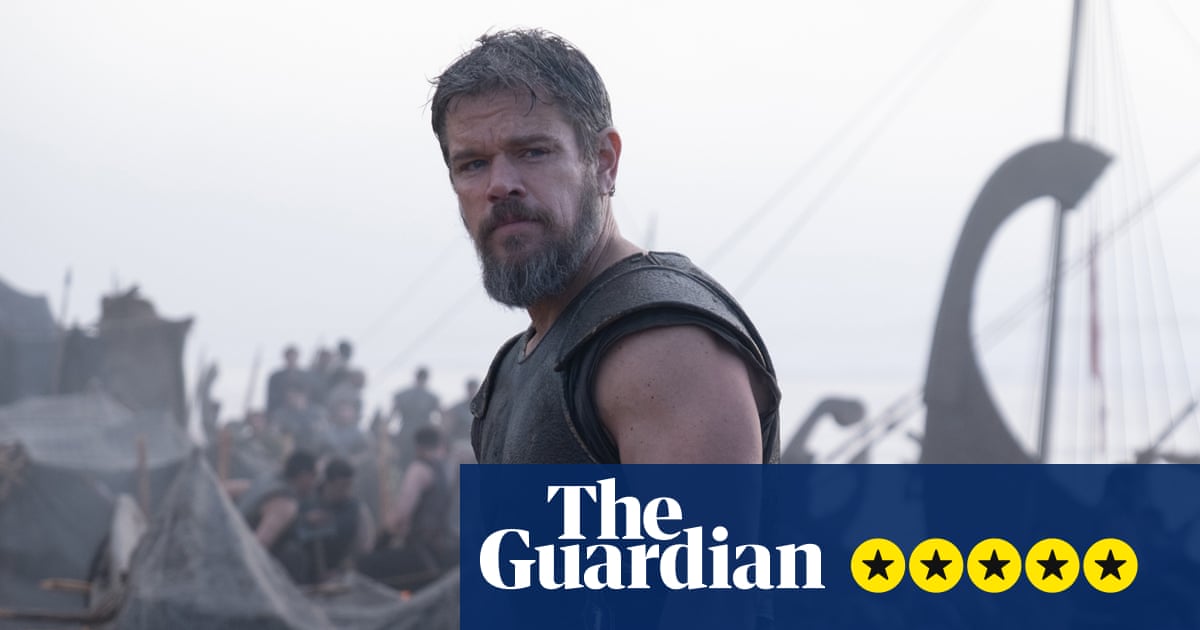
The film also arrives with an unusually broad range of interpretations. One critic sees a study of postwar trauma and damaged families. Another sees an exhausting collection of plot points. Others focus on its treatment of women, noting that Homer's story is repeatedly redirected by Penelope, Athena, Circe, Calypso and the Sirens even though Odysseus remains the central hero.
That division may work in the film's favour commercially. Audiences are being offered both a large-format action spectacle and a familiar myth open to arguments about heroism, guilt, power and homecoming. Those choosing between formats should know that reviewers repeatedly identify the IMAX presentation as one of the production's strongest elements.
What to Expect
The Odyssey is screening nationally in Australia. Viewers can expect a long, visually dense production with major battle sequences, mythical creatures, a prominent score and a non-linear structure. The supplied sources do not confirm any sequel or follow-up production.
Frequently Asked Questions
When is The Odyssey released in Australia?
The film is in Australian cinemas from Thursday, 16 July 2026.
How long is Christopher Nolan's The Odyssey?
It runs for 172 minutes, which is two hours and 52 minutes.
Who plays Odysseus and Penelope?
Matt Damon plays Odysseus, while Anne Hathaway plays his wife, Penelope.
Is The Odyssey worth seeing in IMAX?
Several reviews praise its large-scale landscapes, practical effects and IMAX photography, although opinions on the storytelling are divided.
Why are Australian critics divided over The Odyssey?
Positive reviews praise its ambition, visuals and performances. Critical reviews argue that its exposition, crowded cast and number of plotlines make the film exhausting or emotionally uneven.