
Last updated: June 8, 2026
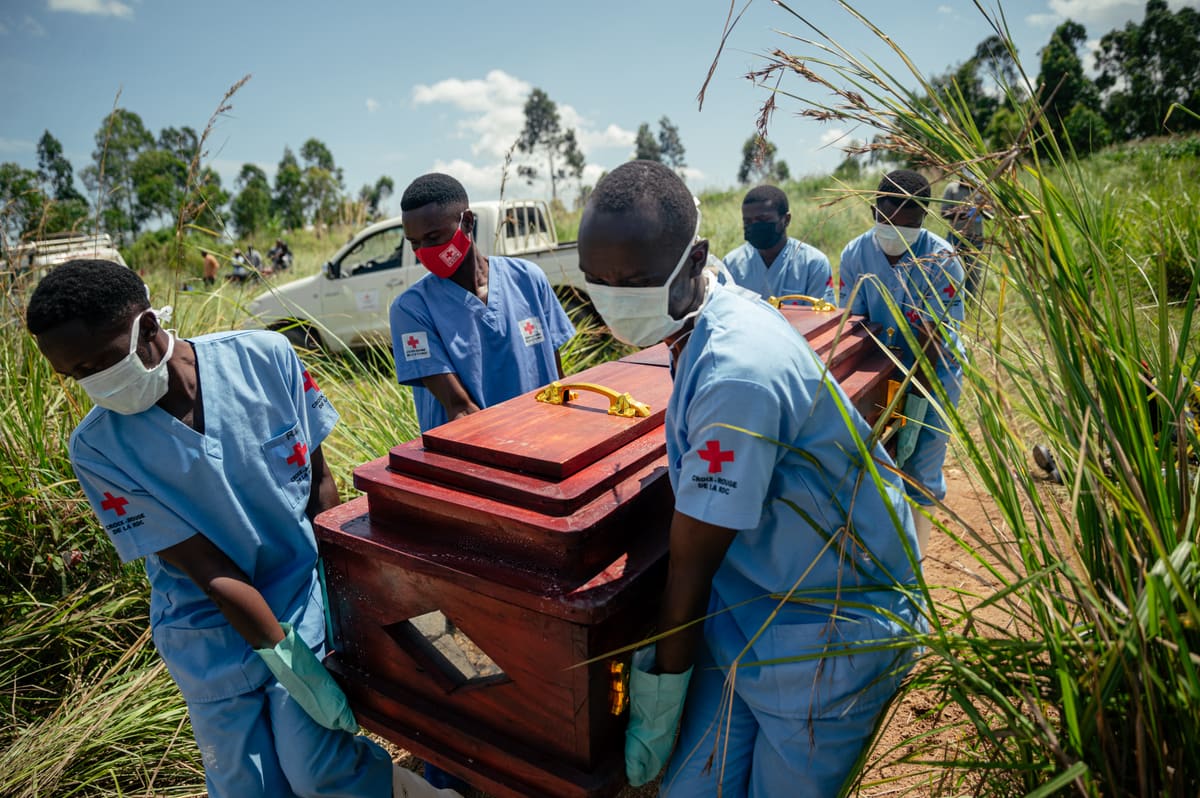
In Bunia, burial teams in protective gear have been carrying coffins through cemeteries while motorbike riders adjust to new movement rules on the streets. The Democratic Republic of the Congo is facing a fast-moving Ebola outbreak centred in the eastern province of Ituri, where conflict, poor roads and strained health services are slowing the response. Latest reports place the DRC toll at more than 500 confirmed cases, with deaths reported above 90, while Uganda has also confirmed cases linked to cross-border movement. Health agencies have now moved into a continental response, with a six-month plan seeking US$518 million to contain the virus and protect neighbouring countries.

How Events Unfolded
Congo declared the outbreak on May 15, 2026, after laboratory tests confirmed Ebola in Ituri. The disease has since spread across Ituri, North Kivu and South Kivu, with Uganda also reporting infections after cases crossed the border.
The outbreak has accelerated quickly. One report placed Congo's confirmed cases at 515 after 27 new infections in a 24-hour period, with 91 confirmed deaths. Another later situation report put the toll at 550 cases, 101 deaths and 19 recoveries.
That jump does not automatically mean every new infection happened at once. Authorities said part of the rapid increase came from expanded diagnostic capacity, which allowed teams to test a backlog of samples that had already been collected.
Movement controls are now affecting daily life. Congo reimposed travel restrictions to and from Bunia, while Uganda closed its border with the DRC in an effort to limit spread. The border closure has disrupted local trade, and health leaders have warned that restrictions can create economic pressure without solving the outbreak at its source. Readers can follow the broader public health plan through the joint Ebola response plan.
Critical Details
This outbreak is caused by the rare Bundibugyo strain of Ebola. That matters because, unlike the Zaire strain responsible for many earlier Congo outbreaks, Bundibugyo has no approved vaccine or treatment. Supportive care can still save lives, especially when patients seek help early, but the medical toolkit is more limited.
Ituri accounts for more than 90% of reported cases. The province has also endured violence from armed groups, including the Allied Democratic Forces, and that insecurity directly affects the health response. Teams cannot trace contacts, move supplies or safely reach remote communities when roads are blocked, villages are displaced or responders are attacked.
Contact tracing is a major weak point. One report said coverage had improved but remained at 64%, while another earlier account placed it around 45%. The gap matters because Ebola spreads through contact with infected bodily fluids, so missed contacts can become missed chains of transmission.
- Bundibugyo virus
- A rare species of Ebola virus now driving the outbreak in Congo and Uganda.
- Contact tracing
- The process of identifying and monitoring people who had contact with an infected patient.
- Case-fatality rate
- The share of confirmed patients who die from the disease, though current figures may shift as investigations continue.
Reactions & Responses
WHO Director-General Dr Tedros Adhanom Ghebreyesus praised Uganda's response during a visit, pointing to border screening, surveillance, testing and case management. He also urged Uganda to reconsider its border closure, arguing that the stronger solution is controlling the outbreak at the epicentre.
“The government has mounted a prompt and capable response to the outbreak of Ebola.”
At the continental level, Africa CDC and WHO have launched a six-month preparedness and response plan covering June to November 2026. It is designed to fund emergency coordination, surveillance, laboratory testing, infection prevention, clinical care, logistics and community engagement.
“Ebola moves fast. Africa must move faster.”
The response is not only medical. Health workers are also confronting mistrust, attacks and fear around safe burials. Those pressures can turn a public health emergency into a community crisis, especially where people have already lived through years of conflict.
Putting It in Perspective
Congo has battled Ebola repeatedly, and authorities have stressed that the country has overcome 16 previous outbreaks. This is now described as the 17th Ebola outbreak in the DRC over the last 50 years, but the strain and setting make this one unusually difficult.
The comparison officials fear is the 2014-2016 West Africa Ebola epidemic, which recorded more than 28,000 reported cases and about 11,300 deaths. A U.S. CDC model cited in the reports warned that, if only 20% of patients are isolated, there could be a 65% chance of cases exceeding 20,000 within three months.
For Australians, the direct health risk described in the reports is not the same as the regional risk in Africa. WHO has assessed the global risk as low, while warning that the danger is much higher inside the DRC and across the region. The practical point is global health preparedness: outbreaks that begin in hard-to-reach conflict zones can still affect travel systems, aid budgets and international health planning.
Looking Ahead
The confirmed next step is scale-up. Africa CDC and WHO are seeking US$518 million for the six-month plan, while emergency financing of US$220.6 million has also been announced to support surveillance, laboratories, health workforce capacity and cross-border coordination.
Response teams are also working to improve diagnosis, trace more contacts and strengthen community trust. Three candidate vaccines are under development, but the reports state there is currently no approved vaccine or treatment specifically for Bundibugyo Ebola.
More recoveries have been reported, including patients discharged in Congo and an American doctor cleared to leave quarantine in Germany after repeatedly testing negative. Those cases show early care can change outcomes, but the outbreak's direction will depend on whether teams can reach patients quickly, protect health workers and keep transmission from moving silently through displaced and mobile communities.
FAQ
What is happening with Ebola in Congo?
Congo is dealing with an Ebola outbreak declared on May 15, 2026, centred mainly in Ituri province, with cases also reported in North Kivu, South Kivu and Uganda.
How many Ebola cases have been reported?
Reports cited more than 500 confirmed cases in the DRC, including figures of 515 and later 550 cases, with deaths reported above 90.
Why is this Ebola outbreak harder to control?
The outbreak is caused by the rare Bundibugyo strain, which has no approved vaccine or treatment, and it is spreading in conflict-affected areas where contact tracing and medical access are difficult.
Has Ebola spread outside Congo?
Yes. Uganda has confirmed 19 cases, including cases among people who travelled from the DRC, and two deaths have been reported there.
Is this Ebola outbreak a global threat?
WHO has assessed the global risk as low, while describing the risk inside the DRC and the surrounding region as much higher.