
3 out of 44. That is the exact number of offensive posts removed by Meta after Federal Labor MP Josh Burns reported them over a three-year period, exposing what he describes as a modern democratic crisis where social media companies profit from engineered toxicity. Appearing before the landmark Royal Commission on Antisemitism and Social Cohesion on Tuesday, the member for Macnamara detailed a relentless campaign of online abuse that has bled into physical violence, warning that the digital landscape has transformed into the primary driver of racial and religious vilification in Australia.
The Bottom Line
- Federal Labor MP Josh Burns told the inquiry that social media platforms operate as an "arena of hate" where complaints consistently disappear into a regulatory black hole.
- Abuse targeting Burns has heavily spilled over to his non-Jewish partner, Victorian Animal Justice MP Georgie Purcell, incorporating severe layers of violent misogyny and sexualisation.
- Data submitted by the Dor Foundation revealed that inquiry witnesses themselves are being aggressively targeted online, with less than 5% of reported content being removed by platforms like Facebook.
- Independent research presented by Deakin University indicated that while antisemitic content remains elevated, data following the Bondi attack actually showed a "huge spike" in anti-Muslim hatred.
- Burns and former attorney-general Mark Dreyfus are calling for urgent legislative reform to expand the powers of the eSafety Commissioner beyond individual vilification.
Breaking It Down
The Royal Commission on Antisemitism and Social Cohesion, established in the wake of the tragic Bondi Beach terror attack, heard extraordinary evidence on Tuesday regarding the direct pipeline between online rhetoric and physical threats. Mr Burns recounted the terrifying reality of a June 2024 arson attack on his St Kilda electorate office. The attack involved an unidentified group smashing windows with a hammer, spray-painting horns over his face, and lighting fires in telecommunications pits that knocked out local internet infrastructure for a week and forced the 3am evacuation of nearby residential apartments.
What happens in the digital sphere does not stay there, according to data specialist Dr Matteo Vergani from Deakin University's Tackling Hate Lab. His team presented findings showing that real-world media reports are rapidly weaponised online, converting reported events into systemic conspiracy theories. While a baseline level of hate content targeting Jewish Australians remained low prior to late 2023, it has spiked sharply and stayed permanently elevated across mainstream platforms, particularly on X (formerly Twitter).
The inquiry was also presented with data from the Dor Foundation, led by chief executive Tahli Blicblau, tracking the immediate blowback faced by everyday citizens who step forward to give evidence. In a audited sample of 275 offensive posts targeting recent commission witnesses, only five were removed by Facebook and 20 by X. The remaining live posts included explicit calls for violence, Holocaust glorification, and targeted harassment labeling terror survivors as "crisis actors."
Why This Matters
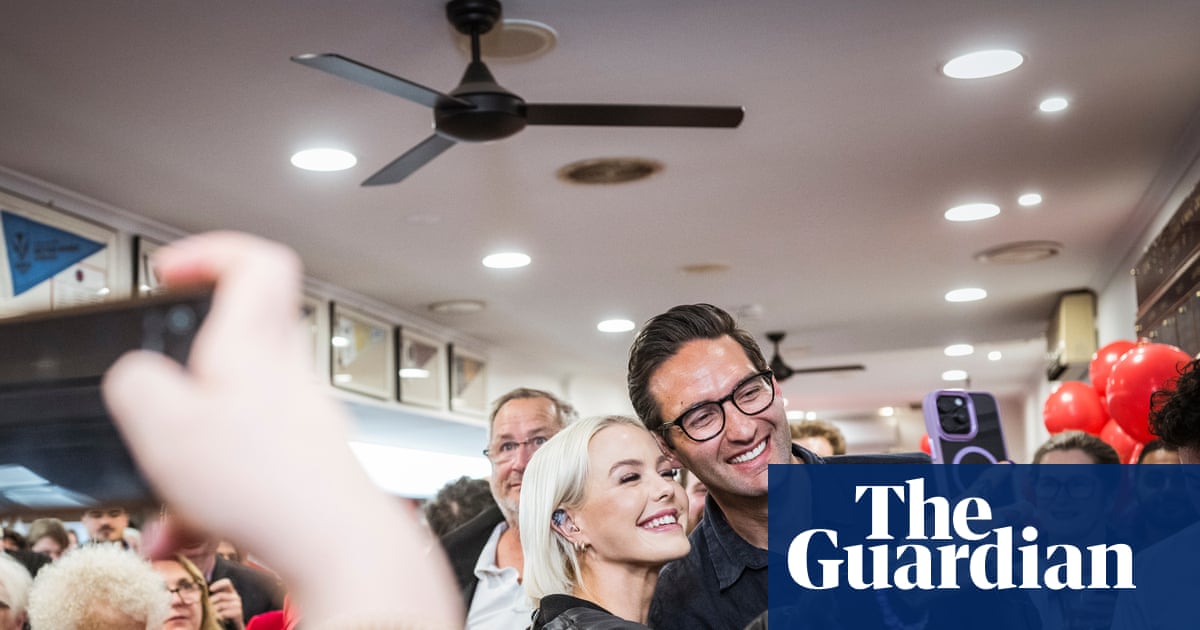
This escalating digital vitriol carries a profoundly personal cost for public figures and ordinary citizens alike. Mr Burns detailed his intense sense of guilt over the "ferocious" abuse directed at his partner, Victorian state MP Georgie Purcell. Because of her relationship with a Jewish man, Purcell has been inundated with highly sexualised, misogynistic attacks, including horrific commentary sent immediately after the birth of the couple's daughter.
It’s a weird feeling that your partner has to take abuse because they’re in a relationship with you. Why should she have to deal with that? Even just speaking out she will attract an avalanche of hate and misogyny.
For the broader Australian community, the issue extends far beyond political circles. The commission heard testimonies from local cultural figures, including Sydney musician Ben Adler of the klezmer fusion band Chutney, who detailed how arts venues and folk festivals capitulated to online boycott campaigns, effectively deplatforming Jewish performers to avoid corporate inconvenience. Randwick City councillor Daniel Rosenfeld also detailed threats comparing him to historical perpetrators of the Holocaust simply for attending a community reception, highlighting a systemic failure in platform self-regulation.
What Comes Next
The regulatory focus is turning directly toward the federal government's legislative toolkit. Mr Burns argued that because the current Online Safety Act only permits the eSafety Commissioner to intervene when an individual is targeted, it lacks the legal mechanism to force platforms to remove systemic hate directed at entire minority groups. Former attorney-general Mark Dreyfus submitted that further extension of hate speech laws is critically required to create a broader federal offense that doesn't rely strictly on proving the threat of physical force.
The eSafety Commissioner, Julie Inman Grant, is scheduled to appear before the royal commission over the next fortnight to address these specific enforcement gaps, ahead of the inquiry's final report due in December.
Frequently Asked Questions
What is the purpose of the Antisemitism Royal Commission?
The Royal Commission on Antisemitism and Social Cohesion was established following the December Bondi Beach terror attack to investigate the prevalence, drivers, and real-world impacts of online and offline hate speech in Australia.
What did MP Josh Burns say about social media companies?
Josh Burns stated that social media platforms function as "arenas of hate" that actively profit from divisive algorithms, noting that he has lost faith in reporting systems after only 3 out of 44 reported threats were removed by Meta.
How has online abuse affected MP Georgie Purcell?
Though she is not Jewish, Victorian MP Georgie Purcell has been subjected to severe online abuse and violent misogynistic commentary purely due to her relationship with federal MP Josh Burns.
What did the Deakin University hate research reveal?
The university's data lab found that online hate is heavily triggered by real-world media incidents, showing sustained high levels of antisemitism alongside an immediate, massive volume spike in anti-Muslim hate after the Bondi attack.
What legislative changes are being proposed to stop online hate?
Federal members are calling for an overhaul of the Online Safety Act to expand the eSafety Commissioner’s powers, allowing the direct removal of content targeting generalized minority populations rather than just single individuals.