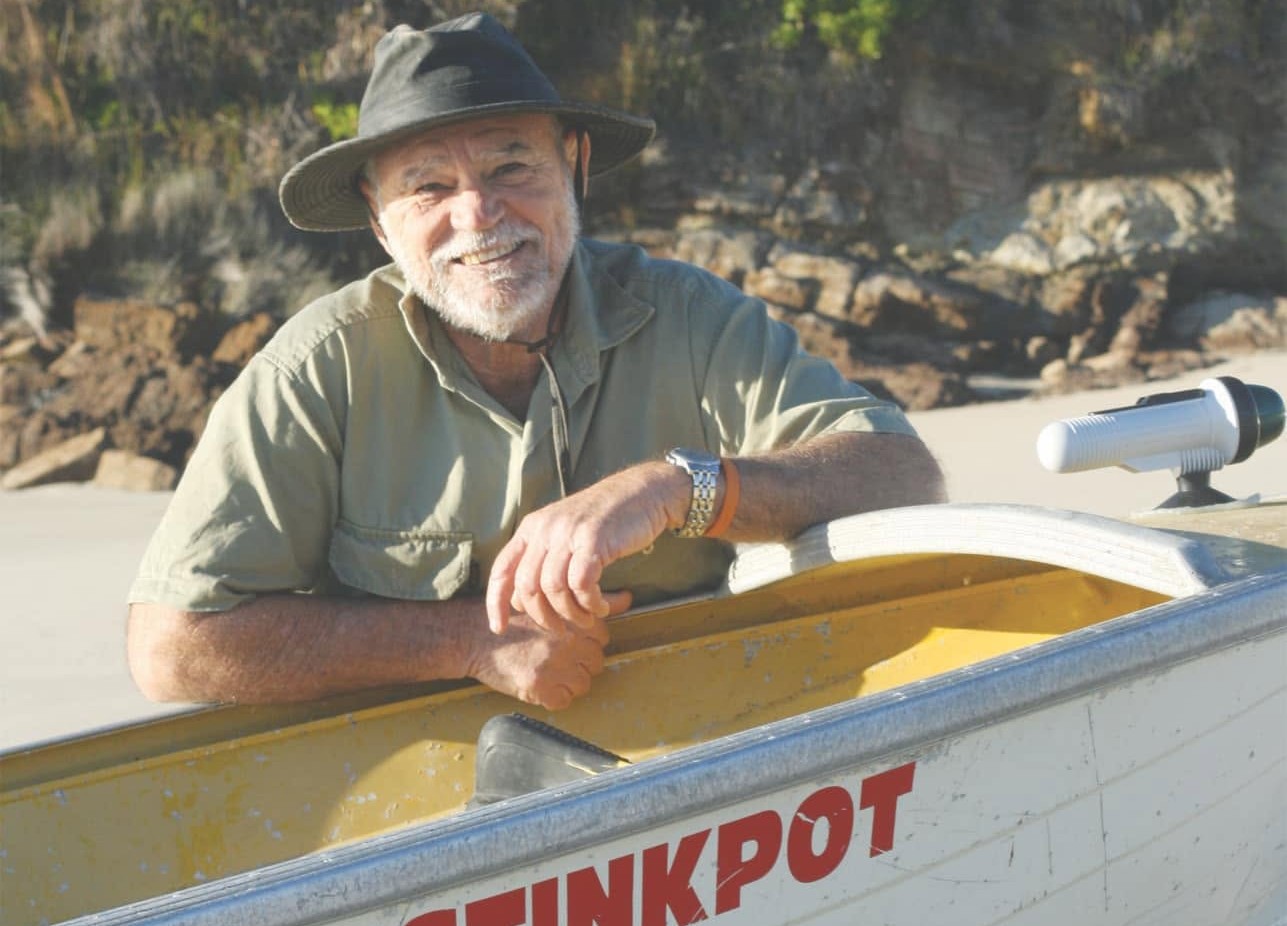
ABC radio fishing personality John 'Stinker' Clarke has survived a harrowing five-hour ordeal in freezing conditions after his fishing boat capsized near the Port Stephens Lighthouse at Fingal Bay on June 24. The 77-year-old local icon was rescued from the pitch-black water after a multi-agency search operation successfully traced his location, defying extreme elements that emergency personnel described as barely conducive to human life.
The Full Story
The veteran angler, who has spent more than 50 years fishing the regional waters, launched his tinnie, named Stinkpot, on Wednesday afternoon for what was meant to be a routine outing. Before heading out, Mr Clarke told his wife Ella to expect him home within a few hours. However, around 3:30pm, as he attempted to pull up his anchor amid deteriorating conditions in front of the lighthouse, a larger-than-average wave swamped and instantly capsized the small vessel, throwing him into the rough sea.
As the overturned boat drifted dangerously close to the coastal rocks, Mr Clarke made the split-second decision to let go and drift into deeper water to avoid being smashed against the cliff face. Finding himself isolated in open water as darkness fell, he managed to grab two floating rowing oars and an empty plastic bucket. Clinging tightly to these makeshift flotation aids along with an older life jacket, he was forced to float in the open ocean while waiting for emergency services to be mobilised.
The alarm was raised at approximately 6:00pm when his wife noticed he had failed to return by his stated deadline. NSW Police, Marine Rescue NSW, and the Westpac Rescue Helicopter Service initiated an immediate search, facing severe 15-knot southerly winds and a grueling 2.5-metre southerly swell. The rescue breakthrough occurred around 8:00pm when helicopter doctor Hannah Hall, manually sweeping a handheld spotlight out of the aircraft window, spotted what appeared to be floating marine debris before locking onto the movement of the stranded fisherman.Water police quickly converged on the coordinated position to pull the fading fisherman out of the swell. In a remarkable twist of fate, the responding officer who dragged him onto the police vessel was Port Stephens water police coordinator Sergeant Clint Brown, a former student and rugby player whom Mr Clarke had coached decades prior. The police boat then travelled back to Nelson Bay Marina, shielded from the dangerous offshore conditions by a Marine Rescue vessel that sailed directly ahead to break the oncoming swells.
The Main Players
- John 'Stinker' Clarke: A 77-year-old experienced fisherman and popular local ABC radio personality who survived five hours stranded at sea.
- Ella Clarke: John's wife, who initiated the rescue by immediately contacting emergency authorities when her husband missed his home deadline.
- Dr Hannah Hall: The Westpac Rescue Helicopter Service doctor who successfully located Mr Clarke in the dark using a manual spotlight.
- Sergeant Clint Brown: The Port Stephens water police coordinator and former student of Mr Clarke who pulled him safely from the water.
- Peter Wood: Marine Rescue Port Stephens Skipper who described the challenging nighttime operation.
- Ryan Hockey & Liam Beal: NSW Ambulance paramedics who delivered critical emergency treatment to stabilise the patient at the wharf.
- Detective Inspector Jane Prior: Marine Area Command Crime Manager who overseen the initial response and safety investigation.
Key Statistics
- 5: The total number of hours Mr Clarke spent floating in open ocean water before rescue crews reached him.
- 25: The dangerously low core body temperature in degrees Celsius recorded by paramedics when Mr Clarke was pulled from the sea, compared to a normal healthy range of 36–37 degrees.
- 15: The sustained speed of the southerly winds in knots encountered by rescue vessels during the night mission.
- 2.5: The height of the southerly swell in metres that rescue teams had to navigate in total darkness.
- 400: The distance in metres southwest of Fingal Lighthouse where the capsized vessel was discovered.
What This Means
The incident has sparked widespread warnings from coastal authorities regarding safety protocols for recreational boaters in regional areas. Maritime officials emphasised that while Mr Clarke made an error by heading out in deteriorating conditions, his strict adherence to baseline safety rules—specifically wearing a life jacket and notifying family of his precise timeline—ultimately prevented a coastal tragedy. Local friends and family, including relatives who flew in from Brisbane and travelled from Sydney, assisted crews by sharing the locations of Mr Clarke's confidential, long-favoured fishing spots to significantly narrow the search perimeter.
The successful outcome provides a massive boost to the emergency services teams who regularly combat dangerous conditions off the coast. For residents in AU, the survival story is a timely reminder of how quickly marine conditions can shift and why active communication with shore contacts is mandatory. Paramedics confirmed that given the extreme conditions, the fisherman was likely only 10 to 15 minutes away from a fatal outcome before he was located.
What to Expect
Following his rescue, Mr Clarke was transported via road ambulance to Tomaree Hospital before being transferred to John Hunter Hospital to receive treatment for severe hypothermia and superficial skin abrasions. He was successfully stabilised and allowed to return home within 24 hours of admission. Moving forward, Marine Area Command officers will conclude their formal inquiries into the vessel capsizing, while Mr Clarke has publicly stated he intends to spend time recovering with family and vows to stick to much quieter waters for any future fishing trips.
FAQ
How long was John 'Stinker' Clarke stranded in the water?
Mr Clarke spent approximately five hours floating in open ocean water after his fishing boat capsized around 3:30pm on June 24.
What emergency equipment did the fisherman have?
Mr Clarke was wearing an older life jacket and managed to hold onto a pair of wooden rowing oars and an empty plastic bucket to stay afloat after his tinnie overturned.
Who found Mr Clarke in the ocean?
He was spotted by Dr Hannah Hall using a searchlight from a Westpac Rescue Helicopter, and was subsequently pulled out of the water by his former school student, NSW Police Sergeant Clint Brown.
What injuries did the fisherman sustain?
Mr Clarke suffered from severe hypothermia, with his core body temperature dropping to a critical 25 degrees Celsius, along with various physical abrasions from the vessel debris.

Resources
Sources and references cited in this article.