Socceroos on the Brink of Knockout Qualification Amid World Cup Ladder Chaos
The calculation for the Socceroos is clear ahead of their final group stage fixture: secure a result against Paraguay and automatic qualification for the round of 32 is guaranteed. With the expanded 48-team format introducing unprecedented complexity across the 12 groups, the race for both automatic top-two berths and the eight best third-placed spots has thrown the tournament into beautiful, chaotic data crunching that has capturing the attention of sports fans across Australia.

Setting the Scene
This tournament marks a massive historical shift in how the FIFA World Cup operates. For the last seven iterations stretching back to France 1998, a clean 32-team format meant the top two sides from eight groups simply moved on. Now, 48 nations are split into 12 groups of four, introducing a safety net where finishing third doesn't automatically mean a flight home.
Instead, 12 teams finishing third across the tournament are being compared in a separate live tracking ladder, with the top 8 advancing to fill out a brand-new 32-team knockout bracket. This has drastically altered team strategies, making every single goal scored or conceded a matter of tournament survival, even when a match feels out of reach.
Adding to the logistical madness, FIFA has altered its standard tie-breaking rules. Head-to-head records are now prioritized over total goal difference when separating teams locked on equal points, creating clear-cut fates early for several struggling sides.
Here's What Happened
Heading into the final matchday of the group stage, seven heavyweights have already booked their places in the round of 32. Heavy favourites France, alongside Germany, Argentina, Colombia, Norway, co-hosts Mexico, and the United States have all safely advanced after secure opening blocks. In contrast, the dream has mathematically ended for five nations, with Haiti, Turkey, Tunisia, Jordan, and Panama completely eliminated from knockout contention.
The United States wrapped up top spot in Group D with a 2-0 victory over Australia in their second match, following a 4-1 opening defeat of Paraguay. This leaves the Socceroos sitting second in Group D with 3 points and a goal difference of 0, directly ahead of Paraguay who also hold 3 points but sit at a -2 goal differential.

Data modelling by the Opta supercomputer, which ran 100,000 simulations of the remaining group stage matches, indicates that 3 points is the absolute baseline of hope for third-placed progression. Sides finishing on four points advance in 99.81% of scenarios, whereas three points with a level (0) goal difference gets a team through 94.8% of the time.
Reactions & Responses
The high-stakes nature of the final group stage games has brought individual performances into sharp focus. Lionel Messi has rewritten history for Argentina, netting twice in their 2-0 win over Austria to become the World Cup’s all-time leading goalscorer with 18 goals, adding to a spectacular hat-trick against Algeria earlier in the tournament. Meanwhile, Kylian Mbappé has pushed France forward with consecutive braces, scoring twice in their 3-1 opener against Senegal and twice more in a clinical 3-0 victory over Iraq.
Outside the goals, the strictness of the tournament layout has left zero room for error, leading to heartbreak elsewhere. Financial and administrative adjustments are already occurring off the pitch, with the Ukrainian Football Association opting not to renew the contract of under-21 head coach Unai Melgosa ahead of its expiration.
The Bigger Picture
For Australia, the math for the upcoming match against Paraguay is transparent. A win or a draw automatically locks in second place in Group D, booking a round of 32 date against the runner-up of Group G. Should the Socceroos suffer a defeat, they will drop to third place on three points and a negative goal difference, forcing them into a nervous multi-day wait to see if they finish among the eight best third-placed teams.
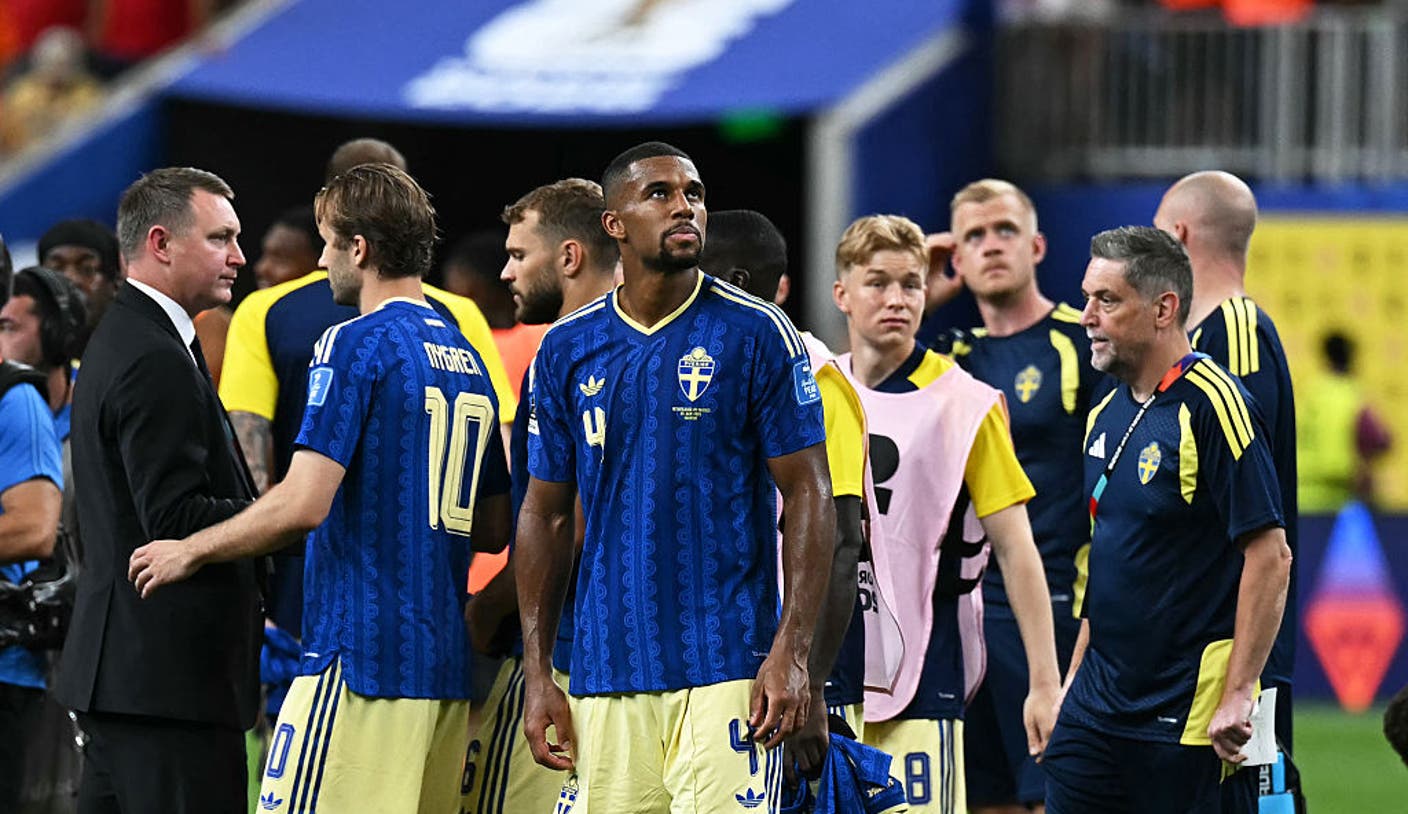
The structural drama extends across other pools too. In Group B, Canada and Switzerland sit tied on four points and will clash in Vancouver to decide who stays home for the knockouts and who travels to Los Angeles. Group I sees France and Norway playing for top seed status, while Sweden, Scotland, and the Netherlands all remain well positioned but require final day compliance to ensure safe passage.
The Road Ahead
The final round of group stage matches will conclude over the coming days, directly establishing the fixed 32-team ladder. The knockout phase officially begins on June 28 and runs through to July 3, mapping a direct, single-elimination path all the way to the final on July 19.
FAQ
How do the third-place rankings work in the 2026 World Cup?
The 12 third-placed teams are ranked in a separate table based on total points accumulated, goal difference, goals scored, fair play conduct points (yellow/red cards), and finally, their FIFA world ranking. The top eight move into the round of 32.
What do the Socceroos need to qualify for the knockouts?
Australia needs a win or a draw against Paraguay to guarantee automatic progression as the Group D runner-up. A loss leaves them on three points, relying on goal difference and results in other groups to claim a third-place spot.
Which tie-breaker is used first if teams are level on points?
For teams level on points within a group, FIFA uses head-to-head records (points, goal difference, and goals scored in matches between the tied teams) before looking at overall group goal differential.

Resources
Sources and references cited in this article.