
For Australian travelers who shell out top dollar to skip the dreaded international stopover, a direct route is a sacred promise. However, passengers aboard Qantas flight QF10 from London Heathrow to Perth received a stark reminder of the limits of modern aviation on Tuesday when their 17-hour journey was cut short by unexpected weather, forcing an emergency refueling stop in Western Australia's remote north.

Behind the Headlines
The disruption underscores the extreme operational and economic vulnerabilities built into ultra-long-haul flight paths. When global airlines map out sectors crossing massive, isolated stretches like the Indian Ocean, fuel management becomes a highly volatile math problem. Airlines must balance passenger payload with enough fuel to handle unforeseen delays, but carrying excess weight heavily taxes fuel efficiency.
This operational reality leaves incredibly tight margins. On ultra-long flights exceeding 17 hours, a slight atmospheric shift or sustained jet stream variations can completely throw off pre-flight projections, transforming a routine journey into a logistical challenge. What makes this particular incident notable is that it acts as a stress-test for the broader commercial appetite for marathon point-to-point travel between Europe and Australia.
Here's What Happened
The Boeing 787-9 Dreamliner departed London Heathrow at 12:28 pm British Standard Time, charting what was supposed to be a seamless direct leg to Perth. However, while en route, the aircraft ran into stronger-than-expected headwinds that dramatically accelerated its fuel burn. Changing weather conditions forced the crew to adjust their flight path mid-journey, shrinking the required safety fuel buffer needed to complete the final two hours of the trip.

Recognizing that they lacked the necessary margins to safely push through to Perth, the pilots initiated a strategic diversion. Exactly 16 hours and 23 minutes after leaving London, the plane touched down at 11:51 am local time at Karratha Airport, a hub located roughly 1,500 kilometers north of Perth in the Pilbara region. The surprise landing was made possible only because Karratha, a town of 25,000 people mostly serving fly-in, fly-out mining workforces, was upgraded and approved as a designated restricted-use alternative international airport just last month.
The aircraft spent roughly one hour on the tarmac for rapid refueling. It departed Karratha at 12:58 pm local time and finally touched down at its true destination, Perth Airport, at 2:36 pm local time (4:36 pm AEST).
Voices & Opinions
Aviation experts emphasize that while the unscheduled stop may frustrate flyers who chose the flight specifically to avoid stopovers, the diversion represents an ordered, highly calculated safety standard rather than an emergency crisis.
Pilots constantly run fuel calculations in flight to ensure their actual fuel burn matches the pre-flight projections. Essentially, they know exactly where to go if anything happens. It’s not a last-minute change where they are frantically looking for an airport; they already know which airport they would divert to.
Meanwhile, the regional diversion has drawn mixed reactions online, with satirical commentary highlighting the deep cultural divide between international travelers and the rugged outback mining hubs they suddenly found themselves sitting in.
The Bigger Picture
The Karratha detour comes at an incredibly awkward time for the national carrier, landing just days after Qantas heavily promoted the launch timeline for its highly anticipated Project Sunrise. The ambitious initiative aims to connect Sydney to London and New York completely non-stop by 2027, with grueling flight times spanning up to 22 hours.
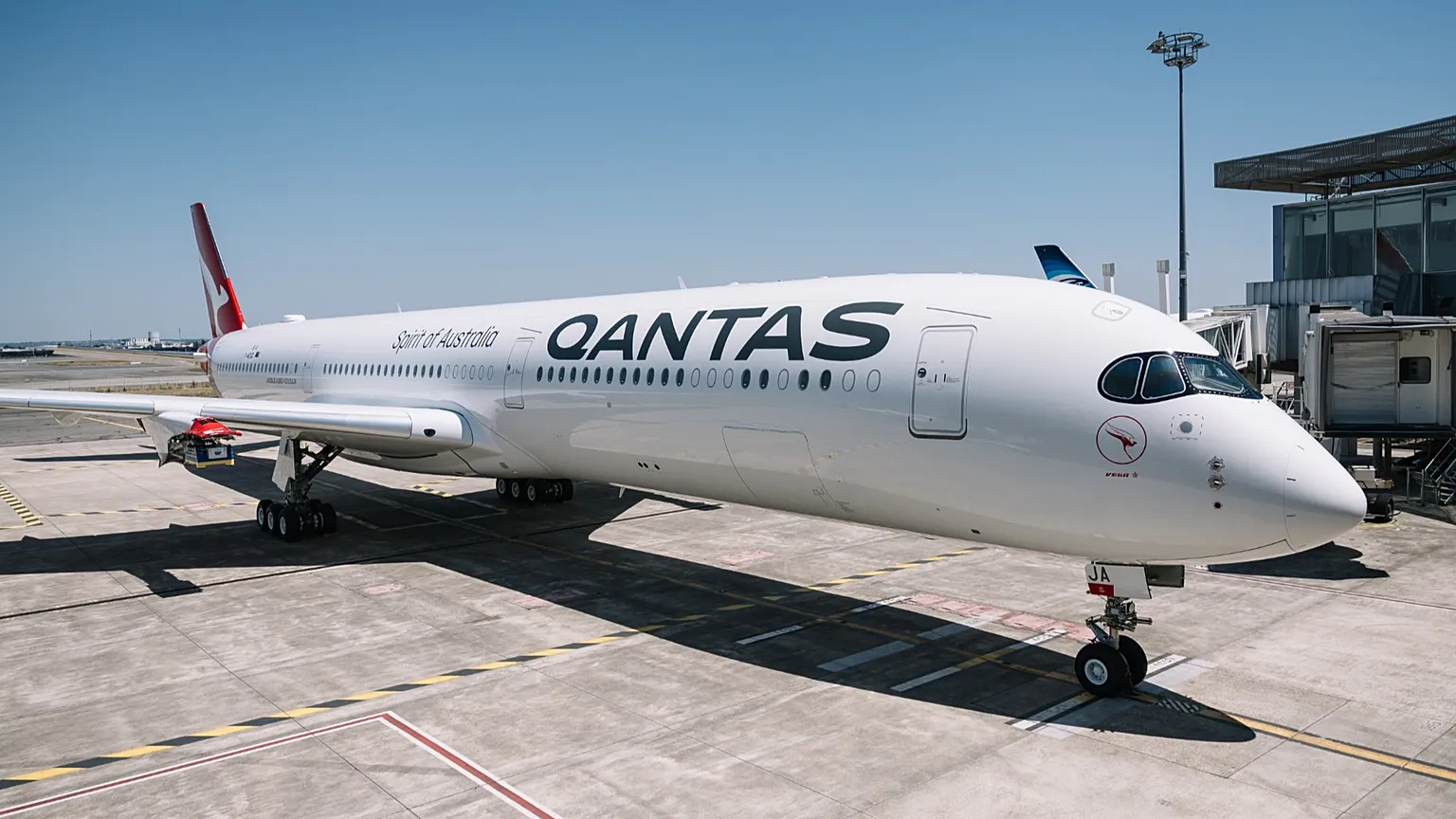
This incident vividly exposes the severe weather risks confronting future ultra-long-range services. If a 17-hour flight path struggles to outmaneuver sudden wind anomalies over Western Australia, a 22-hour flight path will face even harsher meteorological pressures across varying international airspaces, pushing weather economics and contingency planning to their absolute limits.
The Road Ahead
Qantas has confirmed it will push forward with its flagship Project Sunrise routes starting in 2027. To mitigate these extreme weather variables, the airline will utilize specially modified Airbus A350-1000ULR aircraft designed for ultra-long-range performance, featuring enhanced fuel storage capacities.
Operational data pulled from current London-to-Perth diversions will serve as critical reference benchmarks for planners trying to stabilize fuel modeling before sending passengers on the longest commercial paths in aviation history.
Frequently Asked Questions
Why did the Qantas flight from London divert?
The flight encountered severe, unexpected headwinds along its route. This significantly increased the plane's fuel burn and reduced the mandatory safety fuel margins needed to complete the final two hours of the trip to Perth, necessitating a refuel stop.Where did the Qantas flight make its unexpected landing?
The Boeing 787-9 Dreamliner diverted to Karratha Airport, located in a mining town in Western Australia's Pilbara region, approximately 1,500 kilometers north of its original destination in Perth.How long was the Qantas plane delayed on the ground?
The aircraft spent approximately one hour on the ground at Karratha Airport to refuel before taking off again and successfully reaching Perth Airport later that afternoon.Can Karratha Airport regularly handle large international aircraft?
Karratha Airport was officially approved as a designated restricted-use alternative international airport just last month, enabling it to legally and safely accept larger aircraft like the Boeing 787-9 Dreamliner during operational diversions.What does this incident mean for Qantas Project Sunrise?
The diversion highlights the substantial weather and fuel planning risks that Qantas will face with its upcoming Project Sunrise flights, which intend to link Sydney to London non-stop for up to 22 hours starting in 2027.