
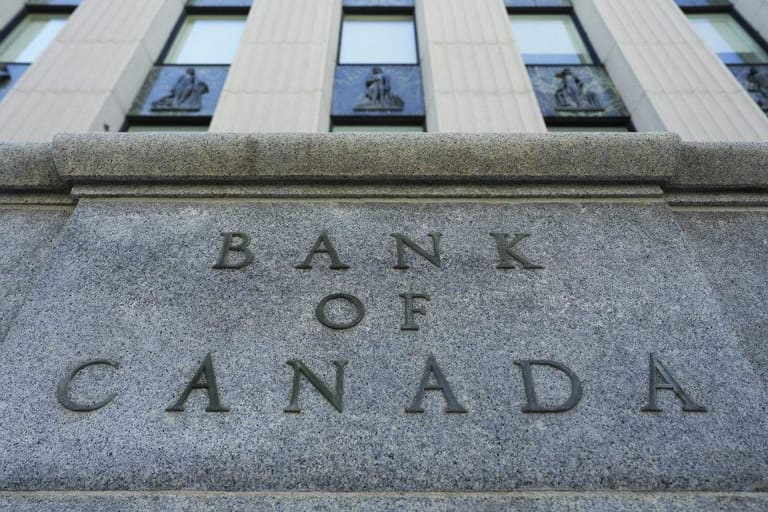
Canadians watching mortgages, lines of credit and the cost of everyday borrowing got a clear signal Wednesday: the Bank of Canada is not ready to move rates in either direction. The central bank kept its benchmark interest rate at 2.25 per cent on June 10, 2026, marking its fifth consecutive hold. The decision reflects a difficult trade-off: inflation has moved higher because of energy prices, while the broader economy has struggled to grow.

Setting the Scene
The rate announcement landed at a tense moment for households and businesses. Inflation reached 2.8 per cent in April, pushed higher in part by global energy prices connected to the conflict in the Middle East. At the same time, the Canadian economy contracted by 0.1 per cent on an annualized basis in the first quarter of 2026 after a 1.0 per cent drop in the fourth quarter of 2025.
That mix leaves the central bank with few easy choices. Raising rates could cool inflation but also add pressure to a weak economy. Cutting rates could help growth, but it could also make price pressures harder to control if higher oil costs spread through the economy.
Here's What Happened
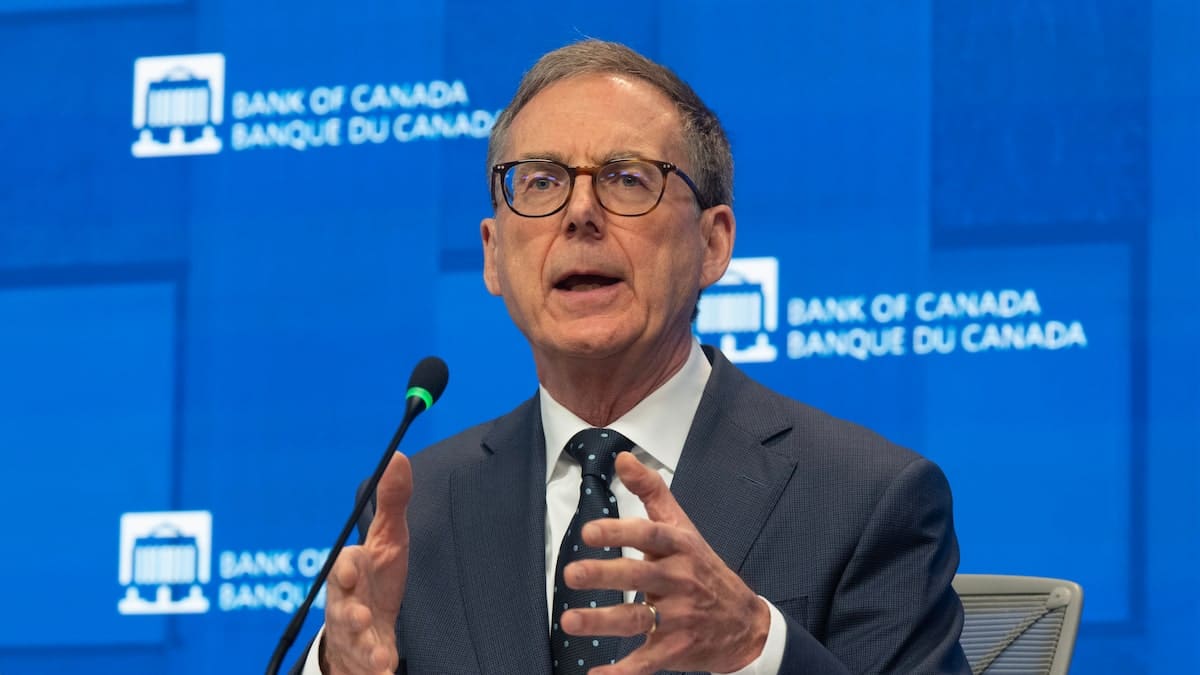
The Bank of Canada announced the decision at 9:45 a.m. Eastern Time, followed by a press conference with Governor Tiff Macklem and Senior Deputy Governor Carolyn Rogers. The bank said it would keep watching whether energy-driven inflation becomes broader and whether U.S. trade uncertainty weakens the economy further.
Macklem said the bank is looking through the near-term impact of the Middle East conflict on headline inflation, but it will not allow higher energy prices to become persistent inflation. The central bank expects inflation to hover near 3 per cent in coming months before gradually easing toward its 2 per cent target.
The economy is giving mixed signals. Canada added almost 88,000 jobs in May, and the unemployment rate fell to 6.6 per cent, but Macklem said monthly job figures have been volatile and employment is little changed since the start of the year. That matters because a single strong jobs report does not erase a year of flat growth.
U.S. tariff threats remain another pressure point. If new trade restrictions hit Canada, the bank said it may need to cut rates to support growth. If oil prices remain elevated and start feeding into other goods and services, the bank may have to raise rates instead.
Reactions & Responses
Macklem rejected the idea that Canada is clearly in recession, even after two quarterly GDP declines. His explanation focused on breadth: more than half of industries grew year over year in the first quarter, and the labour market has not shown a broad collapse.
Based on the data we’ve seen to date, the economy is weak, but it is not clearly in recession
Economists described the hold as expected. BMO Economics managing director Benjamin Reitzes said the June policy statement was similar to April’s, while CIBC senior economist Andrew Grantham described the central bank as patient and still waiting to see how risks develop. Those reactions suggest financial markets were looking less for the decision itself and more for clues about whether the next move could be up or down.
Political reaction also focused on the recession debate. Conservative Leader Pierre Poilievre said in Ottawa that Canada had been put into recession, a claim Macklem’s comments did not support using the central bank’s broader definition of an economic downturn.
The Bigger Picture
For Canadians, the practical effect is a continued pause in the benchmark rate that influences variable borrowing costs. Variable-rate mortgage holders will not see an immediate Bank of Canada-driven change, but the central bank’s warning means future increases are not off the table if inflation spreads beyond energy.
Homebuyers and mortgage renewers face a less settled picture. Fixed mortgage rates are influenced by bond yields, and inflation worries have pushed those yields higher since the start of the year. That means a steady central bank rate does not automatically translate into cheaper fixed mortgages.
The wider concern is confidence. Businesses are dealing with shifting trade relationships, AI adoption and slower population growth, according to Macklem. When investment decisions are delayed because companies cannot predict trade rules or demand, weak growth can linger even without a sharp recession.
The Road Ahead
The Bank of Canada’s next moves will depend on two confirmed pressure points: whether U.S. trade policy becomes more restrictive and whether elevated oil prices push inflation into more categories. The bank said recent data suggests GDP growth will resume in the second quarter, though the economy is still expected to remain in excess supply.
For borrowers, the message is caution rather than relief. Rates are steady today, but the central bank has made clear that both cuts and increases remain possible if the data changes.
FAQ
What is the Bank of Canada interest rate now?
The Bank of Canada kept its benchmark policy rate at 2.25 per cent on June 10, 2026.
Why did the Bank of Canada hold rates?
The bank held rates because inflation has risen due to energy prices while the Canadian economy remains weak. Holding the rate balances those two risks.
Is Canada in a recession in 2026?
Tiff Macklem said the economy is weak but not clearly in recession, because the downturn has not been a significant broad-based decline.
How does the rate hold affect mortgages?
Variable-rate borrowers should not see an immediate Bank of Canada-driven change, but future rate moves remain possible depending on inflation and trade risks.
When was the June 2026 rate announcement?
The announcement was released on Wednesday, June 10, 2026, at 9:45 a.m. Eastern Time.