
The towering steel spans of the Gordie Howe International Bridge gleam quietly in the June sun, a finished $6.4-billion trade highway stretching across the Detroit River. Yet instead of the thunderous roar of thousands of transport trucks, there is only dead silence on the empty tarmac. What was meant to be a historic ribbon-cutting ceremony on June 12 was abruptly canceled at the last minute, locking North America's most vital new economic artery in an indefinite, politically charged limbo.

How Events Unfolded
Construction on the massive crossing, named after the iconic Canadian hockey legend who spent 25 seasons with the Detroit Red Wings, began in 2018 under an agreement funded entirely by Canadian taxpayers. The project was designed to seamlessly connect Windsor, Ontario, and Detroit, Michigan, splitting subsequent toll revenues with the state of Michigan once Canada recouped its initial multi-billion dollar construction costs. However, the smooth rollout ground to a sudden halt when U.S. President Donald Trump intervened via social media, demanding that Canada hand over at least half ownership of the infrastructure before the U.S. government would allow it to open.
As months passed without a resolution, cross-border officials tentatively scheduled a grand opening for June. Trucking executives were already en route when the event was cancelled due to what official statements vaguely termed outstanding issues. Stephen Laskowski, president of the Canadian Trucking Alliance, recalled heading out for the grand opening when his phone rang with explicit instructions not to bother showing up, leaving the shipping industry entirely in the dark.
Now, the infrastructure standstill has exploded into a fierce campaign weapon in Michigan's highly competitive U.S. Senate race. Democratic candidate Mallory McMorrow launched a $400,000 digital and television ad campaign filmed directly in front of the empty crossing. In the ad, McMorrow blasted the administration, demanding that the president open the bridge and alleging that the delay stems from blatant political favoritism toward a billionaire campaign donor.
Critical Details
The core of the political firestorm centers on the Moroun family, the billionaire owners of the competing, privately held Ambassador Bridge. Federal campaign finance records reveal that Matthew Moroun, the head of the Detroit-based trucking dynasty, donated $1 million US to a Trump-aligned super PAC, MAGA Inc., in January. Shortly after that donation, the administration's aggressive public opposition to the Gordie Howe Bridge began to materialize.
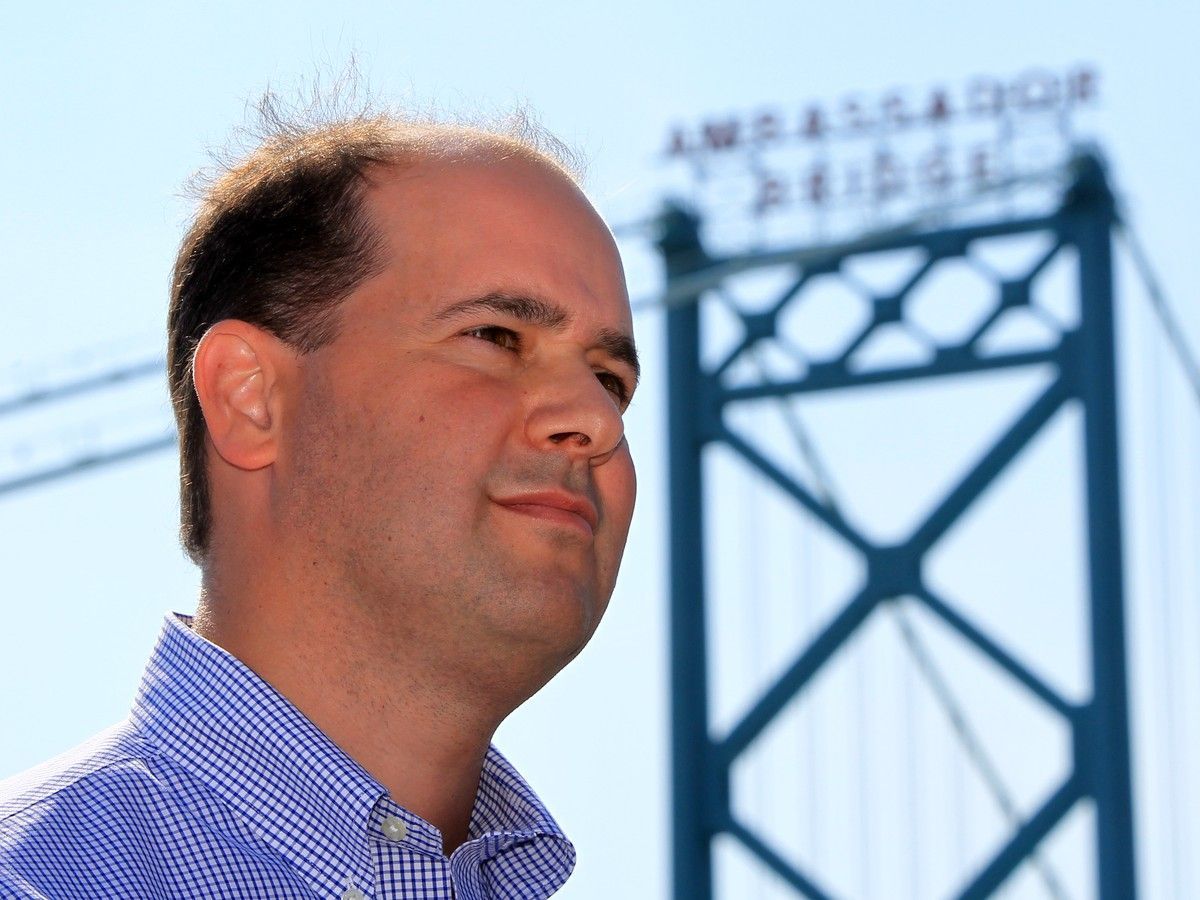
The multi-billion dollar public bridge presents a massive, direct threat to the Moroun family's bottom line. In 2025, the Department of Homeland Security recorded three million commercial vehicles crossing the Ambassador Bridge, where trucks are charged $15 to $20 US per axle. However, official traffic models show that commercial volume on the Ambassador Bridge is expected to plunge to 1.6 million vehicles once the modern Gordie Howe Bridge finally opens, effectively cutting the family's lucrative commercial monopoly in half.
Behind closed doors, U.S. Commerce Secretary Howard Lutnick has taken the lead on the file with the White House's blessing. Reports indicate that Lutnick met with the Moroun family following their million-dollar donation and is now pushing to redraw the division of toll allocations to secure a larger U.S. share. U.S. officials acknowledge that the administration views the completed bridge as a distinct source of leverage to squeeze economic concessions out of Canada, completely independent of broader trade talks.
Reactions & Responses
The sudden blockade has provoked sharp condemnation from international trade specialists and industry leaders who view the move as a dangerous escalation of protectionist policy. Fen Osler Hampson, a specialist in international affairs at Carleton University, described the tactic as the weaponization of infrastructure. Hampson observed that using borders as choke points is a hostile measure typically seen between rivals in wartime rather than close democratic allies.
This is a bridge that has been built for years; more than two decades have gone into bringing this bridge to life.
On the Canadian side, automotive leaders are pushing back against the idea that the bridge can be used indefinitely as a bargaining chip. Flavio Volpe, president of the Automotive Parts Manufacturers' Association and a member of Prime Minister Mark Carney's Advisory Committee on Canada-U.S. Relations, stressed that American manufacturers will ultimately suffer. Volpe pointed out that U.S. firms ship roughly $100-million worth of vehicles and components through the Windsor-Detroit corridor every single day, creating internal domestic pressure on Washington to resolve the dispute.
Putting It in Perspective
The economic stakes of the border shutdown are immense for both countries. Had the bridge opened two weeks ago as originally scheduled, it would have already handled at least 150,000 vehicles and more than $1-billion in bilateral trade. For local communities and regional supply chains, the empty bridge functions as a direct tax on logistical efficiency, forcing commercial trucks to rely on aging, congested pathways.

The conflict forms part of a broader shift in Canada-U.S. relations since 2025, marked by aggressive rhetoric labeling Canada as a 51st state and the implementation of punitive tariffs on steel, auto, and lumber. While the administration previously threatened a blanket 25 per cent tariff on all Canadian goods, data from the Penn Wharton Budget Model shows the effective tariff rate was limited to 3.4 per cent as of April. This indicates a recognition that the U.S. economy remains deeply dependent on Canadian crude oil, uranium, and critical minerals, making a full economic rupture too costly for American consumers.
Looking Ahead
The Gordie Howe International Bridge Authority has confirmed that there is currently no official opening date on the horizon as bilateral talks remain stalled. While Canadian officials have stated they will not react to every social media post, the upcoming review of the Canada-United States-Mexico Agreement (CUSMA) ensures that trade protections will remain highly volatile. For now, commercial carriers on both sides of the border must continue to absorb the daily costs of a finished, multi-billion dollar border crossing that sits entirely vacant.
Frequently Asked Questions
Why is the opening of the Gordie Howe Bridge delayed?
The opening was halted after U.S. President Donald Trump demanded that Canada share ownership of the bridge with the United States, despite Canada entirely funding the $6.4-billion construction cost. U.S. officials are using the completed bridge as leverage to renegotiate toll revenues.
How much money did the Moroun family donate to the campaign?
Matthew Moroun, whose family owns the competing Ambassador Bridge, donated $1 million US to the Trump-aligned super PAC MAGA Inc. in January, shortly before the administration began blocking the Gordie Howe Bridge opening.
How will the new bridge affect commercial border traffic?
The bridge is designed to handle North America's busiest land trade corridor. Once open, commercial traffic on the rival Ambassador Bridge is expected to drop from three million vehicles annually to approximately 1.6 million vehicles as traffic shifts to the new crossing.
Who paid for the construction of the Gordie Howe Bridge?
The $6.4-billion construction bill was funded entirely by Canadian taxpayers under an agreement negotiated by former Michigan Governor Rick Snyder, with the understanding that toll revenues would eventually be split once costs are recovered.