
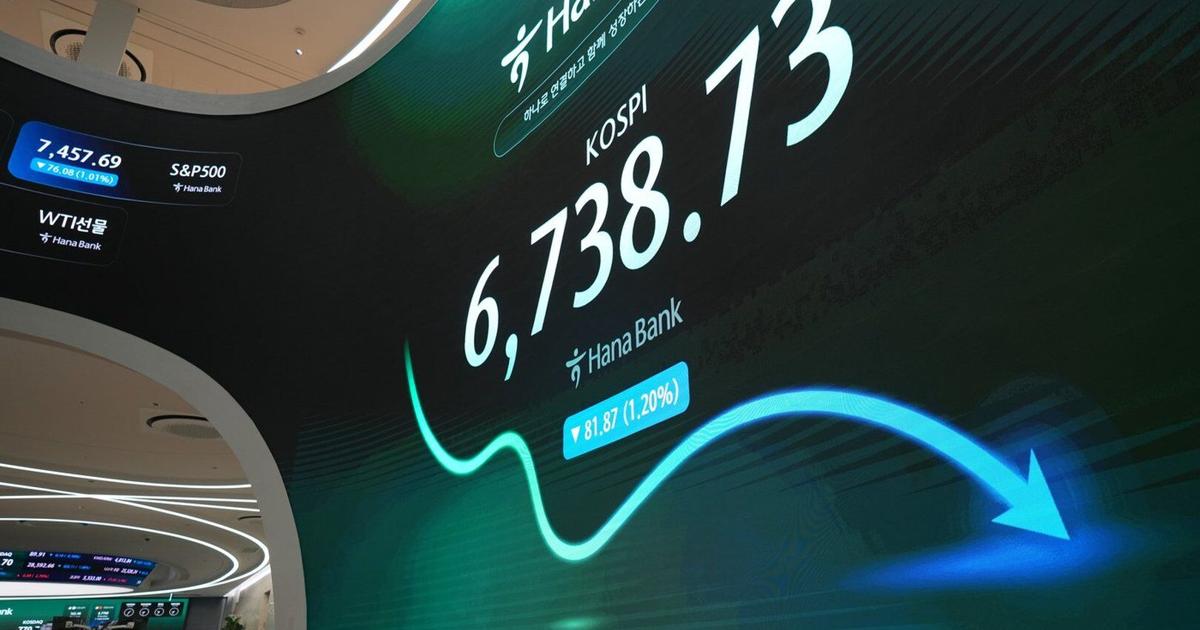
South Korea’s benchmark KOSPI index tumbled by 4.3% on Monday, driven by a sharp selloff in semiconductor heavyweights Samsung Electronics and SK Hynix. The drop triggered an immediate downgrade by Citigroup from overweight to neutral, signaling a major near-term caution on the heavily concentrated tech market as investors brace for upcoming U.S. big tech earnings reports.

The Full Story
The latest drop in Seoul follows a bruising period for the South Korean stock market, which has increasingly evolved from a peripheral emerging market into the central heartbeat of global artificial intelligence investment tracking. Earlier in the cycle, South Korea’s financial regulators hastily approved single-stock 2x leveraged exchange-traded products (ETPs) on May 27, drawing a massive 8.2 trillion KRW in net purchases from retail investors into long leveraged positions by mid-June. This massive concentration of retail funds into just two stocks—Samsung Electronics and SK Hynix—exponentially amplified market volatility through regular rebalancing mandates, transforming minor price movements into systemic index shifts.
A critical turning point occurred on June 22 when the Financial Supervisory Service publicly admitted that the approval of these leveraged products was too hastily prepared, fracturing investor expectation of further policy expansion. The following day, June 23, the KOSPI crashed by 9.99% in a single session, triggering a 20-minute market-wide trading halt as foreign institutions concentrated their selling on the core chip giants. Despite massive forced liquidations hitting 110.793 billion KRW on June 24, retail buyers aggressively bought the dip, pushing the market’s credit loan balance to a record 38.6328 trillion KRW and shifting high-risk leverage from institutional portfolios directly onto domestic household balance sheets.
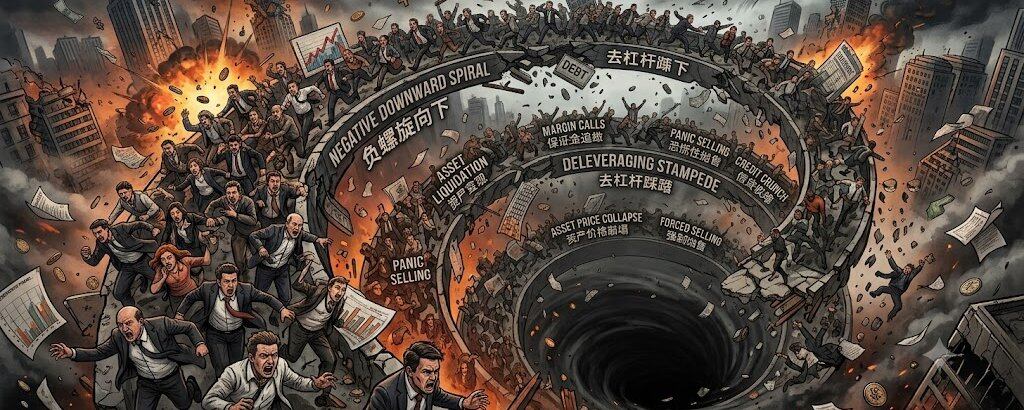
The selloff intensified into July as global sentiment shifted from celebrating immediate chip profitability to questioning the long-term sustainability of AI infrastructure capital expenditures. Rumors regarding Meta’s computing power allocations and a surprise technological breakthrough from a Chinese AI startup reignited institutional oversupply fears, causing global fund managers to sharply reduce geographical concentration risks. By Monday’s session, the KOSPI index extended its decline to trade at 6,536.93, marking a steep 25% drop from its June peak and erasing roughly $1 trillion in market value. The persistent weakness in Seoul has established a continuous trading loop, with daytime losses in Korean chipmakers directly bleeding into Wall Street’s tech sector overnight.
Central Figures
The current market correction centers on a few key institutions and corporate entities whose massive size commands the index's trajectory:
- Samsung Electronics Co. and SK Hynix Inc.: These two tech giants together account for roughly 60% of the KOSPI’s entire market capitalization, rendering the benchmark uniquely vulnerable to semiconductor industry fluctuations. Both stocks slid over 4% on Monday and have shed more than 30% of their individual values since June.
- Citigroup: The Wall Street investment banking firm officially downgraded the South Korean equity market to neutral on Monday, ending a prolonged overweight stance held since mid-2025 due to extreme volatility in memory chip assets.
- The Financial Supervisory Service: South Korea’s top financial regulator whose critical June statements regarding hasty product approvals halted the expansion of single-stock leveraged vehicles.
The Data
The scale of the ongoing market deleveraging is outlined by several prominent financial metrics:
- $1 Trillion: The total market value erased from South Korean equities since the index peaked in late June.
- 0.46: The 60-day correlation coefficient between the KOSPI and the tech-heavy Nasdaq 100, nearing a two-year high and nearly tripling the historical five-year average of 0.16.
- 52%: The combined weight of Samsung Electronics and SK Hynix in the KOSPI index as of July 15, exposing the entire domestic market to concentrated tech risk.
- 1,482.90: The trading value of the South Korean won per U.S. dollar, highlighting ongoing pressure on the local currency.
What This Means
For investors based in California, the sharp downturn in the KOSPI index serves as a significant leading indicator for domestic technology and semiconductor portfolios. Silicon Valley and the broader California tech sector are deeply interconnected with Korean memory manufacturers, who provide the foundational hardware required for large-scale AI data centers. The extreme volatility observed in Seoul functions as a real-time, pre-market pulse check on global AI risk appetite before U.S. exchanges open.
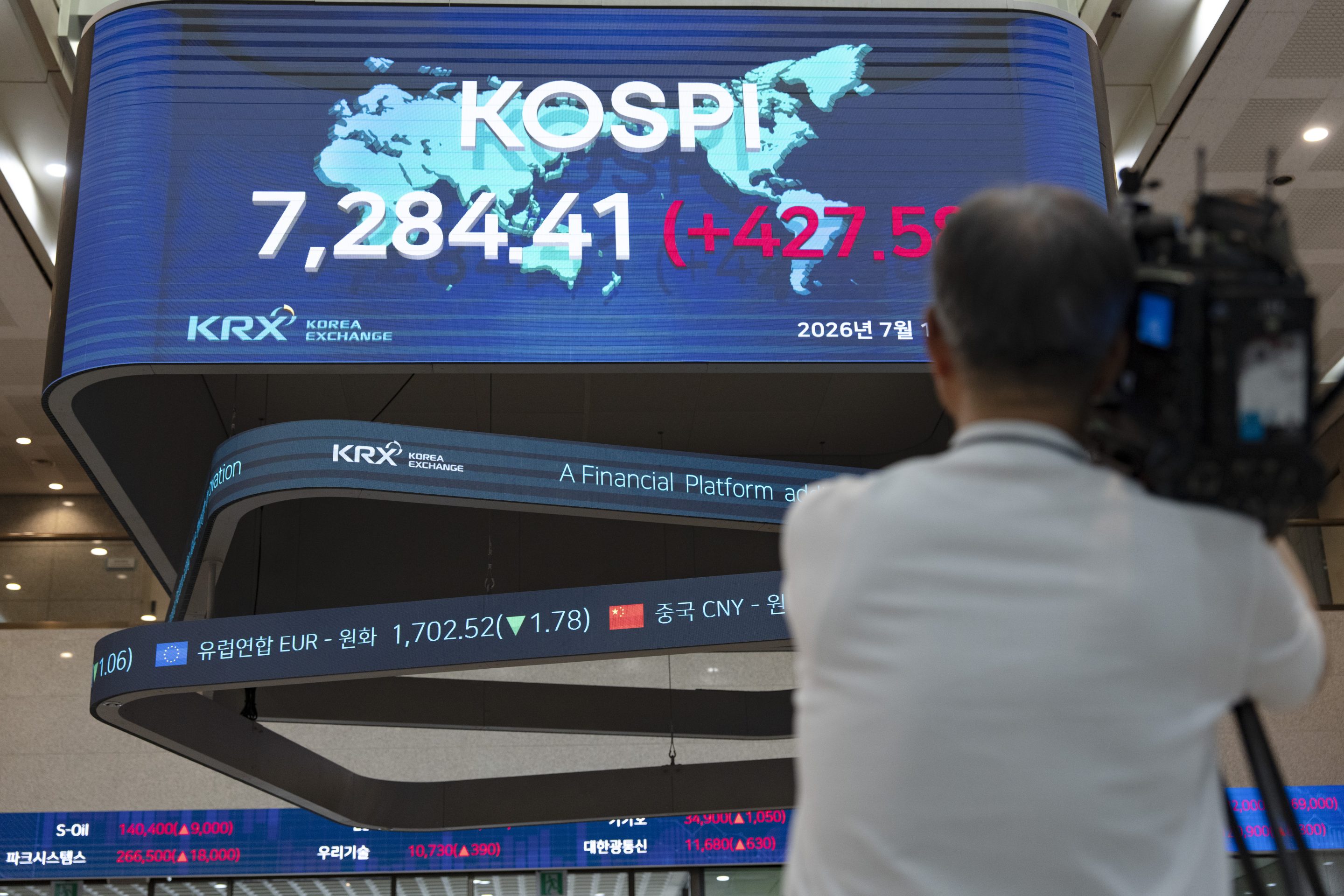
Furthermore, this correction highlights the systemic dangers of highly concentrated index structures and retail leveraged products. The continuous loop where weakness in Korean memory makers spills over to U.S. chip design names demonstrates that the AI infrastructure trade is experiencing an industry-wide rotation. Money is actively shifting out of hardware suppliers and flowing back into massive software and platform enterprises better positioned to direct-monetize AI services.
What to Expect
Market attention is now shifting directly toward the upcoming U.S. corporate earnings season to determine whether actual tech revenue can justify highly valued AI infrastructure investments. Alphabet is scheduled to kick off the major technology reporting cycle on Wednesday, followed immediately by Intel on Thursday. Tech investors will scrutinize these corporate disclosures for verified guidance on future cloud infrastructure spending, which will directly dictate whether the volatile semiconductor trading loop stabilizes or enters another round of liquidations.
Frequently Asked Questions
Why did Citigroup downgrade the South Korean stock market?
Citigroup downgraded the South Korean market to neutral due to extreme, leverage-fueled volatility in chip stocks and a strategic decision to reduce direct exposure to hardware-centric AI infrastructure trades.How do South Korean tech stocks impact California investors?
South Korea’s KOSPI index functions as an early-warning indicator for California technology portfolios. Because Korean companies dominate global memory chip production, their stock movements directly influence trading sentiment for major Silicon Valley chip design and hardware firms.What role did leveraged ETFs play in the market crash?
Single-stock 2x leveraged ETFs forced asset managers to execute massive daily rebalancing trades. When the underlying chip stocks dropped, these funds were forced to sell massive volumes to maintain their leverage ratios, severely amplifying the market’s downward spiral.Are South Korean regulatory authorities stepping in to stabilize the market?
Yes, South Korea’s Finance Minister has confirmed that authorities are closely monitoring the financial risks associated with single-stock leveraged ETPs, and the country has implemented a temporary halt on new listings of these volatile leveraged products.