

Inside the brightly lit showrooms of Vancouver-headquartered fashion label Aritzia, cash registers are ringing at a clip never seen since the retail giant went public a decade ago. Shoppers across North America are snapping up spring and summer collections at full price, leaving fewer items for the discount racks. The consumer frenzy translated into a massive financial windfall this week as the clothing maker reported quarterly profits that more than doubled, triggering a wave of optimism across major Canadian equity research desks.
How Events Unfolded
The financial markets braced for a standard retail update on Thursday evening, but what Aritzia delivered shattered even the most bullish internal expectations. The design house announced its first-quarter financial results for fiscal 2027, revealing a staggering 43.4 per cent surge in net revenue to $951.0 million. This easily eclipsed the consensus Bay Street marketplace expectation of $922 million and stunned analysts who had modeled a far more conservative summer slowdown.
Equally eye-popping was the company's net income, which skyrocketed by 176.6 per cent to hit $117.3 million, up from $42.4 million during the identical three-month block last year. Diluted earnings per share landed at 99 cents, while adjusted earnings per share reached 96 cents, outperforming the Street’s 88-cent target. Aritzia’s core operational efficiency metrics expanded in tandem, with gross profit margins climbing 310 basis points to reach 50.3 per cent, representing an absolute high-water mark for the enterprise since its October 2016 initial public offering.
Chief Executive Officer Jennifer Wong reported that the brand has achieved an almost unprecedented operational cadence. The firm managed to repurchase 564,500 subordinate voting shares for a total cash deployment of $66.2 million under its active normal course issuer bid. With a cash pile that has grown to $471.9 million, the brand is pushing heavily into physical expansion, completely unbothered by the broader economic headwinds currently chilling the Canadian consumer discretionary landscape.
Critical Details
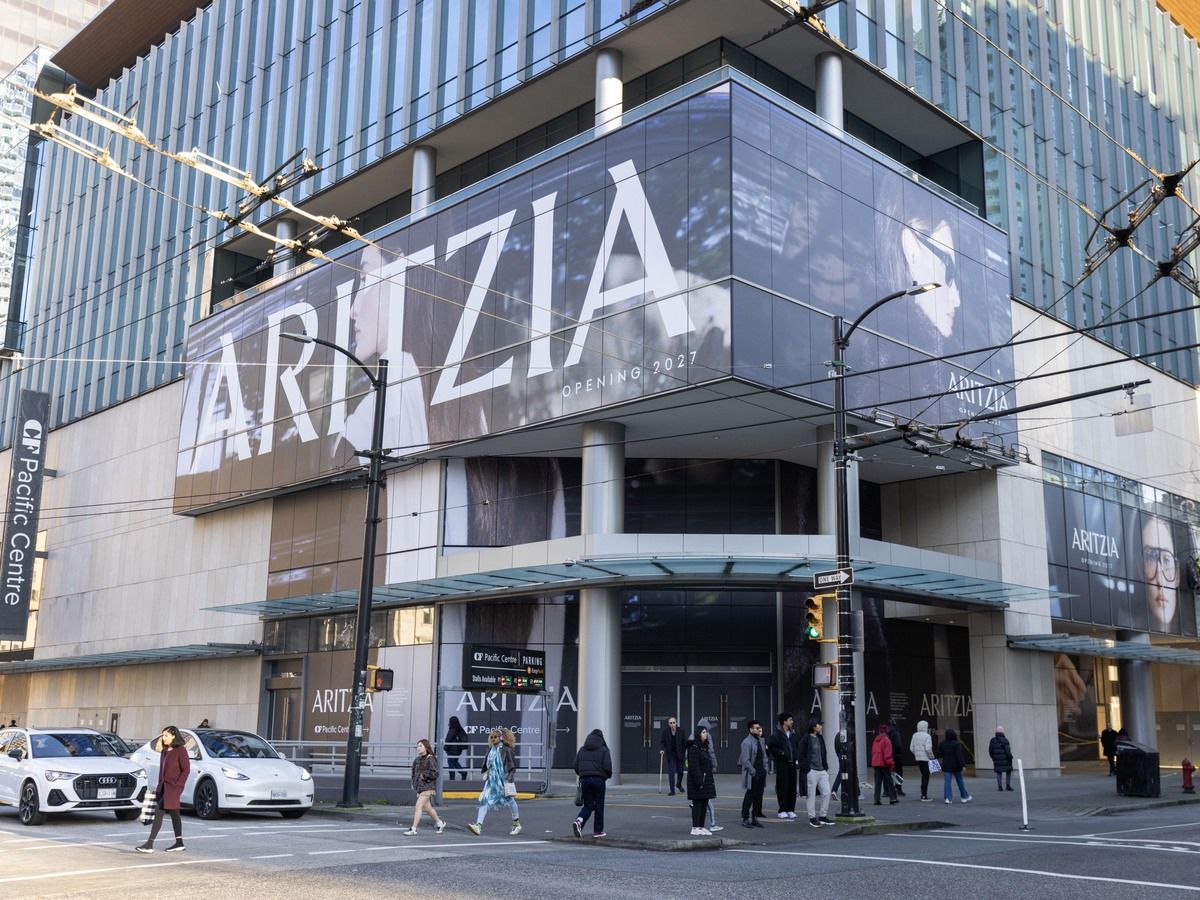
To understand why Aritzia is defying conventional retail gravity, one must look closely at its physical footprint and digital infrastructure strategy. The business model leans heavily into a highly optimized, cross-channel dynamic. When Aritzia establishes a physical boutique in a new metropolitan area, the company witnesses an immediate, approximate 70 per cent lift in regional e-commerce revenue during the very first year. This unique brick-and-mortar halo effect underpins their aggressive real estate blueprint.

The physical boutique layout itself has shifted dramatically over the past decade. Ten years ago, a standard flagship boutique averaged roughly 6,000 square feet; today, newly designed retail builds frequently exceed 10,000 square feet, allowing for broader inventory presentations and elevated spatial consumer experiences. On top of that, these capital investments are returning cash at an exceptional speed, with new locations completely earning back their initial development outlays in under 12 months, outstripping management’s historical projections of a 12-to-18-month window.
Concurrently, digital operational channels have caught fire following the late October 2025 rollout of the specialized mobile platform. The proprietary mobile application has surpassed 2 million downloads, single-handedly processing 30 per cent of all online transactions. This digital momentum helped push overall digital net revenue up by 55.5 per cent to $284.7 million. Although margin metrics faced slight pressure from structural tariff regimes and the formal elimination of the de minimis tax exemption, internal smart-spending mandates kept administrative expenses tightly controlled at 32.0 per cent of sales.
Reactions & Responses
Bay Street equity analysts reacted with a near-unanimous chorus of price-target increases on Friday morning, viewing the results as definitive proof of structural brand heat. Stifel analyst Martin Landry emphasized that the current brand momentum remains robust enough to expand valuation multiples further ahead of the company's scheduled investor day in October. Landry noted five distinct growth vectors compounding at once:
Aritzia reported strong Q1FY27 results with comparable sales growth of 35.1 per cent year-over-year, the highest pace since the IPO. It appears to be a confluence of items which includes products that are resonating with shoppers, the right inventory in the right quantities, reducing markdowns and out of stocks, the mobile app traction, rising brand awareness, and strategic investment in marketing.
Other major financial institutions quickly revised their mathematical projections upward. RBC analyst Irene Nattel elevated her target valuation to $202 from $193, maintaining an outperform rating based on sector-leading transaction velocities. TD Cowen analyst Brian Morrison increased his target to $200, highlighting that the operational beat completely surpassed the most optimistic marketplace assumptions, supported by strong free cash flows and active share repurchases. Meanwhile, Ventum Capital Markets’ George Doumet adjusted his outlook to $186, expressing caution regarding the eventual normalization of growth lines in Canada during the back half of the fiscal year.
Putting It in Perspective
For everyday retail observers and corporate investors in Canada, Aritzia's explosive success highlights a sharp geographic divergence in corporate execution. The brand has explicitly transitioned into a U.S.-focused expansion vehicle, with the American market now comprising 67.1 per cent of total business operations. U.S. revenue jumped 54.5 per cent to $638.1 million during the quarter, indicating that the brand's premium positioning is gaining a permanent foothold south of the border.
By comparison, while Canadian operations grew at a slower relative clip, they still delivered a highly resilient 25.0 per cent increase to $312.9 million. This performance is particularly striking given that Canadian retail sectors are grappling with tightening household wallets. By maintaining pristine control over its supply chain and matching inventory volumes strictly to seasonal demand, the corporate team managed to entirely side-step the aggressive clearance markdown cycles that frequently destroy clothing retail margins during sudden shifts in seasonal weather patterns.
Looking Ahead
Corporate management has signaled extreme structural confidence by formally lifting its full-year financial forecasts after just a single quarter of operational tracking. Aritzia expects its second-quarter fiscal 2027 revenues to land firmly between $1.100 billion and $1.125 billion, translating to an immediate year-over-year jump of 35 to 39 per cent. Gross profit margins for the upcoming quarter are projected to expand by an additional 250 to 300 basis points over the prior year's 43.8 per cent baseline.
- Comparable Sales
- A retail standard metric tracking the financial performance of corporate boutiques and digital channels open for longer than 12 consecutive months to eliminate new storefront distortions.
- Normal Course Issuer Bid (NCIB)
- A regulatory framework through which a publicly traded enterprise repurchases its own outstanding shares from the open marketplace for structural cancellation.
For the complete fiscal 2027 duration, full revenues are now budgeted at a staggering range of $4.55 billion to $4.75 billion, a notable upgrade from the prior projection pool of $4.4 billion to $4.6 billion. This long-term framework will be supported by a capital expenditure deployment of approximately $250 million, primarily dedicated to launching 12 to 13 completely new boutiques and executing four to five comprehensive flagship relocations or structural property updates. The clear majority of this geographic real estate push will occur across major premium retail corridors in the United States.
Frequently Asked Questions
Why did Aritzia stock price expectations increase?
Major institutional analysts increased their price targets because Aritzia delivered 43.4 per cent revenue growth and doubled its net income, significantly outperforming consensus estimates while raising full-year corporate guidance.
How much profit did Aritzia make in Q1 2027?
The clothing retailer recorded a net income of $117.3 million for the quarter ending May 31, 2026, marking a 176.6 per cent explosion from the $42.4 million recorded during the same period in the prior fiscal year.
What is driving Aritzia's rapid e-commerce expansion?
Digital revenue grew by 55.5 per cent, fueled by strategic marketing investments and the massive success of its new mobile app, which has cleared 2 million downloads and now processes 30 per cent of all online orders.
Where is Aritzia focusing its new store openings?
Out of 12 to 13 new boutique openings planned for this fiscal year, 11 to 12 locations are situated in the United States, which now accounts for over 67 per cent of the company's total revenue mix.