
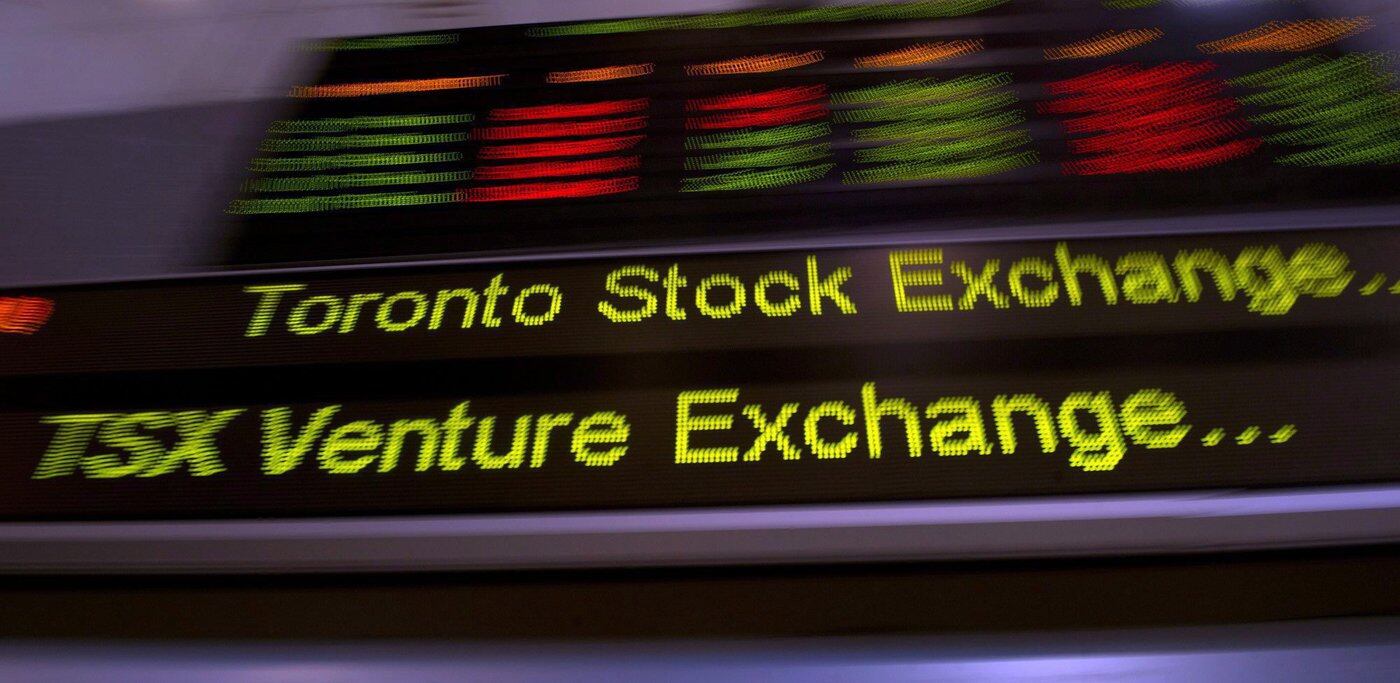
The screens turned green across Bay Street on Monday as oil slid, gold surged and investors rushed back into risk. The S&P/TSX composite index climbed 337.79 points to 35,275.64, reaching a new record high after the U.S. and Iran reached a tentative deal tied to the Strait of Hormuz. The move was not just a stock-market bounce; it was a quick repricing of war risk, inflation pressure and interest-rate expectations. For Canadian investors, the day showed how fast a geopolitical headline can move portfolios.
How Events Unfolded
The rally began with a simple market equation: lower oil prices can ease inflation pressure, and softer inflation pressure can reduce the need for higher interest rates. The trigger was news that the U.S. and Iran had reached a tentative agreement to extend their ceasefire and reopen the Strait of Hormuz, a major route for crude shipments.
In Toronto, the S&P/TSX composite rose 337.79 points to 35,275.64. In New York, the Dow Jones industrial average gained 468.77 points to 51,671.03, the S&P 500 climbed 122.83 points to 7,554.29, and the Nasdaq composite jumped 795.10 points to 26,683.94.
Oil moved in the opposite direction. Brent crude fell 4.8 per cent to US$83.17 in one report, while another market update had Brent down 5.1 per cent to US$82.86. The July crude contract was down US$4.13 at US$80.75 per barrel, a sharp drop from the US$100-plus level seen a few weeks earlier.
That oil drop matters in Canada because the TSX is heavily exposed to energy and materials. On Monday, the market found support from gold and basic materials even as energy stocks were under pressure. Baystreet.ca reported that eight of 12 TSX subgroups gained, with gold up 7.8 per cent and materials up 6.5 per cent, while energy slipped 4.3 per cent.
Critical Details
The heart of the story is the Strait of Hormuz. When it is restricted, crude supply fears can push oil higher. When traders believe it may reopen, oil prices can fall quickly because the risk premium fades. That is why the tentative U.S.-Iran deal had an immediate effect across equities, commodities and currencies.

The deal is not a final settlement. CP24 reported that it does not include a final agreement on Iran's nuclear program, with negotiations expected to continue over the next 60 days. That leaves room for delays, reversals or fresh tension, especially because energy flows may take weeks or months to return to full speed even if the strait reopens as expected.
- Strait of Hormuz
- A key shipping route for crude oil. Disruption there can affect global energy prices.
- TSX composite
- Canada's main stock index, tracking a broad group of companies listed in Toronto.
- Brent crude
- A global oil benchmark used to price crude in international markets.
For households, the connection is indirect but real. Lower crude prices can reduce inflation pressure, which is one reason markets became more confident that interest rates may not need to rise as much. The Globe and Mail reported that the Canadian dollar traded between 71.44 and 71.68 U.S. cents in early trading, while CP24 put it at 71.52 cents U.S. compared with 71.55 cents U.S. on Friday.
Reactions & Responses
Allan Small, senior investment adviser at iA Private Wealth, said the market was being driven by geopolitics and headlines. His point matters because investors were reacting less to company earnings and more to the belief that the conflict could be cooling.
As long as this market believes this war is coming to an end, you’re going to see positive days (and) positive reaction.
Oil analysts were more cautious about the physical supply picture. Tamas Varga of PVM Oil Associates said the market should not expect an instant return to pre-crisis traffic through the chokepoint.
It will take time for oil to approach the pre-crisis level of 20 million barrels per day sailing through this chokepoint. Estimates of the full resumption of traffic vary from weeks to months.
That difference explains the mixed market reaction: stocks rallied on improved sentiment, while commodity traders still priced in a supply system that may take time to normalize.
Putting It in Perspective
Monday's rally followed another strong TSX session on Friday, when the index gained 266 points and ended the week up 1.5 per cent. The Motley Fool Canada noted that metals, financials and industrials helped lift the index even as technology and energy had pressured the broader market.

The broader message for Canadian portfolios is that sector balance matters. Energy can lose ground when oil falls, but gold miners and materials stocks may rise when investors seek safety or respond to stronger metals prices. Montage Gold, for example, had jumped nearly 12 per cent on Friday as gold strength supported sentiment toward miners.
There was also a technology angle. CP24 reported that Nvidia rose 3.5 per cent and that companies tied to artificial intelligence gained after recent sharp swings. SpaceX rose 19.6 per cent in its second day of trading on Wall Street, adding another layer of excitement to a market already reacting to geopolitics.
Looking Ahead
Investors now have three main items to watch: whether the Strait of Hormuz fully reopens, whether the U.S.-Iran framework survives the next stage of negotiations, and how central banks read the inflation signal from lower oil. The U.S. Federal Reserve is expected to announce its latest rate decision this week, and traders were pricing a lower chance of a rate hike this year after the tentative deal.
Canadian investors will also be watching domestic data, including housing starts, manufacturing sales, new orders and wholesale trade. Those numbers matter because a TSX record high can feel powerful on a screen, but the next move depends on whether lower geopolitical stress lines up with stronger economic data.
FAQ
Why did the S&P/TSX composite rise on June 15, 2026?
It rose after news of a tentative U.S.-Iran deal to extend a ceasefire and reopen the Strait of Hormuz, which helped push oil lower and lifted market sentiment.
How much did the TSX gain?
The S&P/TSX composite gained 337.79 points to close at 35,275.64, a new record high according to the provided market reports.
What happened to oil prices?
The July crude oil contract fell US$4.13 to US$80.75 per barrel, while Brent crude was reported near US$83 after falling roughly 5 per cent.
Why does the Strait of Hormuz matter to Canadian investors?
It is a major crude shipping route. When access looks safer, oil prices can fall, which affects TSX energy stocks, inflation expectations and interest-rate bets.
What comes next for markets?
Markets will watch whether the strait reopens, whether U.S.-Iran negotiations continue over the next 60 days, and what the U.S. Federal Reserve says about interest rates.