
Last updated: June 16, 2026, 11:03 a.m. ET
The timing could hardly have been sharper: new federal cellphone fee rules landed on a Friday, and Canada’s telecom regulator was already warning two of the country’s biggest carriers about fresh charges. At the centre are Bell’s $40 device handling charge and Telus’ $15 SIM fee. The Canadian Radio-television and Telecommunications Commission says both may run against rules meant to stop carriers from charging customers extra to activate, change or cancel plans. By Wednesday, June 17, Bell and Telus must tell the regulator whether the fees have been dropped or explain why they believe the charges comply.

How Events Unfolded
The CRTC’s new rules took effect on Friday, June 12, banning fees linked to activating, changing or cancelling cellphone plans. The target was familiar to many Canadian wireless customers: connection and activation-style charges that could add roughly $30 to $80 when someone tried to switch providers or adjust a plan.
Bell had already introduced a $40 device handling charge in May for customers who buy a phone with a wireless plan. Telus then introduced a $15 SIM purchase fee on June 11, covering both physical SIM cards and eSIMs. The CRTC sent follow-up letters on June 12, the same day the ban came into force, asking both companies for clear answers by June 17.
The regulator’s position is direct: a fee connected to providing a phone, SIM card or eSIM may not fit the exemption for optional extras if the item is needed to deliver the wireless service. A SIM card is especially sensitive because it connects a customer’s device to a mobile network.
Rogers and Fido later entered the same conversation after adding a $40 device setup charge for customers buying or upgrading a device, according to iPhone in Canada’s report. That widened the issue from a two-carrier dispute into a broader test of how far Canada’s biggest telecoms can go under the new rules.
Critical Details
The key question is whether these charges are genuinely optional product fees or renamed barriers to switching. The CRTC’s policy allows reasonable fees for optional products or services, such as add-on equipment or a home installation that is not required to deliver the service. But if the fee is tied to getting the plan working, the regulator may treat it as prohibited.
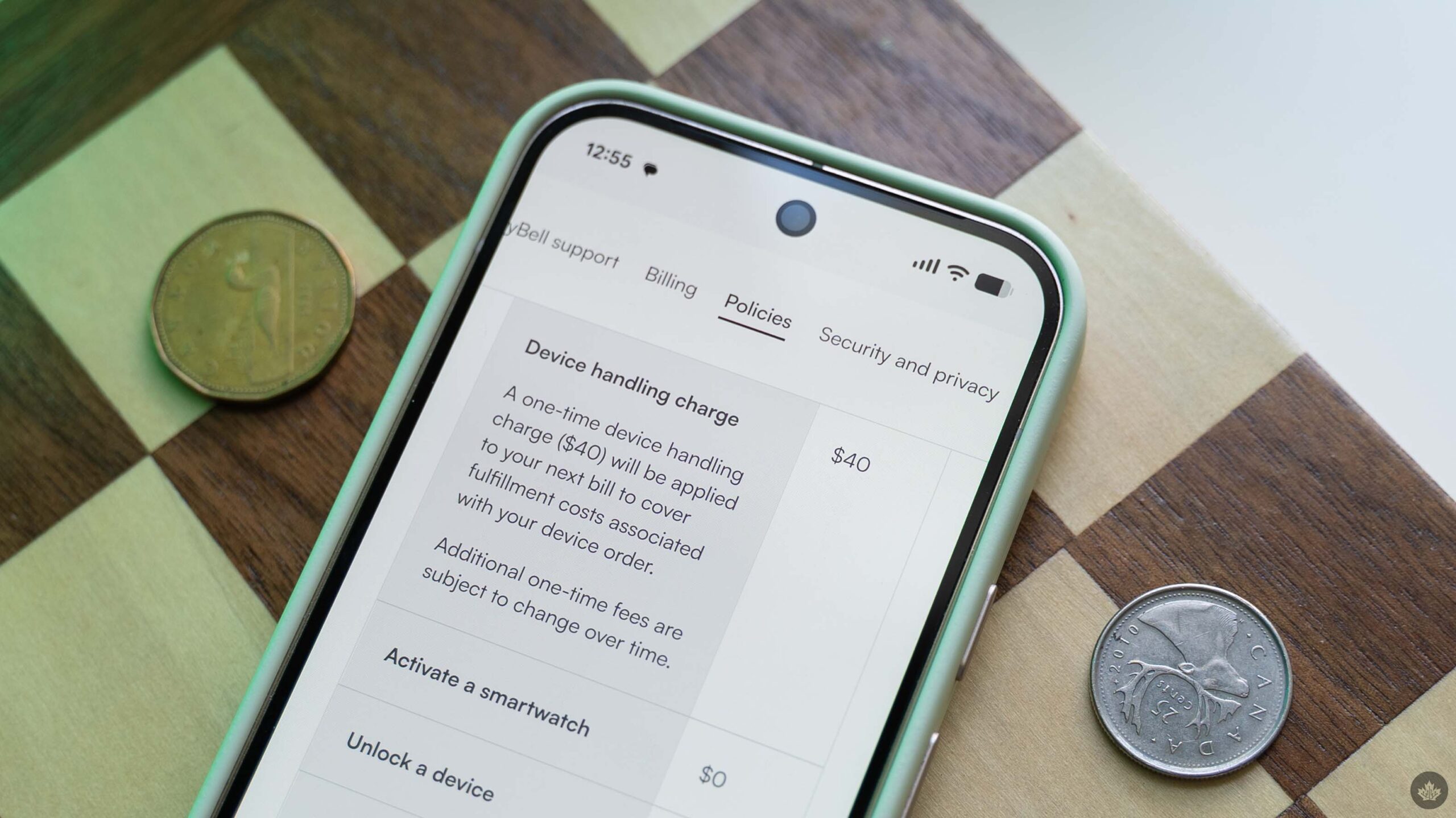
Bell’s argument is that buying a device is optional. A customer can sign up for a plan without purchasing a phone from Bell, the company says, so the handling charge should fall outside the ban. Telus has framed its SIM charge as a physical or digital product purchase, not an administrative fee.
The CRTC is not accepting that reasoning without proof. In Bell’s case, CRTC vice-president Scott Hutton had already warned that a fee associated with providing a phone “may be considered to be an activation fee that is prohibited.” For Telus, Hutton said a SIM card or eSIM is required for the wireless service a customer purchases, which weakens the company’s claim that the fee is optional.
- Activation fee
- A charge added when a customer starts a new wireless plan or connects service.
- eSIM
- A digital SIM built into a device that connects it to a mobile network without a physical card.
- Compliance action
- Regulatory steps the CRTC can pursue if it finds a company is not following telecom rules.
Reactions & Responses
The regulator’s letters give Bell and Telus a short runway. The message is not just a warning; it is a demand for confirmation or a legal-style explanation before further action.
Commission staff will consider all available compliance options to ensure that fees that are a barrier to switching cellphone and internet plans are prohibited as intended by the act.
Bell has pushed back. In a June 10 letter, Bell assistant general counsel Philippe Gauvin said the charge “applies only to customers who elect to purchase a device, recovers legitimate fulfilment costs, and does not discourage customers from switching or modifying plans.” Bell spokesperson Elise von Scheel also told CBC News the company was reviewing the CRTC’s latest letter while maintaining that optional device purchases are outside the new rules.
Consumer advocates see the matter differently. Matt Hatfield, executive director of OpenMedia, told CBC News the new charges look like an attempt to keep collecting revenue that the new rules were designed to remove.
This appears to me to be them continuing a practice that looks very much like activation fees under a different name.
Putting It in Perspective
For Canadians, this is not a technical fight over wording. It affects the price of switching providers, upgrading a device or signing up for a plan. A $15 SIM fee may look small beside a monthly bill, but fees like that can reduce the savings a customer hoped to get by moving to a better offer.
The timing also matters. The CRTC announced the policy in March because it wanted Canadians to be able to take better offers without getting hit by unexpected costs. If carriers can replace banned activation charges with device, setup or SIM fees, the new rules lose much of their force.
There is also a competitive angle. MobileSyrup reported that Freedom Mobile removed its previous $45 connection fee, while other prepaid providers already did not charge activation fees. Rogers told CBC News it did not charge for SIM cards, while Bell’s website said physical or digital SIM cards come free with a monthly plan. Those differences make the Bell and Telus fees more visible to customers comparing plans.
Looking Ahead
The next confirmed deadline is June 17. Bell must confirm whether it has stopped charging the $40 device handling fee. Telus must confirm whether it has stopped charging the $15 SIM fee or explain why it believes the charge fits the rules.
If the issue is not resolved, the CRTC says it can consider regulatory action. The regulator has also said its review of each matter is ongoing. For customers, the practical takeaway is simple: before switching plans or buying a device, check whether any device, setup, SIM or shipping fee appears on the first bill.
FAQ
What fees did Bell and Telus introduce?
Bell introduced a $40 device handling charge for customers buying a phone with a wireless plan. Telus introduced a $15 SIM purchase fee for physical SIM cards and eSIMs.
When did the CRTC cellphone fee ban start?
The new CRTC rules took effect on June 12, 2026. They ban fees tied to activating, changing or cancelling cellphone plans.
Why does the CRTC say the fees may break the rules?
The CRTC says the fees may not qualify as optional product charges if the phone, SIM card or eSIM is required to deliver the wireless service.
What is the deadline for Bell and Telus to respond?
Bell and Telus were given until Wednesday, June 17, 2026, to confirm they stopped charging the fees or explain why they believe the fees comply.
Does the ban mean all cancellation costs are gone?
No. Customers who finance a device and cancel early may still need to pay the remaining balance on the device financing agreement.