
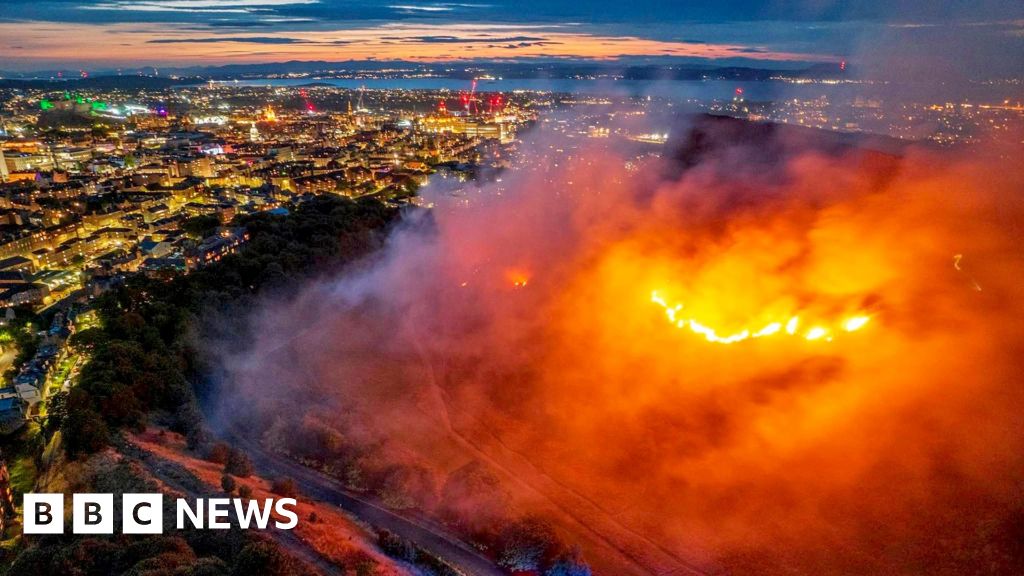
Thick plumes of black smoke choked the sunset sky over Edinburgh as flames quickly ripped through the dried-out vegetation of the city's most famous landmark. The Scottish Fire and Rescue Service deployed six fire appliances and specialist teams to the scene after emergency calls flagged the open-air grassfire at approximately 6:38 p.m. on Sunday. Emergency crews worked tirelessly through the night to douse the flames, and officials confirm that no casualties have been reported so far.
How Events Unfolded
The fire broke out on the steep slopes of Arthur's Seat, an iconic dormant volcano rising 251 meters above sea level that sits prominently inside Holyrood Park. Initially, operations control mobilized four fire engines on Sunday evening, but by Monday morning, the response stepped up to six appliances as crews battled to suppress persistent hotspots. Heavy smoke billowed across the Salisbury Crags cliff face, remaining visible to residents as far away as Fife.
Police Scotland closed Queen's Drive, the main perimeter road encircling the Holyrood Park hills, restricting all vehicle access to keep the public safe. Firefighters concentrated their daytime suppression efforts on the hillside sections closest to Pollock Halls of Residence, the largest student accommodation site for Edinburgh University. Nearby residents were instructed by local authorities to keep all windows and doors closed to avoid smoke inhalation.
The Fine Print
This emergency occurs during an extended spell of unusually warm, dry weather that has left greenery throughout Scotland highly vulnerable to ignition. The current blaze marks the second fire on Arthur's Seat in just three months, following a significant grassfire in Holyrood Park this past May. The capital city landmark is no stranger to these incidents, with emergency crews responding to similar wild blazes in 2019, 2020, 2022, and 2025.
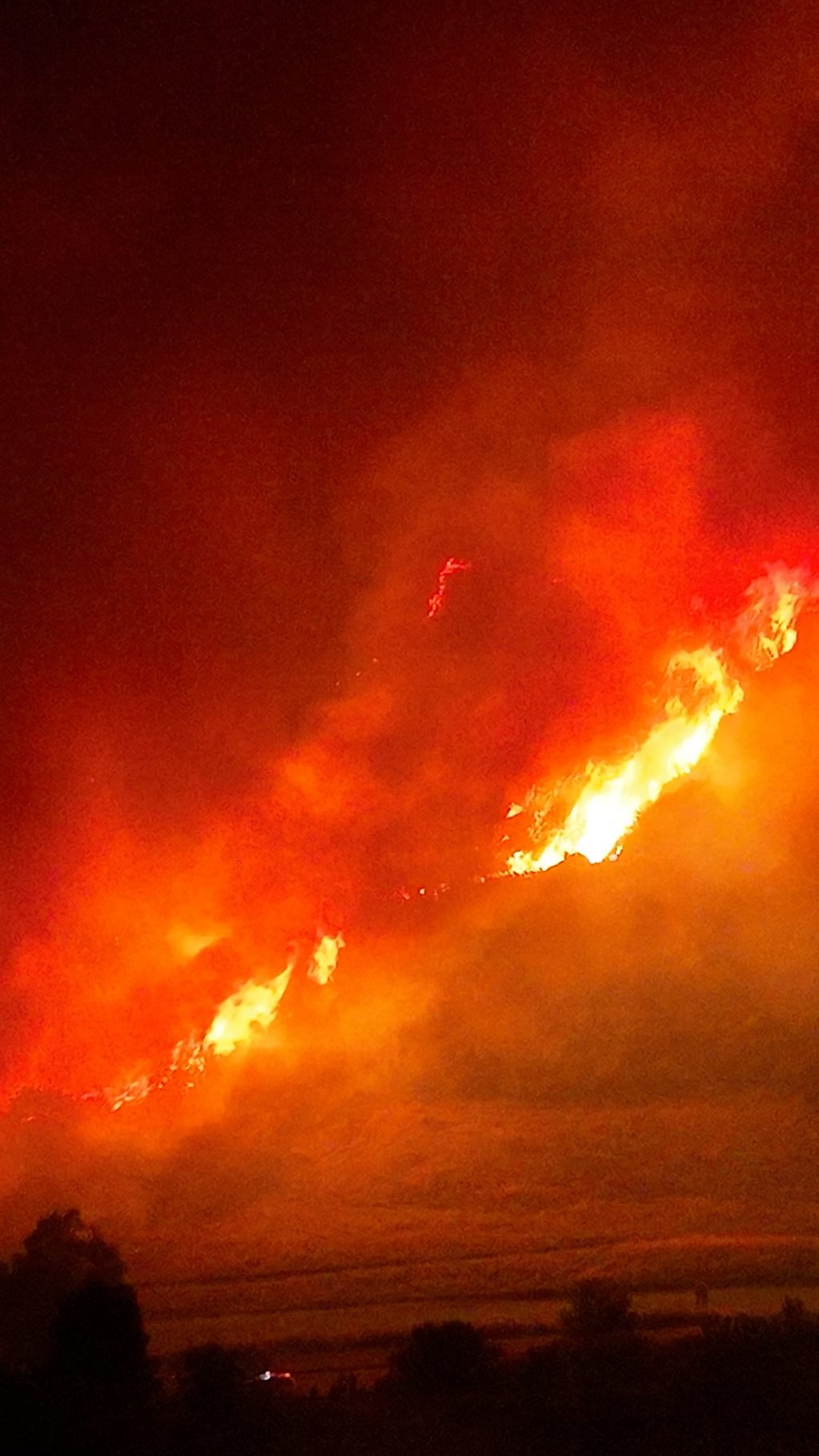
The threat is part of a broader regional crisis, as dozens of firefighters have simultaneously spent five days fighting a massive 6.5-square-kilometre wildfire in the Cairngorms National Park. High-volume pumps have been drawing water from Loch Morlich to protect local campsites and ski resorts. A very high-risk wildfire warning remains active across the Central Highlands, alongside Southern and Eastern Scotland.
The Response
Official statements emphasize containment over immediate answers regarding how the blaze started on the historic hill.
The feeling from the ground there is that we will probably be there for a couple of days continuing to tackle it and dampen out hotspots.
Henderson added that it is too early to speculate on the cause, noting that open fires are inherently difficult to trace due to their scale and the fact they can occasionally trigger naturally. Meanwhile, local community members expressed deep anxiety over the environmental toll. Edinburgh University student Mahek Jayantilial, 24, observed that the landscape was incredibly dry from a lack of rainfall, stating that a small bit of glass or a poorly snuffed-out cigarette butt would easily ignite it.
Putting It in Perspective
The immediate consequence extends beyond scorched vegetation to severe ecological disruptions for native species inhabiting the cliffs. Local resident Callum Smith raised concerns regarding a long-term peregrine falcon nesting site situated directly on the burning rock face, which currently shelters two adult birds and two young chicks.
Because the youngest chick has not fledged yet, it remains unable to fly unsupported to escape the heavy smoke blanketing the area. For international travelers and prospective students from Canada planning visits to the Scottish capital, the recurring fires highlight how climate pressures are altering historic European urban centers.
Looking Ahead
Fire crews are confirmed to remain stationed on Arthur's Seat for at least the next few days to monitor smoldering ground and extinguish lingering deep-seated heat. A formal fire investigation will commence once the site is declared entirely safe. Officials continue to urge the public to avoid open flames, campfires, and outdoor barbecues across all risk zones.
FAQ
What caused the fire on Arthur's Seat?
The exact cause remains unknown. The Scottish Fire and Rescue Service will conduct a full investigation once the area is fully cooled, noting that the scale of open-air blazes makes identifying the origin difficult.Are there any casualties reported from the Edinburgh fire?
No, authorities have confirmed there are no reported civilian or firefighter casualties. Emergency operations successfully isolated the flames away from nearby residential areas and university dorms.Which roads are closed due to the wildfire?
Police Scotland closed Queen's Drive, the main road circling the Holyrood Park hills. The public has been advised to avoid the immediate area until further notice.How does this fire connect to other Scottish wildfires?
The blaze coincided with a separate 6.5-square-kilometre wildfire in the Cairngorms National Park. Both incidents were amplified by a prolonged spell of dry weather, triggering a high-risk wildfire warning across the region.