
A powerful 7.1-magnitude earthquake struck Japan's southern prefecture of Kumamoto on Tuesday afternoon, causing structural collapses, blackouts, and widespread destruction across Kyushu island. The tremor, which occurred at 4:27 p.m. local time near Uki City, triggered a partial collapse and explosion at a major shopping mall, leaving people trapped inside and prompting a massive emergency response. For readers in CA, this severe seismic event underscores ongoing global disaster recovery efforts and affects international transport links, corporate supply chains, and travel to southwestern Japan.

Why This Is Trending
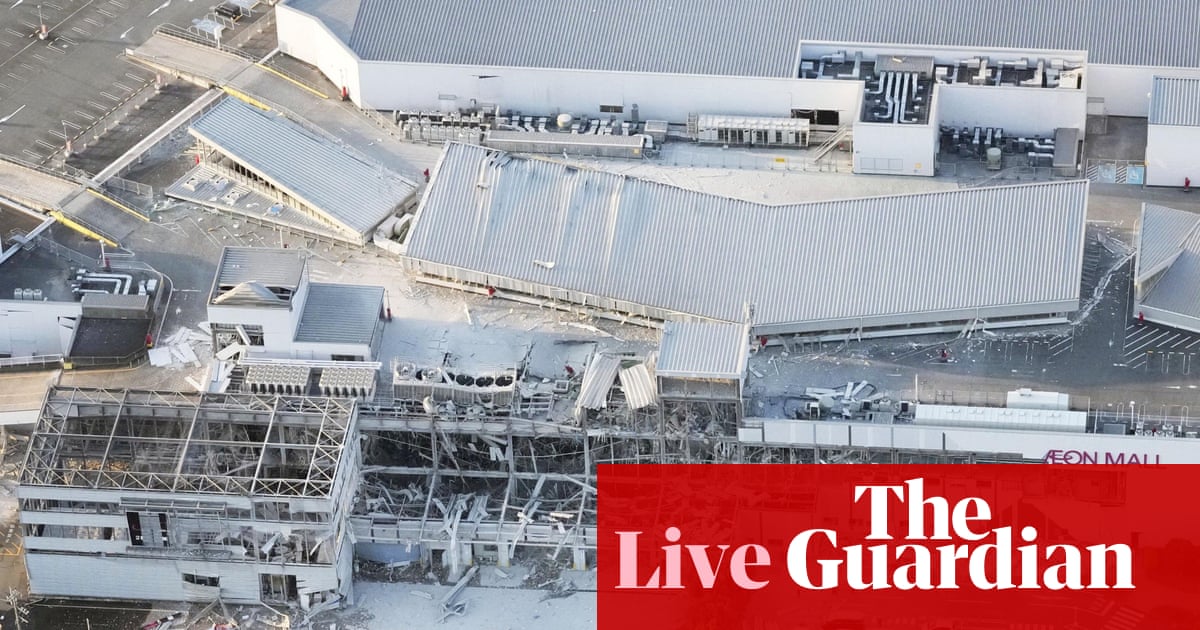
The earthquake caught global attention due to its sheer intensity—reaching the maximum level 7 on Japan's Shindo seismic scale—and the immediate emergency reports that followed. Search activity spiked after images surfaced of a torn facade and structural collapse at the Aeon Mall in Kashima Town, where an explosion occurred shortly after the initial tremor, trapping employees and shoppers inside.
What Happened
The earthquake struck inland at a depth of 10km, roughly 20 kilometres south of Kumamoto City. The United States Geological Survey later revised its magnitude estimate to 6.8, though Japan's Meteorological Agency maintained a provisional value of 7.1. Following the main shock, an explosion rocked the Aeon Mall in Kashima Town, tearing away one side of the building, exposing steel beams, and throwing debris across the parking lot. Emergency responders rushed to the scene as night fell, while public broadcaster NHK reported that 20 to 30 mall employees were unaccounted for. Elsewhere in the prefecture, a chimney collapsed at the Nippon Paper Industries Yatsushiro Plant, leaving several workers missing, and a freight train derailed at Yatsushiro Station.
What We Know So Far
Authorities have confirmed multiple injuries across the region, with local hospitals accepting dozens of patients suffering from fractures and burns. The Japanese Fire and Disaster Management Agency instructed around 300,000 people to move to evacuation centres, while utility providers reported over 40,000 households lost electricity across Kyushu. Transportation came to a halt as JR Kyushu suspended Shinkansen high-speed bullet trains, and Aso Kumamoto Airport closed its runway to assess tarmac safety. Meanwhile, international flight delays radiated as far as Tokyo's Haneda Airport.
Human casualties, building collapses, road damage, fires... have been confirmed so far.
Despite the severe structural damage to roads, bridges, and historic sites—including stone walls tumbling at the 17th-century Kumamoto Castle—critical infrastructure escaped major disaster. The International Atomic Energy Agency confirmed that the Sendai nuclear power plant, situated 100km from the epicenter, suffered no damage or safety issues and remained fully operational. Initial tsunami advisories predicting 1-metre waves for the Ariake Bay and Yatsushiro Sea were officially lifted within two hours.

Why It Matters
Kumamoto sits in a highly active tectonic zone on the island of Kyushu, and this event brings back painful memories of the 2016 earthquakes that claimed over 270 lives in the same region. The economic impact extends to the tech sector, as key manufacturing facilities including TSMC, Sony, and Fujifilm temporarily evacuated staff from their semiconductor and production plants in Kumamoto to perform safety checks.
What Happens Next
Japanese defense forces have deployed 3,600 personnel to lead search and rescue operations through the night, prioritizing trapped individuals inside the Aeon Mall and the paper factory. The Japan Meteorological Agency recorded more than 60 aftershocks in the hours following the main quake and warned residents to stay vigilant for potential strong follow-up tremors over the next two to three days.
Frequently Asked Questions
What was the magnitude of the earthquake in Kumamoto?
The Japan Meteorological Agency reported a provisional magnitude of 7.1, while the US Geological Survey estimated the quake at 6.8 magnitude.
Was a tsunami triggered by the quake?
A tsunami advisory for 1-metre waves was initially issued for coastal areas along the Ariake and Yatsushiro Seas, but the advisory was lifted within two hours without tsunami activity observed.
Are nuclear power plants in the region affected?
No. The International Atomic Energy Agency and Japan's Nuclear Regulation Authority confirmed no safety issues or damage at nearby facilities, including the Sendai nuclear power plant.