The heavy wool cloak of Aunt Lydia is back on Ann Dowd’s shoulders, but the world she inhabits is starting to fray at the edges. As The Testaments officially makes its debut, the sequel to the cultural juggernaut The Handmaid’s Tale is doing more than just continuing a story—it is holding a mirror up to a world that feels increasingly familiar. It’s a chilling return to Margaret Atwood's dystopian vision, one that feels particularly pointed for those of us watching from north of the border.

What We Know So Far
Set fifteen years after the events that saw June Osborne become a symbol of resistance, The Testaments shifts the focus to the inner workings of Gilead's power structure. Ann Dowd, who has won both an Emmy and our collective fear for her portrayal of Aunt Lydia, is no longer just a villainous enforcer. In this new chapter, we see her navigating the treacherous waters of a regime that is beginning to rot from the inside. It’s not just about survival anymore; it’s about legacy and the secrets that can bring a nation to its knees.
The narrative isn't just Dowd's to carry, though she certainly anchors it. We are introduced to a new generation, including Chase Infiniti’s character, who provides a fresh, albeit "creatively suffocated" perspective on the religious autocracy. While the original series focused on the visceral horror of being a Handmaid, this sequel leans into the political intrigue and the slow-motion collapse of a social order. What’s interesting is how the showrunners have chosen to weave Atwood’s 2019 novel into the existing TV universe, creating a bridge that feels both inevitable and unsettling.

For fans who might be a bit hazy on the details, it’s worth a quick refresher on the original plot before diving in. The stakes have changed, but the fundamental question remains: how much can a person endure before they break—or decide to break the system? The production values remain high, capturing that sterile, terrifying beauty that has become the show’s visual trademark.
What People Are Saying
The cast and crew haven't been shy about the parallels between the show and our current global climate. During recent press junkets, the conversation repeatedly turned toward how the themes of bodily autonomy and state control are playing out in real-time headlines across North America.
"We don't have to look far to see the echoes of Gilead in the world today. It’s a cautionary tale that keeps becoming more relevant."
While some critics have noted that the sequel feels "suffocated" by its own high expectations, others argue that the grounded performance of the veteran cast keeps it from drifting into mere melodrama. The consensus seems to be that while it might not capture the lightning-in-a-bottle shock of the first season, it provides a much-needed depth to the lore of Margaret Atwood’s world.
How This Affects You
You might be wondering why a fictional show about a collapsing American autocracy hits so close to home for us in Canada. Beyond the fact that Margaret Atwood is one of our most celebrated literary icons, The Testaments deals heavily with the concept of the Pearl Girls and the refugees fleeing across the border. For many Canadians, the show has always served as a stark reminder of our role as a neighbor and a sanctuary.
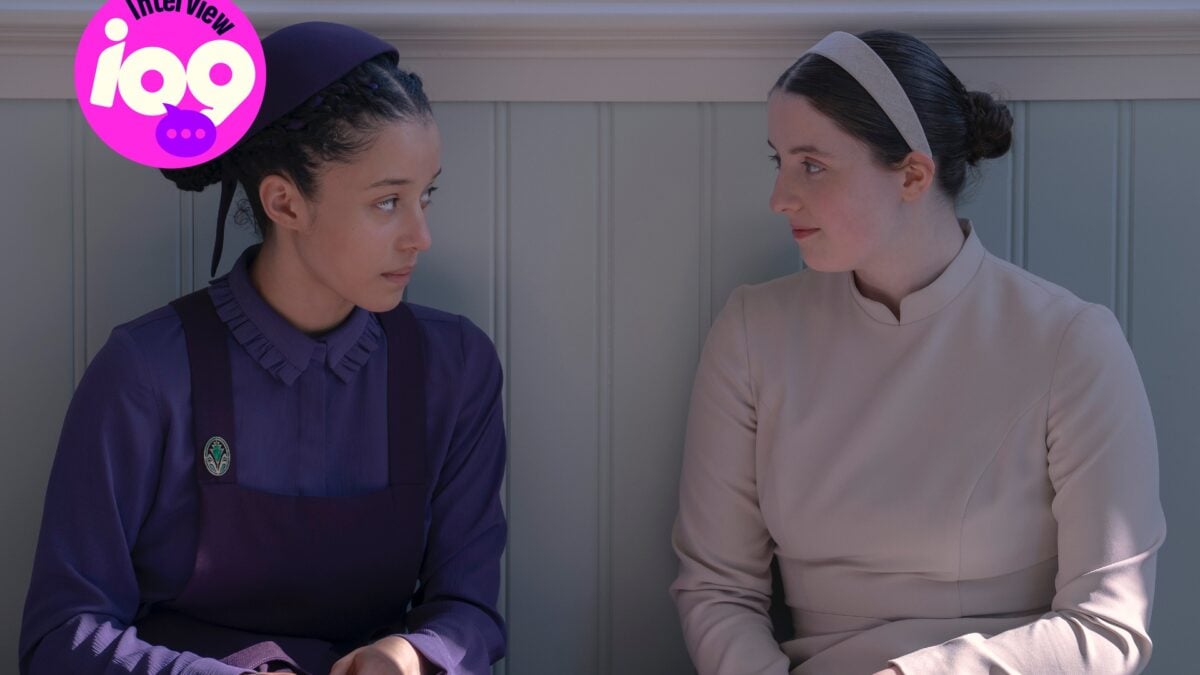
The series often highlights the geopolitical tension between a falling United States and a stable Canada. As we watch these characters navigate the border, it forces a conversation about our own policies and our identity as a safe haven. It’s not just a TV show; it’s a cultural touchstone that prompts us to look at our own society and say, "not here, not ever."
- Gilead
- The totalitarian, patriarchal, and theonomic state that has replaced the United States.
- The Testaments
- The 2019 sequel novel by Margaret Atwood, upon which this new series is based.
- Aunts
- A class of women in Gilead responsible for training and monitoring Handmaids and young girls.
Coming Up
With the first episodes now available for streaming, the rollout will continue weekly. Expect the season finale to air in late May, which many industry insiders suggest will lead directly into the final planned season of the flagship show. There are also whispers of a special retrospective documentary featuring Margaret Atwood herself, slated for release later this year.
At a Glance
- Ann Dowd returns as Aunt Lydia, offering a deeper look at her complex motivations.
- The story is set 15 years after the start of The Handmaid’s Tale.
- New characters include young women raised inside Gilead and those watching from Canada.
- The series is based on Margaret Atwood's 2019 Booker Prize-winning novel.
- Themes focus on political decay, secrets, and the internal resistance within the regime.
Frequently Asked Questions
Do I need to finish The Handmaid’s Tale before watching The Testaments?
While it’s possible to follow the main plot, you’ll miss the emotional weight of Aunt Lydia’s transformation and the history of the characters mentioned without having the context of the first five seasons.
Is Elisabeth Moss in the new series?
Her character, June, is the shadow that hangs over the entire story, but The Testaments primarily focuses on the perspectives of three other women, including Aunt Lydia.
How many episodes are in the first season?
The debut season consists of 10 episodes, released on a weekly schedule following the two-episode premiere.
Where was the series filmed?
Like its predecessor, much of the production took place in and around Southern Ontario, utilizing local landmarks to create the austere world of Gilead.
Is this the final season of the franchise?
No, The Testaments is a standalone sequel series, while the original Handmaid’s Tale is expected to conclude with its own sixth and final season.

Resources
Sources and references cited in this article.