
42% of the rice products in a new Consumer Reports investigation had average inorganic arsenic levels high enough that eating one serving a day over time could significantly raise risks for skin cancer, bladder cancer and type 2 diabetes. For Canadian households that eat rice often, the practical takeaway is not to stop eating it, but to choose types more carefully, vary grains and change how rice is cooked.
The Bottom Line
- Consumer Reports tested 52 rice products, using two to three samples of each, and found measurable inorganic arsenic in every product.
- Brown rice averaged 113 ppb of inorganic arsenic, compared with 72 ppb for white rice.
- Basmati and sushi rice had the lowest averages among the main types tested, at 55 ppb and 57 ppb.
- A cooking method that boils rice for five minutes, drains it and finishes it in fresh water cut inorganic arsenic by 50% to 58% in Consumer Reports' tests.
- Rotating in grains such as quinoa, farro, oats and sorghum can reduce reliance on rice; the non-rice grains tested had far less inorganic arsenic.
Breaking It Down
Consumer Reports analyzed 142 samples across arborio, basmati, brown, jasmine, sushi, white and precooked rice, plus seasoned rice side dishes. Seventeen products averaged at least 100 parts per billion of inorganic arsenic, the level the U.S. Food and Drug Administration uses as an action level for infant rice cereal, although there is no federal limit for ordinary rice products.
The results varied sharply by type. Brown rice consistently carried more inorganic arsenic than white rice because arsenic concentrates in the outer bran layer, which remains on brown rice and is removed when white rice is polished. Long- and short-grain rice and parboiled rice averaged 101 ppb, while jasmine averaged 87 ppb and arborio 64 ppb. Consumer Reports' full investigation also found that the apparent decline from its 2014 averages was not large enough to show an overall market improvement.
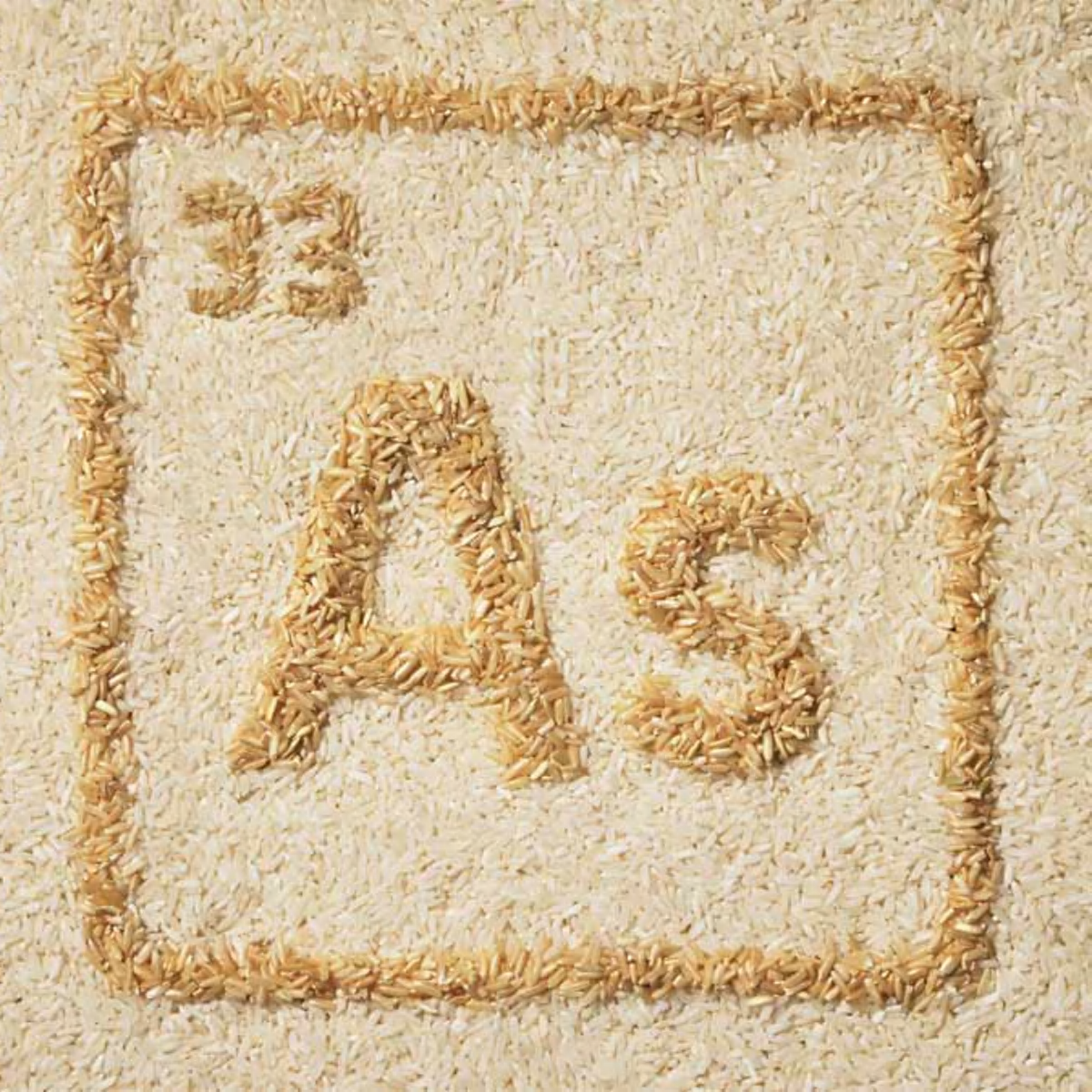
Why rice? It is commonly grown in flooded fields, where arsenic in soil becomes more available to plant roots.
The strongest consumer action in the testing came from cooking technique. Rinsing or soaking removed 5% or less of the arsenic. By contrast, boiling rice in water for five minutes, draining it, then finishing it in fresh water reduced inorganic arsenic by 50% in brown rice and 58% in white rice. A separate report on the same method describes a similar parboiling-and-absorption approach.
- Inorganic arsenic
- The more toxic form of arsenic discussed in the testing and linked in the source material to cancers and other long-term health effects.
- ppb
- Parts per billion, the unit used to compare arsenic concentrations in the tested rice products.
- Parboiling and absorption
- A method that briefly boils rice, discards the first water and completes cooking with fresh water.
Why This Matters
For frequent rice eaters, exposure adds up over time. Consumer Reports calculated that in 42% of the products, one serving a day over time could significantly increase risks for skin cancer, bladder cancer and type 2 diabetes. Children are a particular concern because their lower body weight means each serving represents a larger exposure, and the source material links early-life arsenic exposure with developmental risks.

The source material points to white basmati and sushi rice as lower-arsenic options on average, while brown rice generally runs higher. Changing the menu helps too: Consumer Reports found grains including farro, quinoa and sorghum had much lower inorganic arsenic levels than rice, with even the highest non-rice grain tested containing less than a quarter of the amount found in sushi rice, the lowest-arsenic rice category overall.
What Comes Next
Consumer Reports is calling for limits on inorganic arsenic across all rice products, not only infant rice cereal. The organization said it asked the FDA whether broader limits were planned, but the agency did not respond to its request.
For households deciding what to do now, the confirmed steps are straightforward: choose lower-arsenic varieties more often, rotate other grains into meals and use the five-minute boil, drain and finish method when practical.
FAQ
Does all rice contain arsenic?
In the Consumer Reports testing, measurable inorganic arsenic was found in every rice product sampled. The amount varied substantially by rice type and product.
Which rice had the lowest arsenic levels?
Basmati and sushi rice had the lowest average inorganic arsenic levels among the main types tested, at 55 ppb and 57 ppb. Brown rice averaged higher than white rice.
Is brown rice higher in arsenic than white rice?
Yes. Brown rice averaged 113 ppb of inorganic arsenic in the testing, compared with 72 ppb for white rice, because arsenic concentrates in the bran layer that remains on brown rice.
Can cooking reduce arsenic in rice?
Yes. Boiling rice for five minutes, draining it and finishing it in fresh water reduced inorganic arsenic by 50% in brown rice and 58% in white rice in Consumer Reports' tests.
Does rinsing rice remove arsenic?
Not much, according to the testing described in the source material. Rinsing or soaking removed 5% or less, far below the reduction achieved by the boil-drain-finish method.
What can I eat instead of rice?
Consumer Reports tested grains and seeds including quinoa, farro, oats, barley and sorghum and found far lower inorganic arsenic levels than in rice. Rotating these foods into meals can reduce repeated exposure from relying heavily on rice.