E-3 Sentry reportedly destroyed as Iran strike hits Saudi base
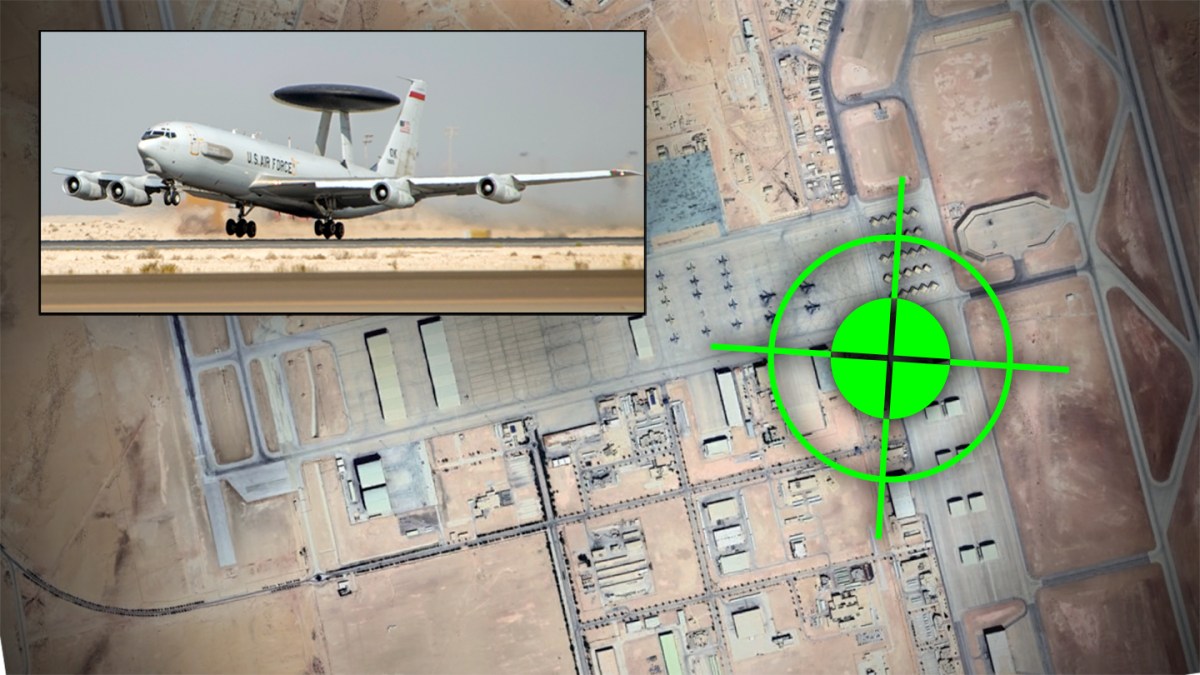
A high-value surveillance aircraft may have been wiped out in a single strike — and that’s what’s turning heads far beyond the Middle East. Early images circulating online suggest an E-3 Sentry, one of the U.S. military’s most critical airborne radar systems, was severely damaged or destroyed during Iran’s latest missile attack on a Saudi air base. The strike also left American troops wounded, raising fresh concerns about escalation. What looked like a cooling conflict suddenly feels anything but.
What We Know So Far
The strike targeted a Saudi air base hosting U.S. forces, coming days after Israeli attacks on Iranian nuclear facilities triggered a wider regional response. Reports indicate multiple missiles hit the installation, injuring at least a dozen American personnel and damaging aircraft on the ground.
Among the most striking claims: visual evidence suggesting an E-3 Sentry airborne warning and control system (AWACS) aircraft was hit. These planes act as flying radar hubs, capable of tracking aircraft and coordinating air operations across vast distances.
While officials have not confirmed the full extent of the damage, defense analysts say losing even one such aircraft would be significant. These systems are not only expensive — often costing hundreds of millions — but also central to coordinating complex military operations.

The attack itself appears to be part of a broader chain reaction. Israeli strikes on Iranian nuclear infrastructure set the stage, and Tehran responded by targeting allied positions in the region. It’s a pattern observers have seen before — retaliation begets retaliation — but this time, the stakes feel higher.
Meanwhile, officials confirmed that at least 15 U.S. troops were wounded, though none of the injuries are believed to be life-threatening. Still, the optics matter. A direct hit on a base hosting American personnel carries political and military weight.
The Response
U.S. defense officials acknowledged the attack and confirmed injuries, while emphasizing that the situation remains under review. One senior official described the strike as “a calculated escalation,” pointing to the targeting of high-value assets.
"We are assessing the full extent of the damage and will respond appropriately,"
Regional leaders have also been quick to react. Saudi authorities condemned the attack, calling it a violation of sovereignty, while urging restraint to avoid a wider conflict.
"This attack threatens regional stability and cannot go unanswered,"
There’s also growing scrutiny over earlier political messaging. Just days before the strike, former U.S. leadership had suggested the conflict was effectively contained. Now, that narrative is being questioned.
What It Means for You
If you’re watching from California, this might feel far away — but the ripple effects travel fast. Military escalation in the Middle East often ties directly into global oil prices, which can hit the pump here within days. And yes, that means your commute could get more expensive.

There’s also a broader security angle. California hosts major defense contractors and military installations. Any sustained escalation could influence federal spending, contracts, and even local employment tied to the defense sector.
And here’s the thing — when advanced systems like the E-3 are reportedly knocked out, it signals vulnerability. That can shift military planning and, in turn, policy decisions that echo all the way to Washington and beyond. As the saying goes, when it rains, it pours.
Coming Up
Officials are expected to release a clearer damage assessment in the coming days. Military analysts are watching closely for any confirmation about the E-3 Sentry’s status.
Diplomatic channels are also active behind the scenes, with efforts underway to prevent further escalation. At the same time, additional troop protections and repositioning may be announced as a precaution.
At a Glance
- Iran launched a missile strike on a Saudi base hosting U.S. forces
- At least 15 American troops were injured
- Images suggest a possible hit on an E-3 Sentry aircraft
- The strike follows Israeli attacks on Iranian nuclear facilities
- Officials warn of rising regional tensions and potential escalation
FAQ
What is an E-3 Sentry and why does it matter?
The E-3 Sentry is a surveillance aircraft equipped with advanced radar systems that track airborne threats. It plays a key role in coordinating military operations and monitoring large areas of airspace.
Were U.S. troops seriously injured in the strike?
Reports indicate that at least 15 U.S. personnel were wounded, but none of the injuries are considered life-threatening. Officials are continuing to assess the situation.
Has the E-3 Sentry destruction been confirmed?
There is no official confirmation yet. However, images circulating online suggest significant damage to at least one aircraft believed to be an E-3.
How could this affect gas prices in California?
Escalation in the Middle East often impacts global oil markets. That can translate into higher fuel prices across California, sometimes within days.
What happens next in the conflict?
Military and diplomatic responses are expected in the coming days. Analysts are watching for retaliation or efforts to de-escalate the situation.

Resources
Sources and references cited in this article.

