
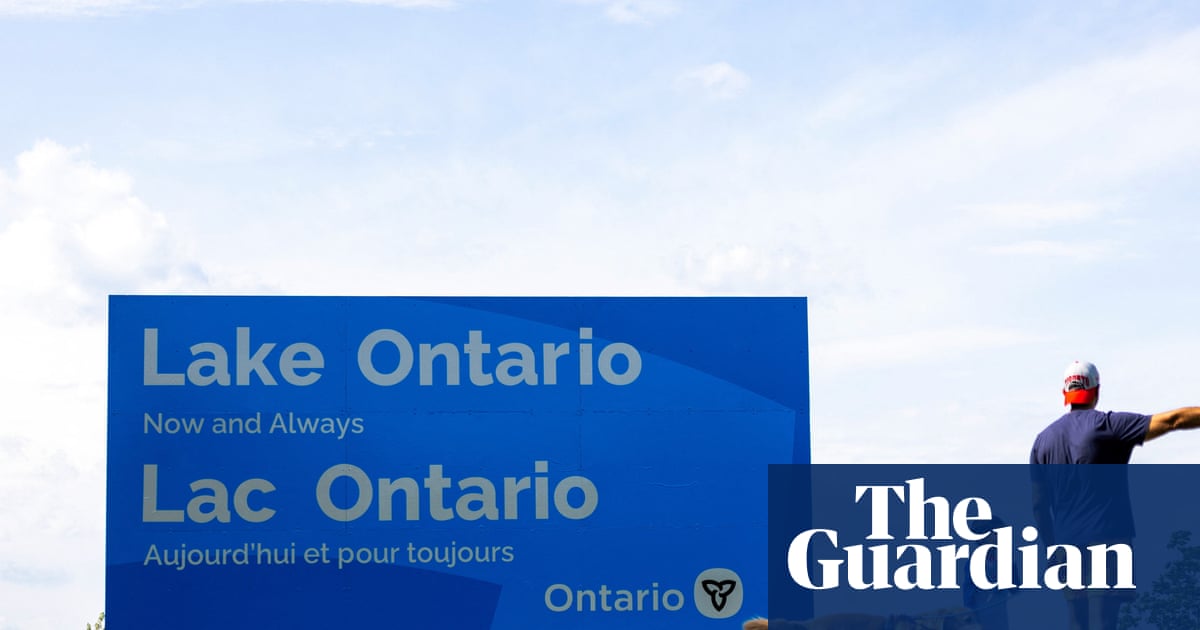
A crisp breeze rolled across Fifty Point Conservation Area in Winona as Ontario Premier Doug Ford stepped up to a newly erected, two-storey billboard declaring Lake Ontario's traditional name. The lakeside demonstration comes directly on the heels of an escalating diplomatic showdown between Ottawa and Washington. Following an executive order signed by US President Donald Trump directing federal agencies to rebrand the body of water as 'Lake America', tech giant Google confirmed it has updated its mapping service to display different names depending on where users log in.

The Story at a Glance
The geographic dispute marks a visual escalation in broader cross-border tensions triggered when bilateral trade talks collapsed. Washington instituted 50% tariffs on $20bn (C$28bn) worth of Canadian goods, prompting Canada to prepare dollar-for-dollar counter-tariffs scheduled to take effect next month. As part of his administration's response, Trump signed an executive directive ordering the US Geographic Names Information System (GNIS) to list the shared international water as 'Lake America'. In response, Google confirmed that US-based users will see 'Lake America', Canadian users will see 'Lake Ontario', and international users outside both nations will see both names displayed side by side.
How the Story Developed
Tensions accelerated sharply following the breakdown of bilateral trade discussions on August 21, when both governments accused each other of demanding last-minute changes to established frameworks. On Thursday, Trump signed an executive order giving the US Department of the Interior 30 days to update federal databases, claiming the US manages most of the lake's volume, economic activity, and security.
By Saturday, the digital footprint of the order materialized on commercial platforms. According to Google's official statement, the search platform follows official geographic repositories such as GNIS for regional domestic naming standards. This digital policy mirrors the adjustment made in 2025 when the US administration designated the Gulf of Mexico as the Gulf of America on American maps.
Alongside formal decrees, Trump shared AI-generated videos across social platforms, including footage depicting Canada geese carrying rifles along the shoreline and animations replacing Canadian signage. Ontario responded rapidly on Saturday by unveiling the official shoreline sign near Grimsby reading 'Lake Ontario. Now and Always.'
Key People and Details
The body of water spans 7,340 square miles, bordered by Ontario to the north and the state of New York to the south. Four of the five Great Lakes derive their names from Indigenous heritage, with Ontario originating from the Wendat term meaning beautiful or great lake.

- GNIS (Geographic Names Information System)
- The official federal database maintained by the US government for geographic names within US territory.
- Wendat Origin
- The Indigenous linguistic origin of Ontario, historically recorded as referencing shining or expansive waters for over 400 years.
Key leaders involved across jurisdictions include:
- Donald Trump: Issued executive orders instructing US agencies and mapping standards to adopt 'Lake America'.
- Mark Carney: Rejected the redesignation, emphasizing the centuries-old legal and cultural naming heritage.
- Doug Ford: Unveiled provincial signage and coordinated with regional US governors to maintain original cartographic terms.
- Pierre Picard: Grand Chief of the Wendat Nation, who criticized the unilateral order as an attempt to diminish Indigenous heritage.
Reaction and Response
Canadian officials across party lines united in dismissing the unilateral redesignation. Standing at the Fifty Point Conservation Area, Premier Ford reiterated provincial resolve.
Long before President Trump, this lake was called Lake Ontario. Long after President Trump is gone, it will still be called Lake Ontario.
Prime Minister Mark Carney stated that international bodies of water cannot be unilaterally renamed by one party, adding that the historical designation remains permanent. Indigenous leadership also spoke out against the move. Wendat Nation Grand Chief Pierre Picard condemned the order, stating that sovereign nations cannot erase established cultural history.
Across the border, several US state officials voiced opposition. New York Governor Kathy Hochul confirmed her state would not adopt the name change on state materials, while Vermont Governor Phil Scott called the decree disappointing. Mapping competitor MapQuest also confirmed it would not modify its map listings.
What to Watch
Attention now turns to concrete cross-border economic measures. Retaliatory tariffs from Ottawa are set to take effect starting September 8, targeting imported US steel and manufactured goods. Meanwhile, the US Department of the Interior has 30 days to finish updating federal agency documents, charts, and navigational maps under the GNIS system.
Frequently Asked Questions
Why did Google Maps change Lake Ontario to Lake America?
Google Maps updates geographic labels based on domestic official databases. Because US federal agencies updated the Geographic Names Information System (GNIS) following an executive order, Google displayed the new label for US users while keeping Lake Ontario for Canadian users.
Does the US executive order change the official name in Canada?
No. US executive orders only control internal federal agencies and domestic US naming conventions. Canadian federal and provincial jurisdictions, international nautical bodies, and Canadian mapping services retain the name Lake Ontario.
What will users outside Canada and the US see on Google Maps?
According to Google's mapping guidelines for contested or dual-named international bodies of water, users accessing the service from outside Canada and the United States will see both names displayed on the map.
What triggered the dispute over Lake Ontario?
The dispute followed the collapse of Canada-US trade negotiations on August 21, which resulted in the US imposing 50% tariffs on $20 billion in Canadian products and Canada announcing dollar-for-dollar counter-tariffs.