
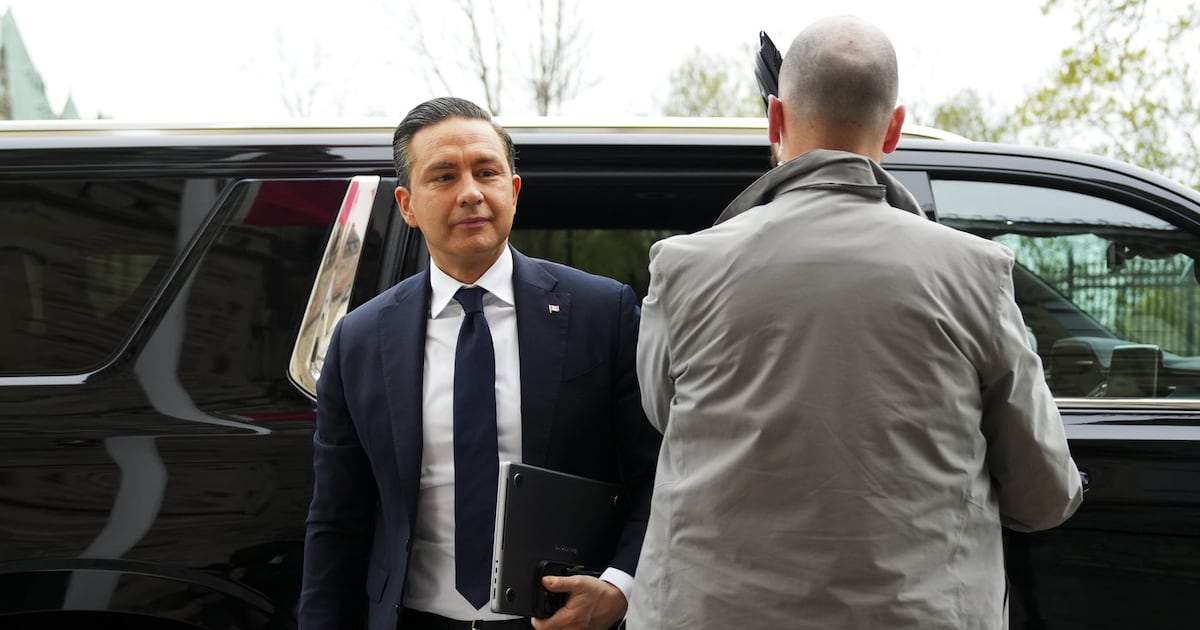
Pierre Poilievre used a major Conservative gathering in Ottawa this week to make one thing crystal clear: he is not stepping aside after Mark Carney’s Liberals secured a majority government. The speech landed at a tense moment for Conservatives across Canada, with party members debating strategy, leadership and how to reconnect with voters before the next federal fight.
For Canadians watching from coast to coast, the message matters beyond party politics. Housing costs, inflation pressure and economic uncertainty are still dominating kitchen-table conversations, and Poilievre is betting those frustrations will keep fueling support for his brand of politics.

The Full Story
The atmosphere inside the Ottawa conference was part pep rally, part reality check. Poilievre walked onto the stage facing growing questions about whether he could still unite Conservatives after failing to stop Carney’s Liberals from winning another mandate.
Instead of sounding defensive, Poilievre leaned into the role of political fighter. He repeatedly framed the Liberals as a disconnected establishment and described his movement as one battling what he called a “club of Liberal elites.” The language was familiar to longtime followers, but the tone carried more urgency this time around.
Meanwhile, many Conservatives arriving at the event were openly discussing where the party goes next. Some organizers wanted sharper economic messaging. Others argued the Conservatives need broader appeal in urban Canada, especially in places like Toronto, Vancouver and Montreal where Liberal support remains strong. That’s the million-dollar question right now in federal politics: can Conservatives grow beyond their core base without losing the energy that helped Poilievre rise in the first place?

What’s interesting is how quickly the political landscape shifted after Carney entered federal politics. The former central banker brought an economic credibility argument that resonated with moderate voters uneasy about inflation and global market instability. That changed the campaign dynamic almost overnight.
Poilievre, though, argued that affordability concerns are far from over. He pointed to rising housing prices, strained household budgets and growing frustration among younger Canadians trying to enter the housing market. If you’ve been following Canadian politics lately, you already know affordability has become the defining issue for many families.
The Conservative leader also urged supporters not to treat the election result as the end of the road. Several attendees described the conference as a reset moment rather than a retreat. Politics in Canada can turn on a dime, especially when economic conditions shift quickly.
The Main Players
Pierre Poilievre remains the central figure inside the Conservative Party. Known for his aggressive attacks on Liberal policy and his focus on affordability, he continues to command strong loyalty among grassroots members.
Mark Carney, now leading a Liberal majority government, enters office with a reputation shaped by his years at the Bank of Canada and Bank of England. Supporters see him as a steady economic hand during uncertain global conditions.
The broader Conservative movement is also under pressure from regional divisions. Western Conservatives often prioritize energy and resource development, while voters in Ontario and Quebec are increasingly focused on housing, immigration capacity and cost-of-living concerns.
We will keep fighting for Canadians who feel locked out and left behind.
Key Statistics
1: The Liberals secured another majority government under Mark Carney.
Several battleground suburban ridings in Ontario and British Columbia ultimately helped determine the election outcome.
Housing affordability continues to rank among the top concerns for Canadian voters, especially younger households facing high borrowing costs and limited supply.
Political strategists say those numbers matter because suburban regions often decide Canadian elections. A few thousand votes in fast-growing communities around Toronto or Vancouver can reshape Parliament.
What This Means
The bigger story here may not be the conference speech itself. It is the early fight over what the Conservative Party should become over the next few years.
For voters in Canada, particularly younger workers and families squeezed by housing prices, both parties are now battling to own the affordability issue. Carney is expected to lean on economic stability and institutional credibility. Poilievre is betting frustration and anger over living costs remain politically powerful.
There is also a broader question hanging over Ottawa: how long can economic frustration remain the dominant political force? Canadians have heard affordability promises from every major party for years now. Many want results, not slogans.
And get this — insiders at the conference suggested organizing efforts are already ramping up for future campaigns despite the recent defeat. Nobody inside the party appears ready for a quiet rebuilding period.
What to Expect
Poilievre is expected to continue touring the country over the coming months while the Conservatives reassess strategy and messaging.
The Liberals, meanwhile, will face immediate pressure to deliver measurable progress on affordability, housing and economic growth. Opposition parties are likely to target those files aggressively in Parliament.
Canadians should also expect renewed debates around immigration levels, federal spending and energy policy as both major parties attempt to define the next political cycle.
FAQ
Why is Pierre Poilievre still leading the Conservatives?
Poilievre told supporters he believes he remains the best person to challenge Mark Carney’s Liberal government despite the election loss.
Who is Mark Carney?
Mark Carney is Canada’s prime minister and former central banker who previously led both the Bank of Canada and the Bank of England.
What was the Ottawa Conservative conference about?
The event focused on party strategy, leadership direction and rebuilding momentum after the Liberal majority victory.
What issues are dominating Canadian politics right now?
Housing affordability, inflation, household costs and economic uncertainty remain the biggest concerns for many voters.
Could the Conservatives replace Poilievre?
Some party members are debating the future direction of the Conservatives, but Poilievre currently appears determined to stay and fight the next election.